Descend to the Basement of a Barangaroo Office Tower and You’ll Find Urban Green, a Subterranean Farm Supplying Top Sydney Restaurants
Words by Ariela Bard · Updated on 23 Mar 2021 · Published on 18 Mar 2021
You might think a dark corner of an underground car park in the CBD is an odd spot to grow fresh produce. But some of Sydney’s top chefs would disagree.
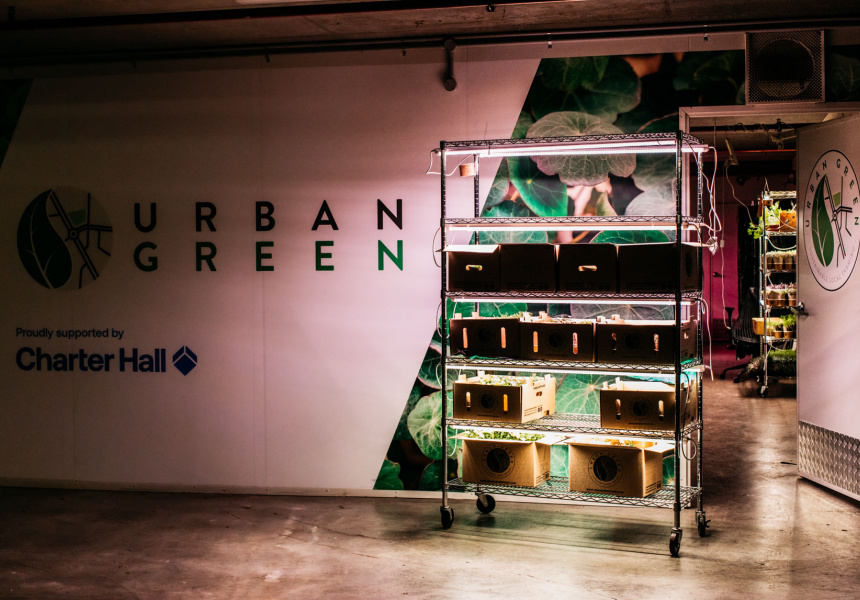
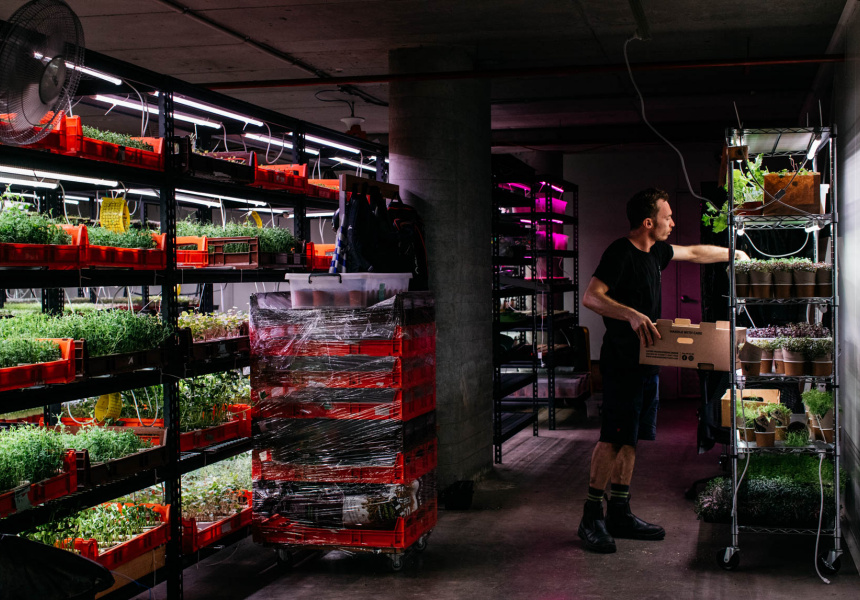
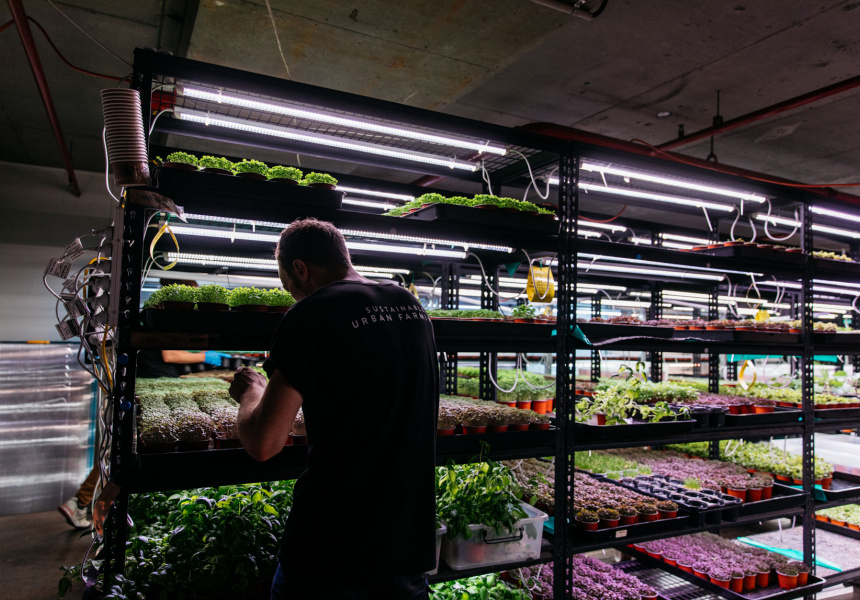
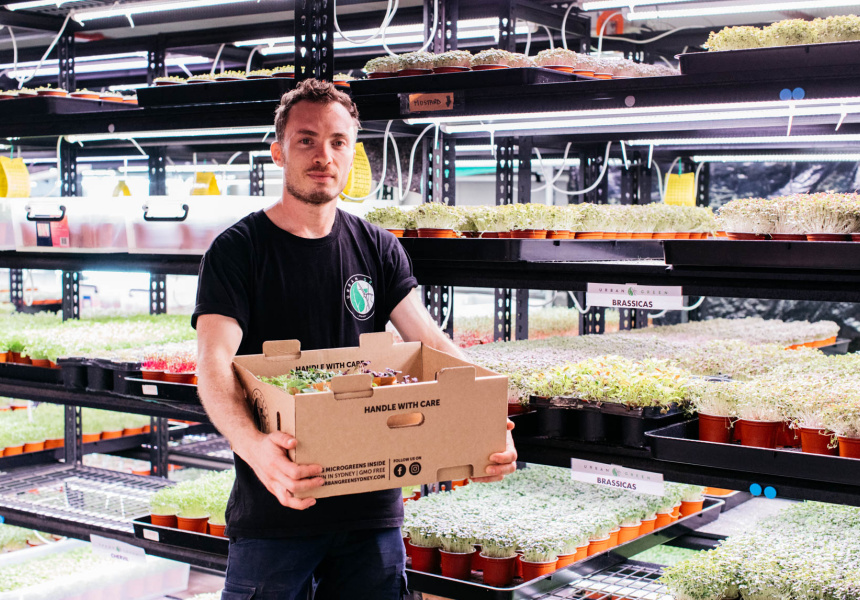
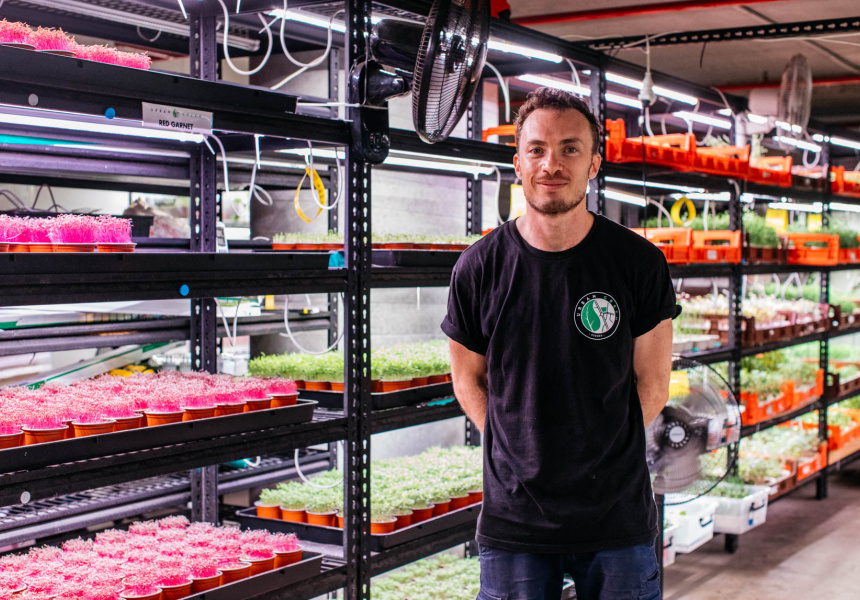
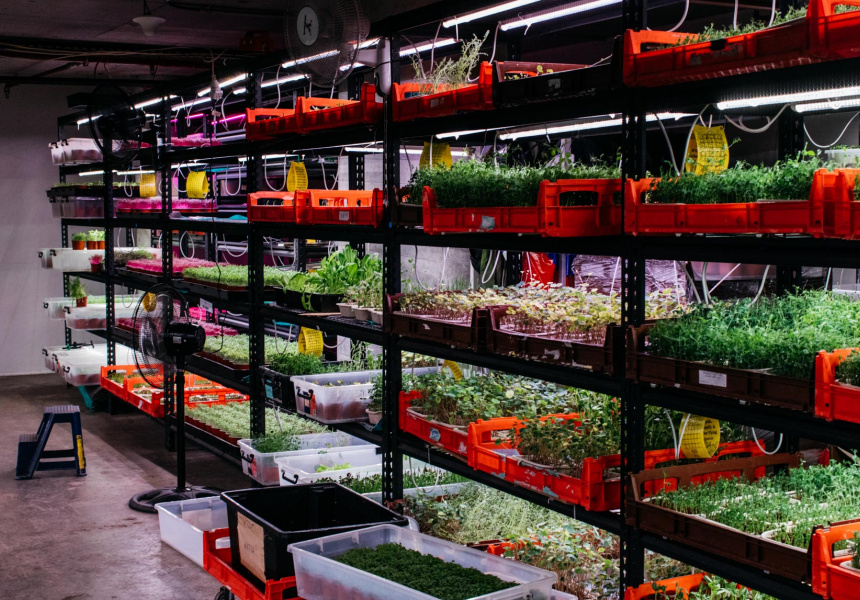
Urban Green is Sydney’s first commercial indoor farm, and it’s located in the basement of an office building in Barangaroo. While the Macquarie bankers hop in the lift and head skyward, Urban Green founder Noah Verin hits the down button and descends to his subterranean vertical farm, where the microgreens served at Monopole , Yellow , Woodcut and many more are grown.
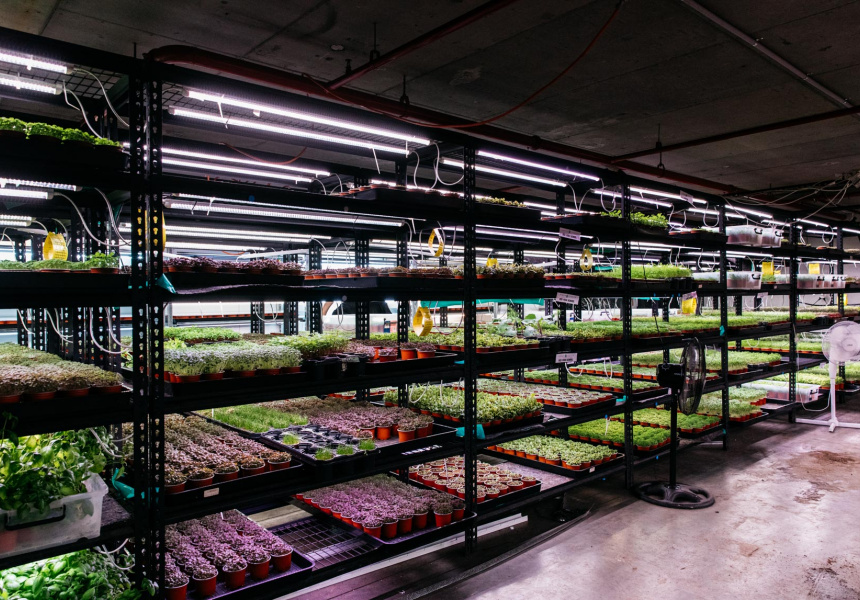
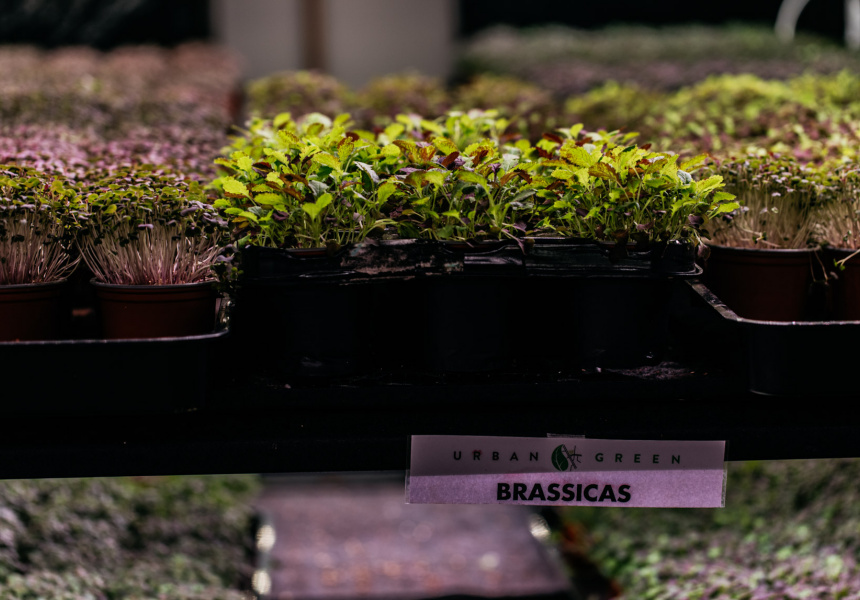
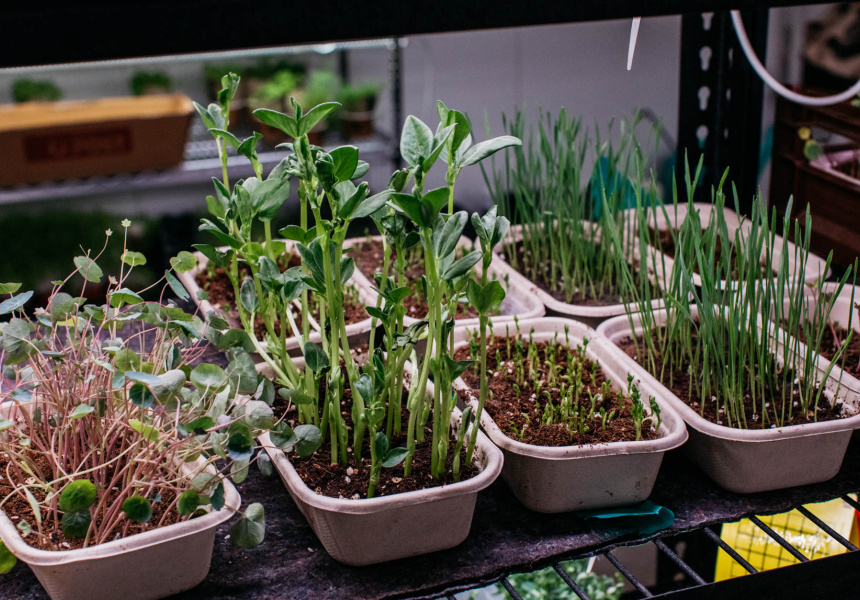
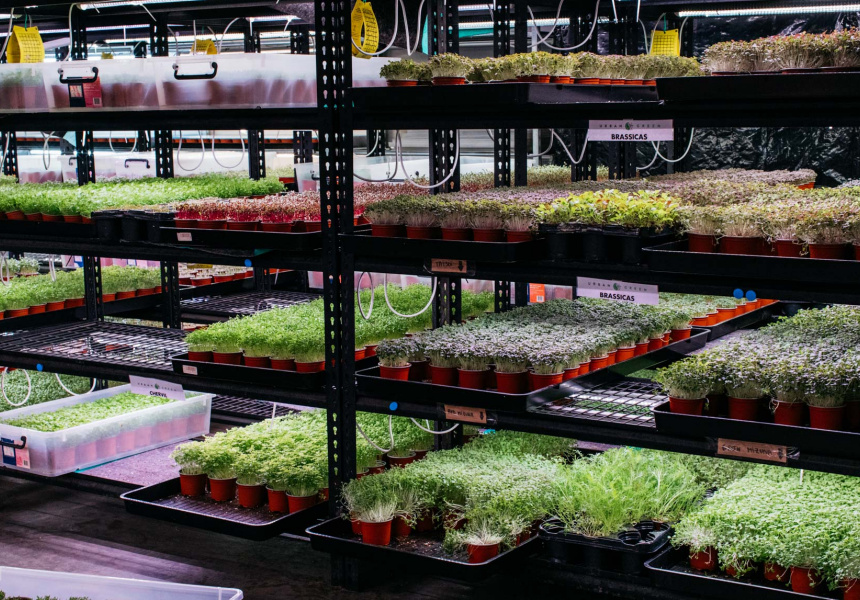
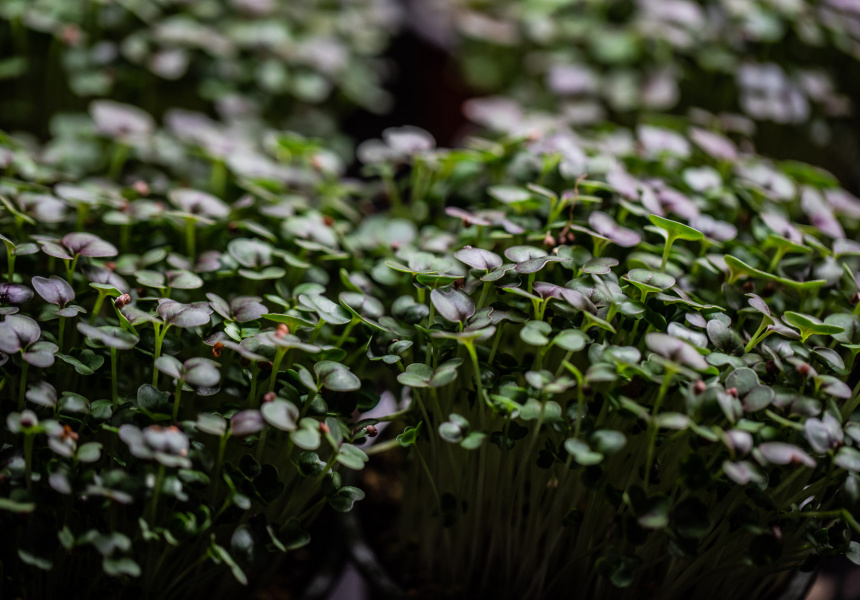
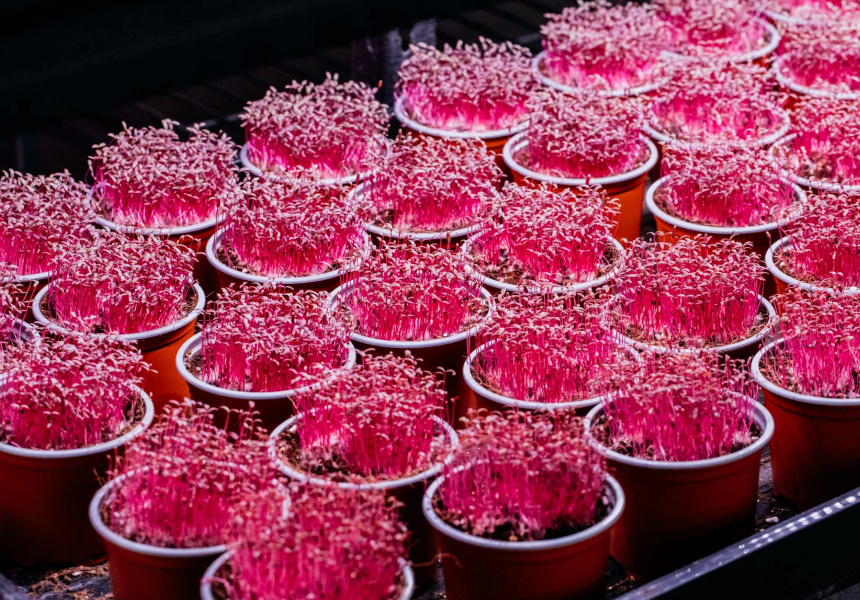
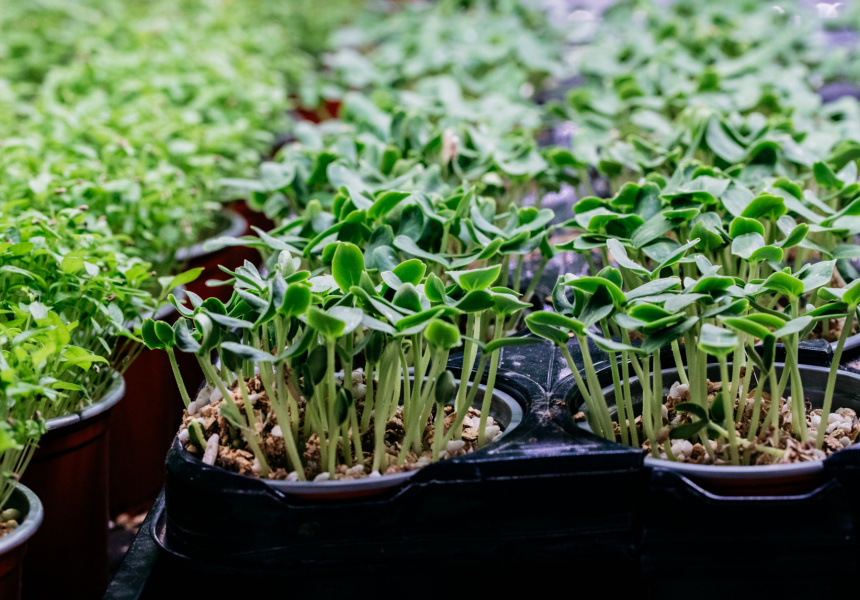
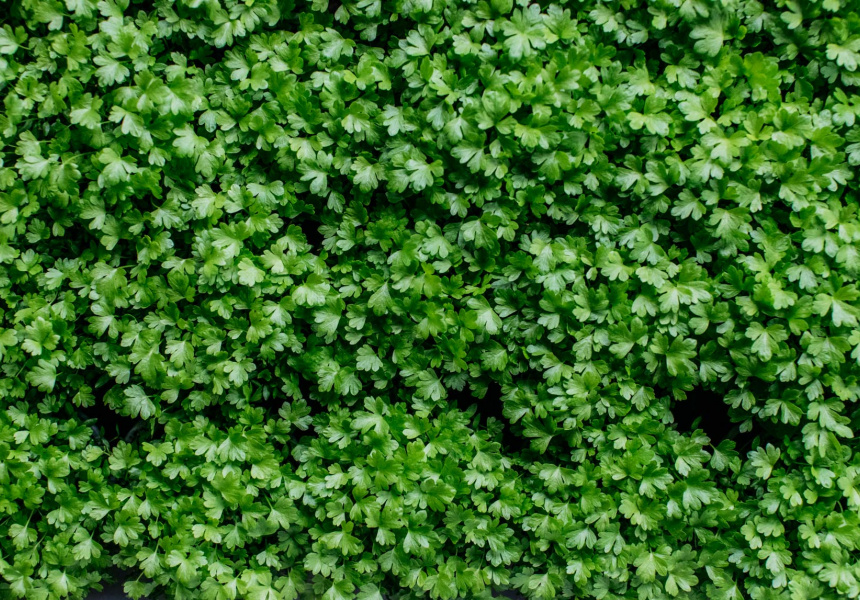
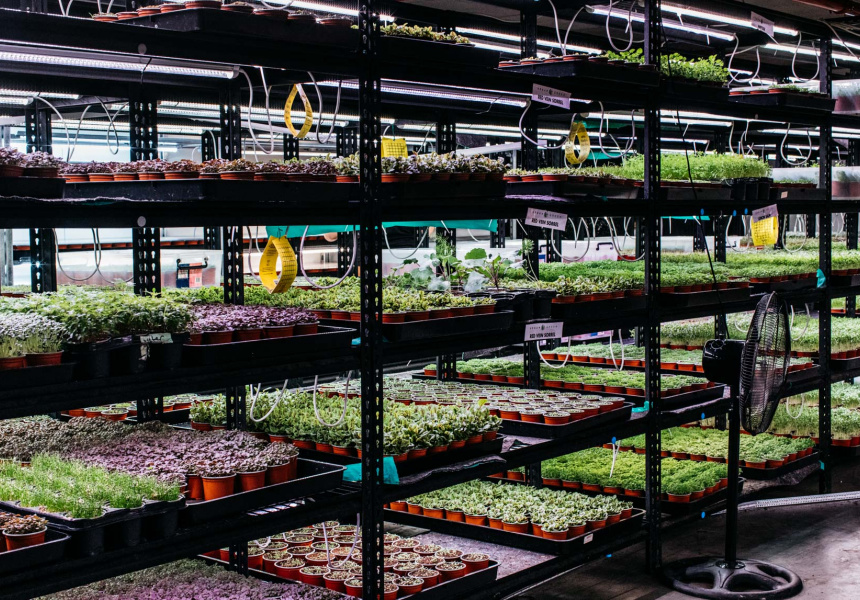
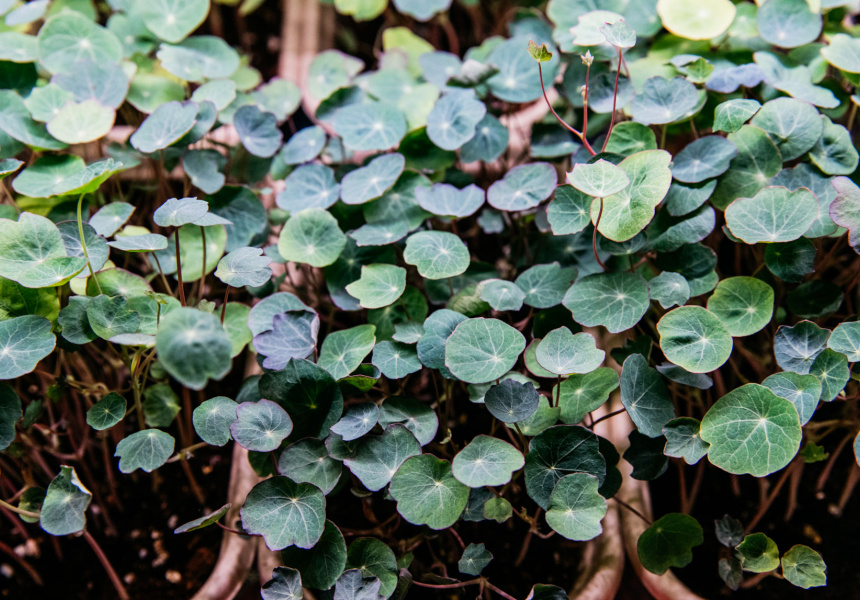
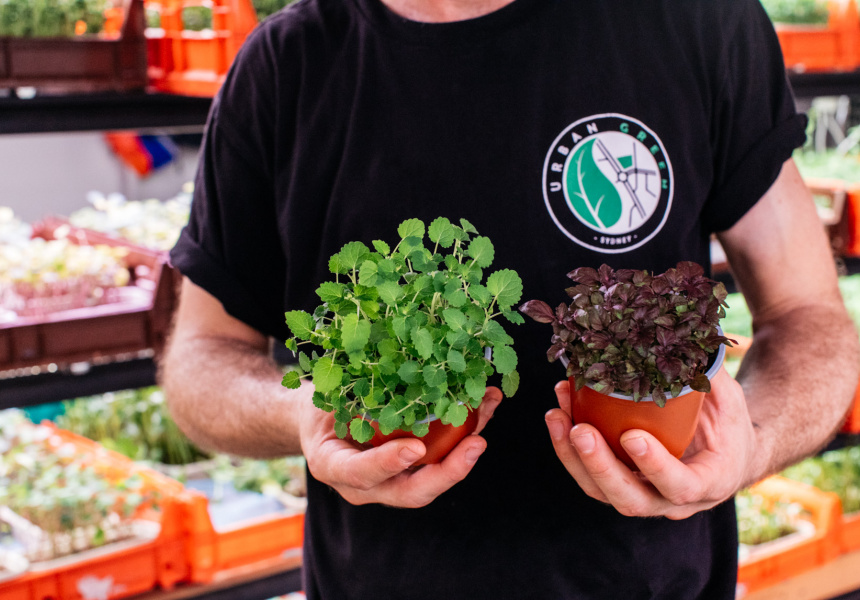
“There are a lot of people around here who have no idea what’s going on below ground [level],” Verin tells Broadsheet. He grows 35 microgreen varieties in the basement, including lemon balm, green mizuna, celery, marigold leaf, Dijon mustard, and red-veined sorrel – “the Mercedes-Benz of microgreens”.
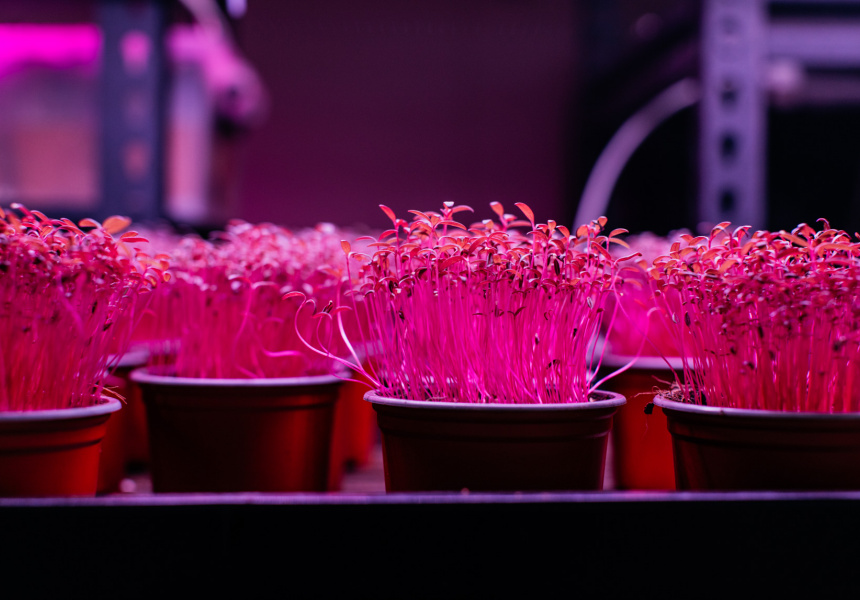
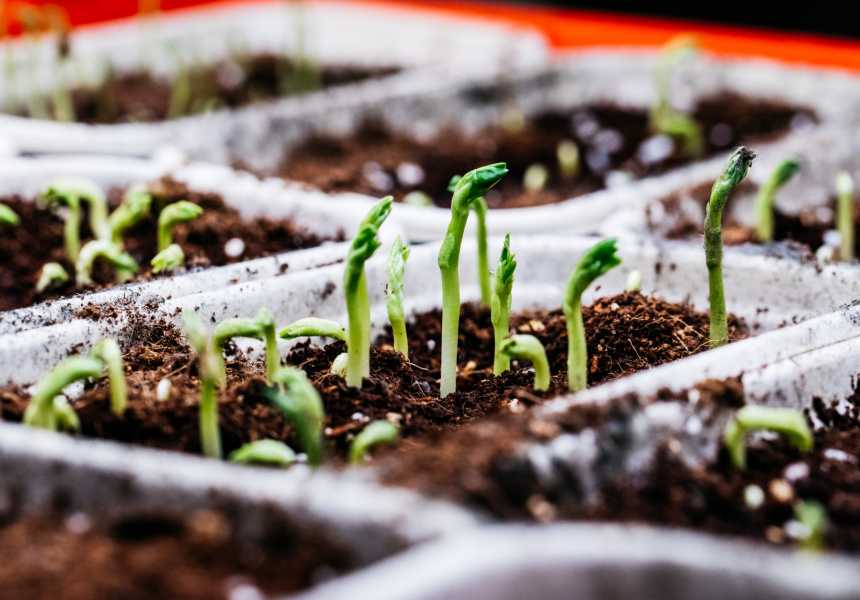
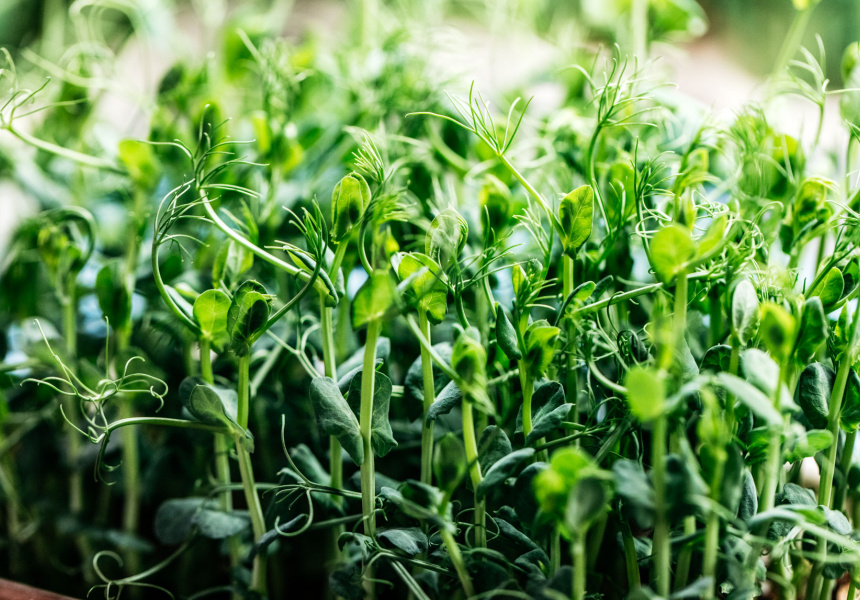
Microgreens are essentially edible seedlings, grown from the same seed that produces an adult plant, but harvested earlier, when they’re packed with nutrients, flavour and colour. What started as a health-food trend in San Francisco in the 1980s soon caught the attention of high-end chefs, who realised that these tiny greens not only looked great in their dishes, but were also full of flavour.
Verin, who worked as a chef for nine years and studied environmental science, had never heard of microgreens until his co-worker Jose Botero suggested growing some. Three days later, a news story sent to Verin by his father – about farmers growing microgreens in old bomb shelters in London – made him pay attention.
“We started doing tests in Jose’s living room. We started under the couch, then on top of the fridge, under the bed... The whole apartment was covered in microgreens. It was quite funny,” says Verin.
Next, the pair started taking samples to restaurants. “I told Jose not to go crazy because we didn’t have a space to grow yet,” Verin says. “Then he called me and said ‘Noah! Me estoy cagando en los pantalones ,’ which literally means ‘I’m shitting my pants’ in Spanish.”
The pair had taken orders amounting to 20 trays a week. “That was on a Friday afternoon. Somehow we managed to find warehouse space in Redfern and moved in on Sunday and started production.”
After two and a half years in a Marrickville warehouse, Verin entered into a partnership with property investment management company Charter Hall, which was looking to convert underutilised space in its Shelley Street office tower into something productive.
The farm occupies a sealed-off, 150-square-metre section of the tower’s 1000-square-metre basement (there are plans to expand). The conversion from car park to vertical farm involved installing floor-to-ceiling cool-room panels for insulation, a reverse-cycle air-conditioning system to regulate the temperature, and an extremely powerful exhaust cycle to filter the air. The microgreens grow under LED lights that mimic the sun, while strategically placed fans ensure adequate air flow. Water conservation is at the forefront of the operation: all irrigation is done by hand, with surplus water emptied into a reservoir to ensure not a drop is wasted, and germinating seeds are sprayed and covered in perspex sheets to catch any condensation.
In keeping with its sustainability focus, Urban Green avoids using single-use plastic sleeves. Instead, products are wrapped in a sheet of post-consumer recycled paper and delivered inside Biocups, which are collected and reused. All the produce is grown in coconut coir – an organic and sustainable coconut fibre that looks and feels like soil, but has none of the pathogens or bacteria.
Urban Green’s new click-and-collect service means microgreens don’t have to be relegated to the fancy world of fine dining. Keen home cooks can access Urban Green’s online store via its website.