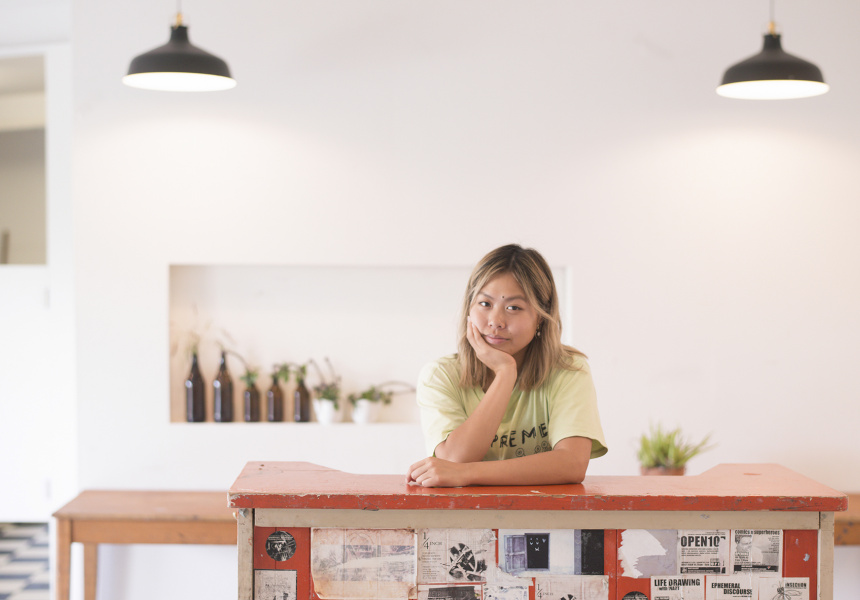

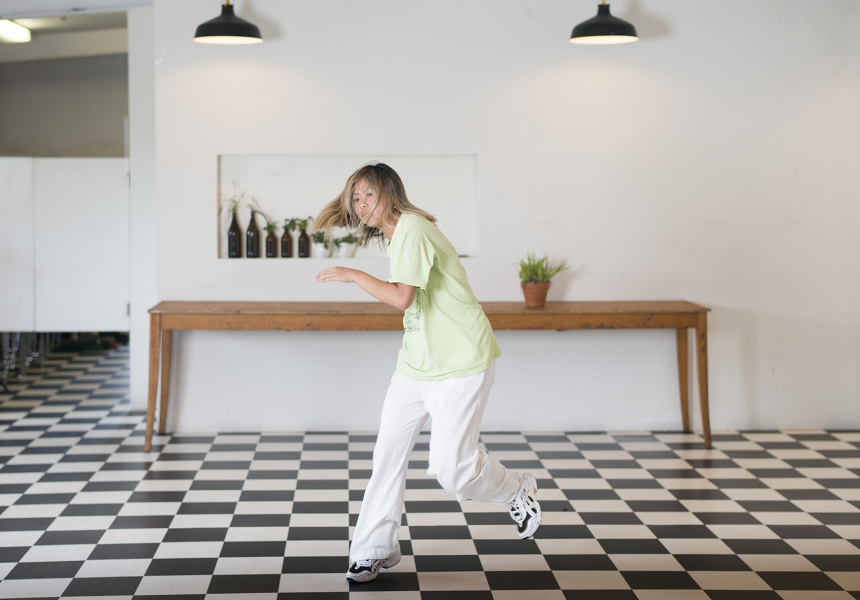



Nothing beats a dance class when you need to shake off a bad day – or a bad pandemic, says Amy Zhang, general manager of Groove Therapy , a Sydney dance studio and talent agency.
“The thing that truly kept me sane in self-isolation was taking online dance classes every day with my mates,” says Zhang, who reckons a gym workout is too regimented. “Dance is mixed with art, it’s mixed with creativity, it’s mixed with self-expression, and you have the endorphins because it is physical as well.”
Groove Therapy was founded in 2016 by Vanessa Marian Varghese , a dancer, choreographer and performance artist. Varghese realised that for non-dancers, most traditional dance studios were intimidating spaces. “She wanted to make a beginner dance class that was judgement-free – less of a scene and more of a community,” says Zhang, a professional dancer who was Varghese’s flatmate at the time.
Zhang, from Brisbane, started dancing when she was 17 in a studio similar to Groove Therapy, she says, before moving to Sydney to study full-time at the prestigious Brent Street Studio in Moore Park’s Entertainment Quarter. “That’s when I moved in with Ness,” she says. “I asked if she needed a hand, and three years later, I’m still here.”

Groove Therapy’s tagline – no mirrors, dim lights – reflects Varghese’s founding philosophy. “Without the mirrors, it’s less about what you look like and more about what it feels like, shaking the day off and feeling the body through dance,” Zhang says.
The studio’s teachers are trained in street styles, which is “an umbrella term for any sort of dance style that was born in the streets or out of a studio,” Zhang says. “That could be anything from hip-hop to dancehall from Jamaica to Afrobeat, all the way to house.”
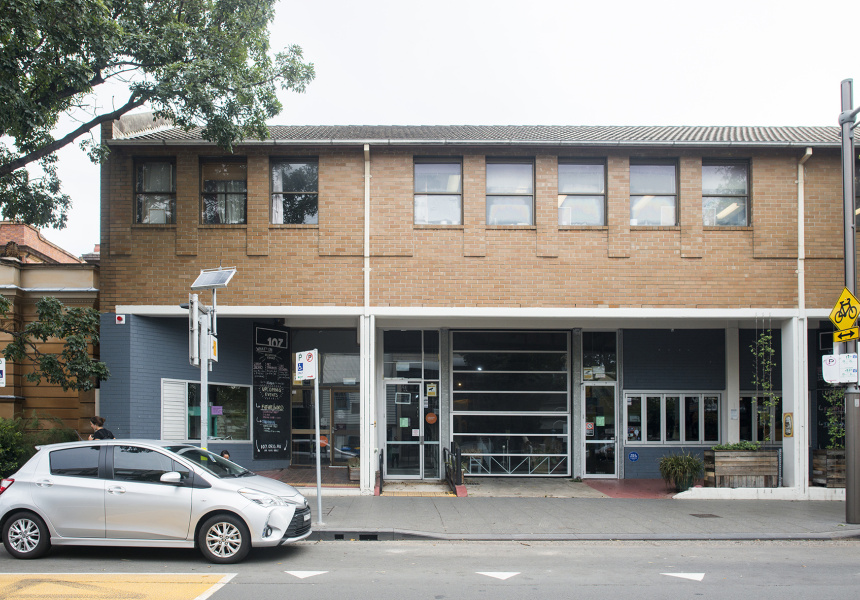
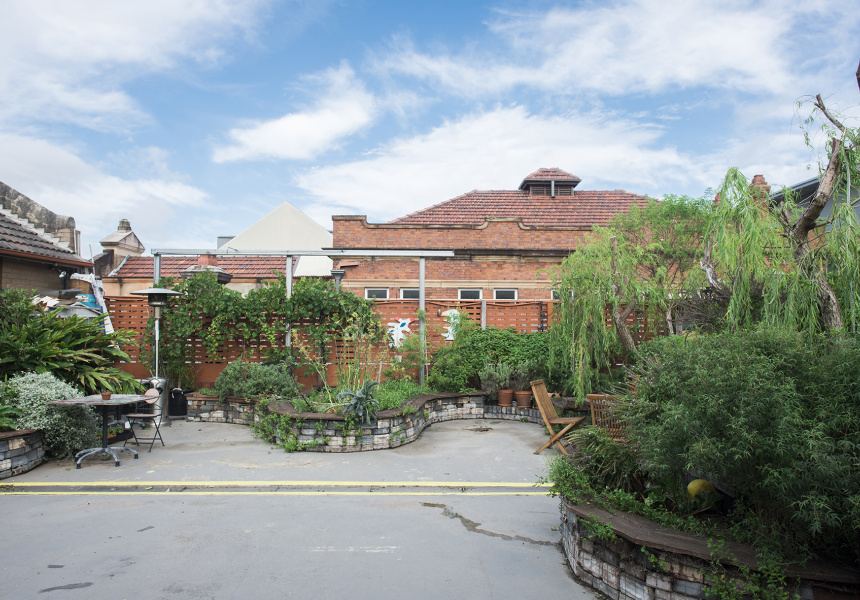
Before the pandemic hit, Groove Therapy operated out of 107 Projects , a shared arts space in Redfern that supports a network of local creatives and community groups. It’s currently in talks with 107 regarding when it’s safe to resume classes.
Zhang says Redfern’s reputation as one of Sydney’s most inclusive suburbs is well-earned. “It has such a strong community vibe,” she says. One of her favourite haunts is Tany’s Japanese restaurant on Redfern Street, where it’s now a tradition for teachers and students to go after class to share a meal and unwind. If you’re looking for more wellness activities in the area, Humming Puppy is a pop-music loving Pilates studio that welcomes all skill levels.
Fortunately, Groove Therapy offered online classes pre-coronavirus so was somewhat prepared when the pandemic hit in March.
“We realised there was a whole group of people that physically, geographically, mentally couldn’t make it to our face-to-face classes,” Zhang says. “The online course lets you learn at your own pace and in your own space.” Livestream classes cater to those “who are less worried about nailing perfect dance technique and more wanting to feel like they’re still dancing with real people in real time.”
Groove Therapy also runs a community program, which earned Varghese nominations for the NSW Young Achiever Awards and a Telstra Business Award in 2018. “We find that often the people who need the programs the most can’t afford them,” Zhang says.
In these outreach classes, Groove Therapy runs sessions specifically tailored to their participants – such as aged care residents or young migrants. Accessibility is a big part Groove Therapy’s mission to improve people’s mental wellness through dance, which is why these social impact programs are free. “We find that often the people who need the programs the most can’t afford them,” Zhang says.
In 2017, Varghese established an aged care and dementia class at the Anzac Village in Narrabeen, which has since been adopted by other nursing homes in NSW. “Music from yesteryear really helps to bring back memory for people who suffer dementia, and on top of that [dance] helps with mobility and flexibility,” Zhang says. “Their eyes light up when the song plays. Mixing those things together gives them a physical workout as well as a mental one.”
And through Groove Rising, they’ve taught young women in western Sydney from refugee and migrant backgrounds. “We did an eight-week dance series over a few terms all about body confidence and social connection,” Zhang says. “These girls were coming from all different countries, and we wanted to give them some personal empowerment through dance.”
Another local business to take a creative approach to mental health is The Indigo Project , a psychology practice based in Surry Hills. “We have a lot of love and admiration for the Indigo Project,” says Zhang. “They take therapy and do it in a really cool way.”
Like Groove Therapy, The Indigo Project is committed to improving mental wellbeing in the community – more important than ever in the wake of the pandemic. “[Talking about] mental health is something that people have shied away from,” says Zhang, “but they’ve been breaking down the stigma around mental illness for ages.”
This article is produced in partnership with City of Sydney. Follow and use the hashtag #sydneylocal on Instagram for more local secrets.

Produced by Broadsheet in partnership with City of Sydney.
Learn more about partner content on Broadsheet.

-ddbc53a5d5.webp)
-0479dd41eb.webp)
More from Broadsheet
Videos
More Guides
Recipes




-6e9e4d4cb1.webp)
-c121bced4e.webp)
-11768298fd.webp)

-3b308e01c9.webp)