TravelFive Reasons To Visit the Northern Territory When the Crowds Have Thinned



There’s a strange assumption about the Northern Territory: once the dry season ends, the Territory does too.
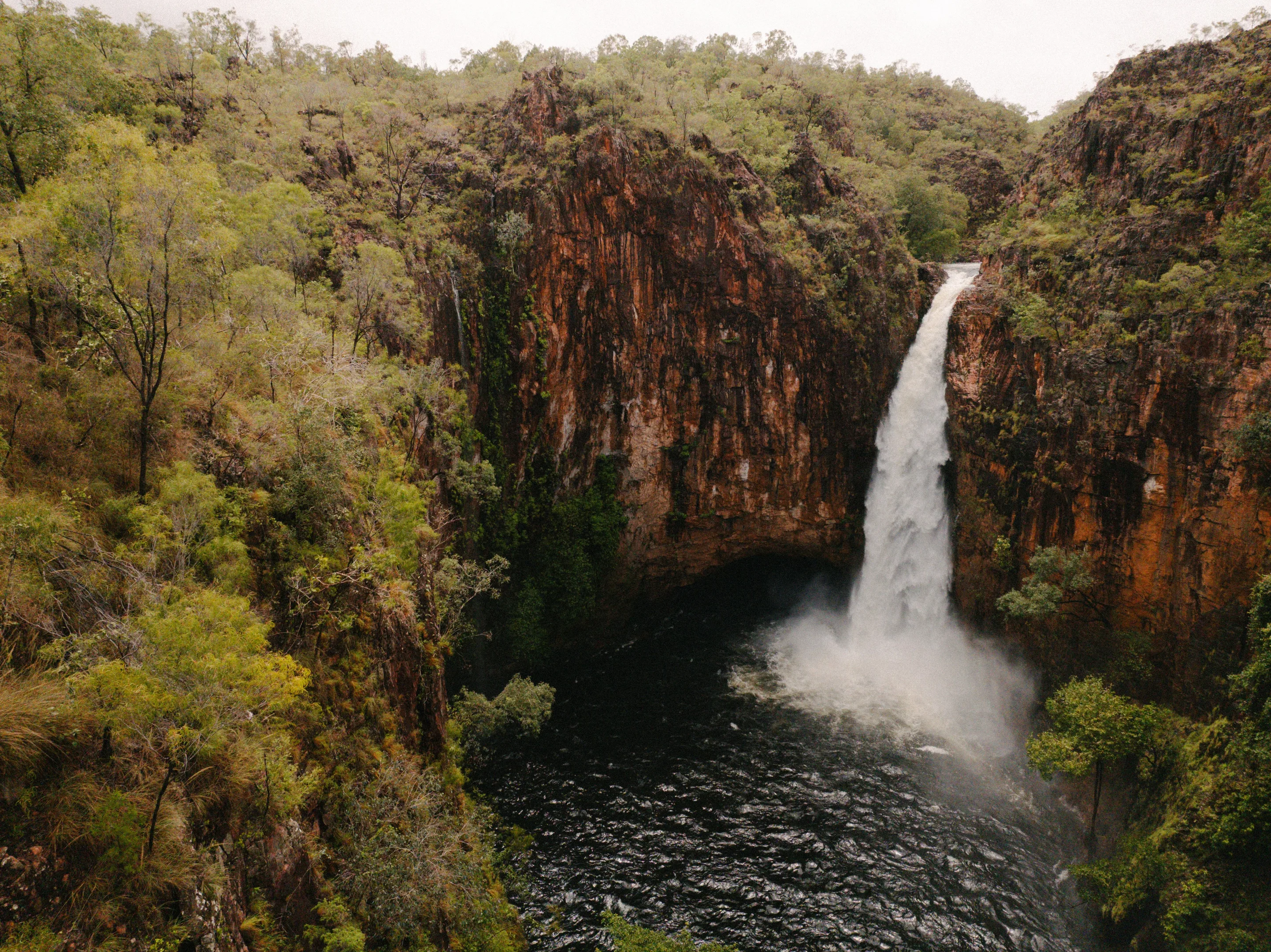
But from September through to April, something else happens. The crowds disappear, peak season prices drop to become more appealing and the landscape undergoes a transformation of its own. In the Top End, the arrival of monsoon rain turns waterfalls into torrents, billabongs swell and the bush erupts into shades of green; in the Red Centre, summer storms transform the desert into an oasis, while the balmy evenings make way for some of Australia’s most spectacular after-dark experiences.
Visiting the Northern Territory's quieter season (September to April) is an insider’s secret that most tourists completely overlook. Here are five reasons to make the trip now.
Travelling in the Territory outside its traditional peak season means more space to yourself, but the bigger draw is what that space allows.
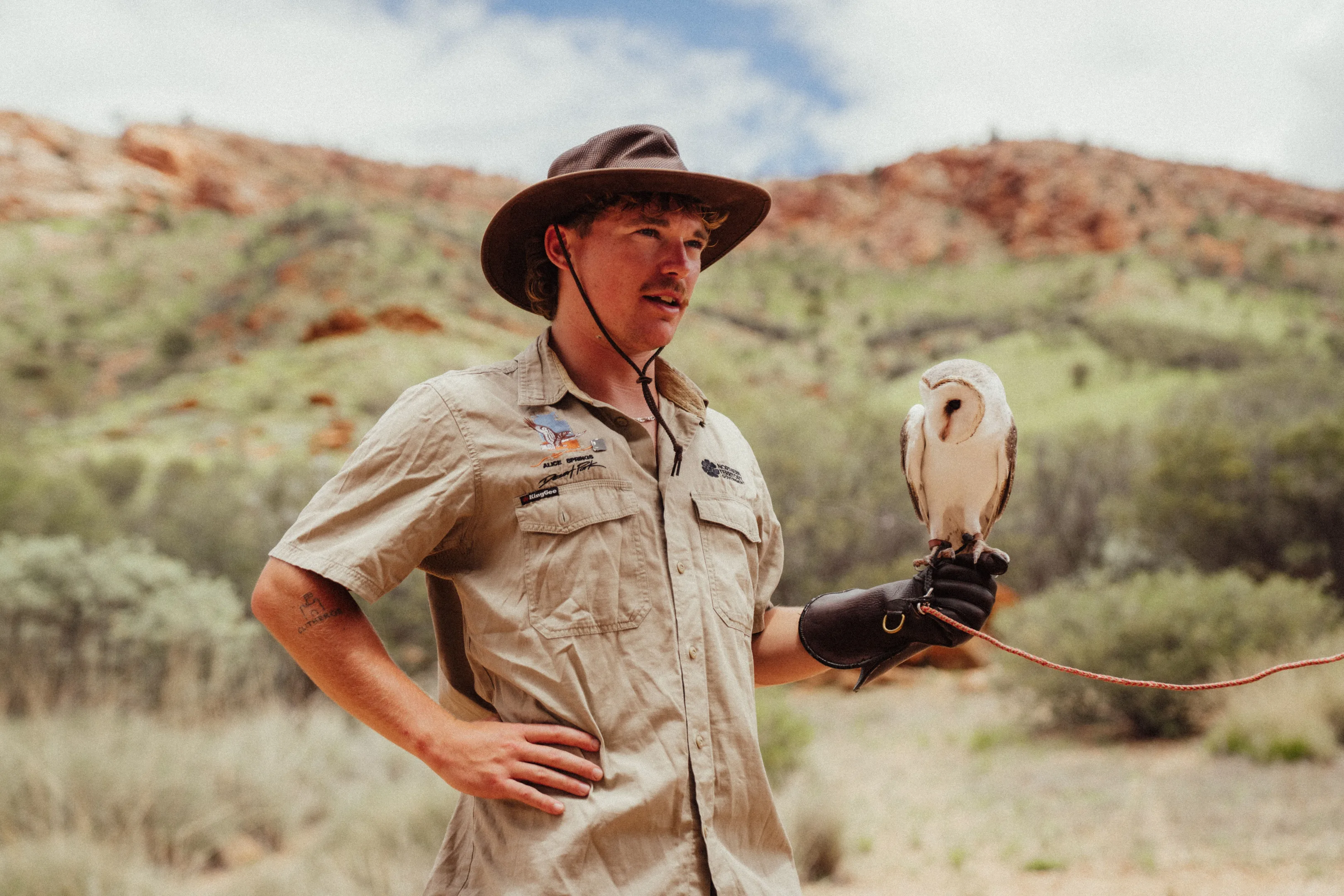
With fewer visitors around, there’s more opportunity to spend time with the people who know the place best. The Territory is home to some of Australia’s oldest continuing cultural traditions, and experiences led by Aboriginal guides offer a way to understand Country through stories, language, food, art and knowledge that can’t be replicated by ticking off a list of landmarks.

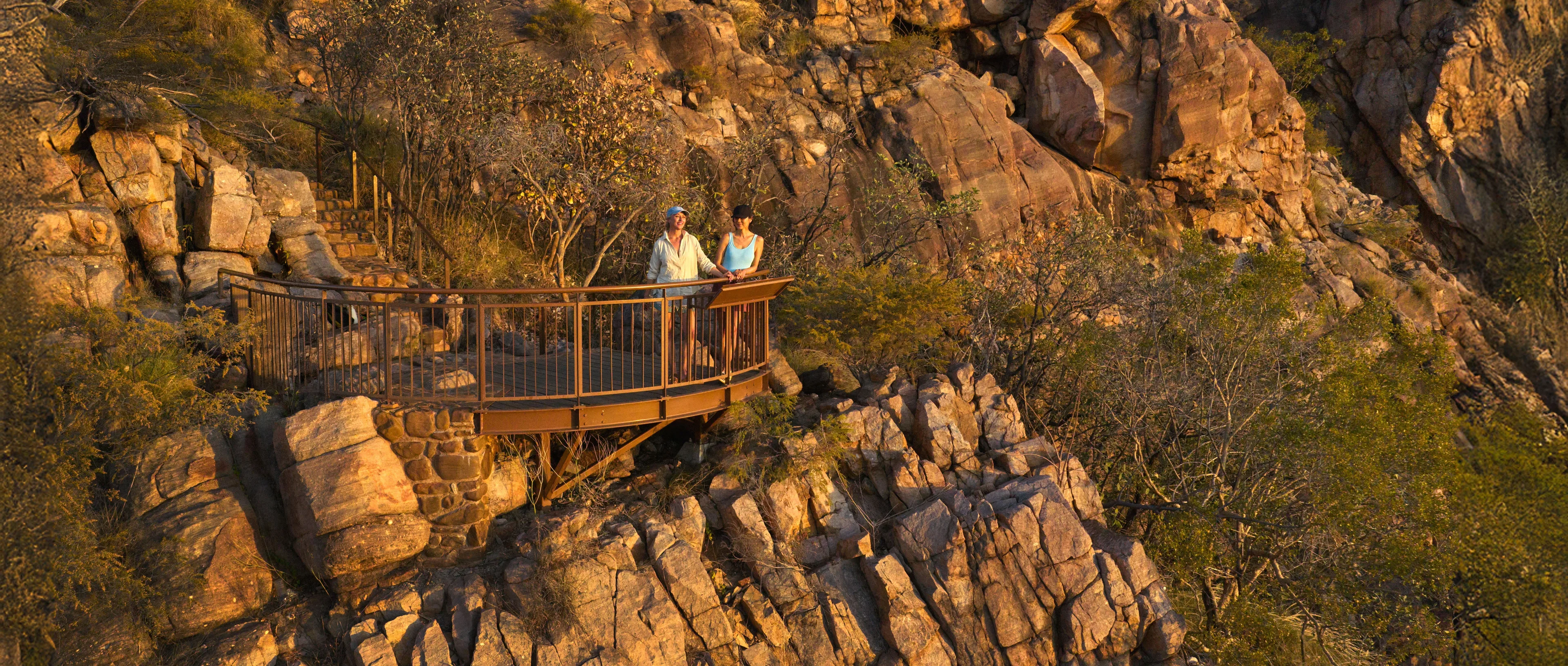
The same goes for the Territory’s landscapes. In the quieter months, a trip to a national park can feel less like battling for elbow space with sightseers and more like being immersed in a stretch of ancient country.
With fewer tourists around, you’ll also find it easier to connect with the locals at events. The Territory’s event calendar doesn’t go into hibernation when the weather changes; Darwin hosts the MXGP of Australia every September, bringing international motorcross racing to the Top End, followed by the Darwin International Laksa Festival for the month of October – highlighting the city’s diverse multicultural influence. In Alice Springs, Desert Mob festival unites hundreds of First Nations artists in a celebration of desert culture with a massive exhibition and cultural events from September 10 to October 25.
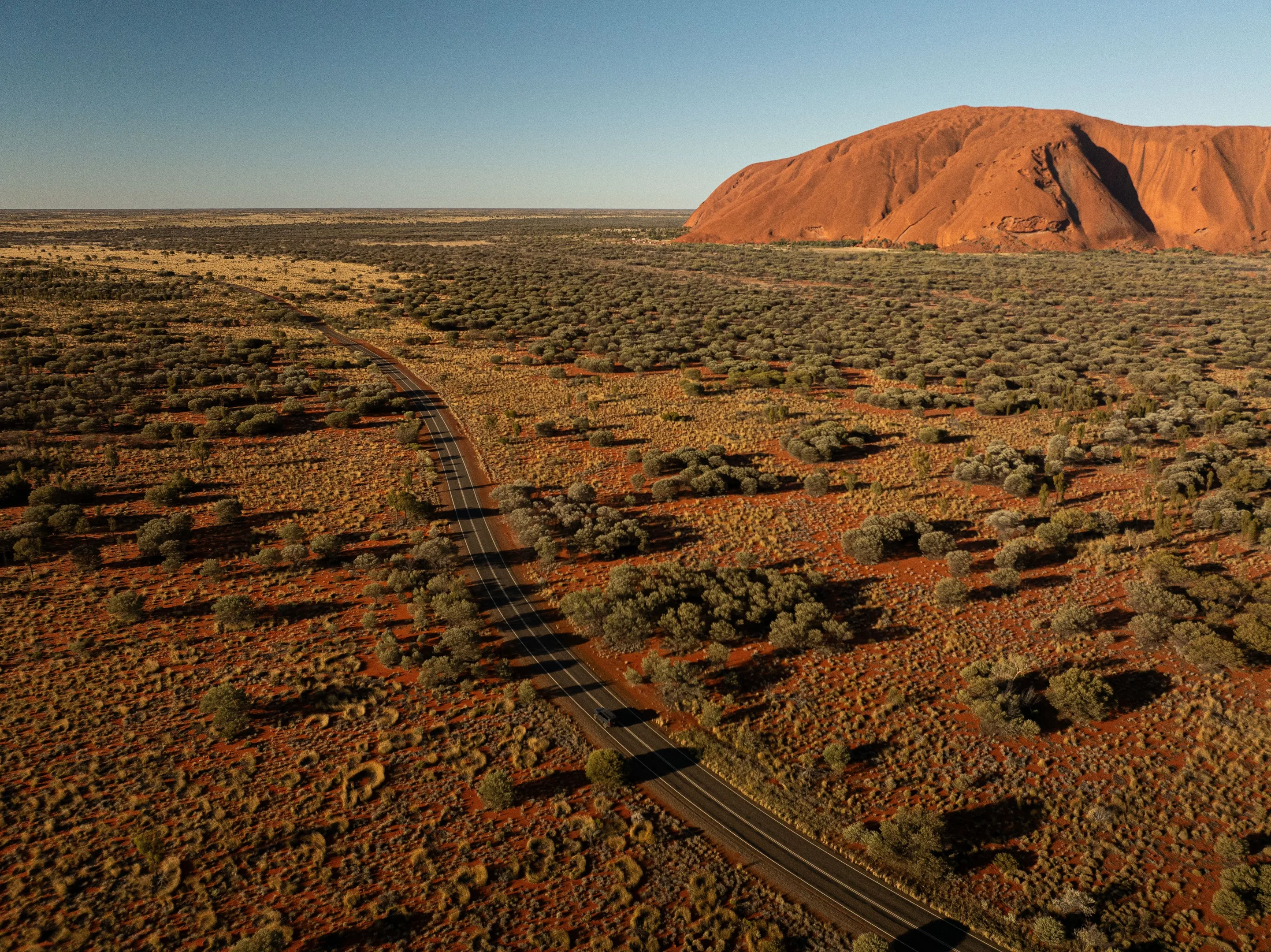
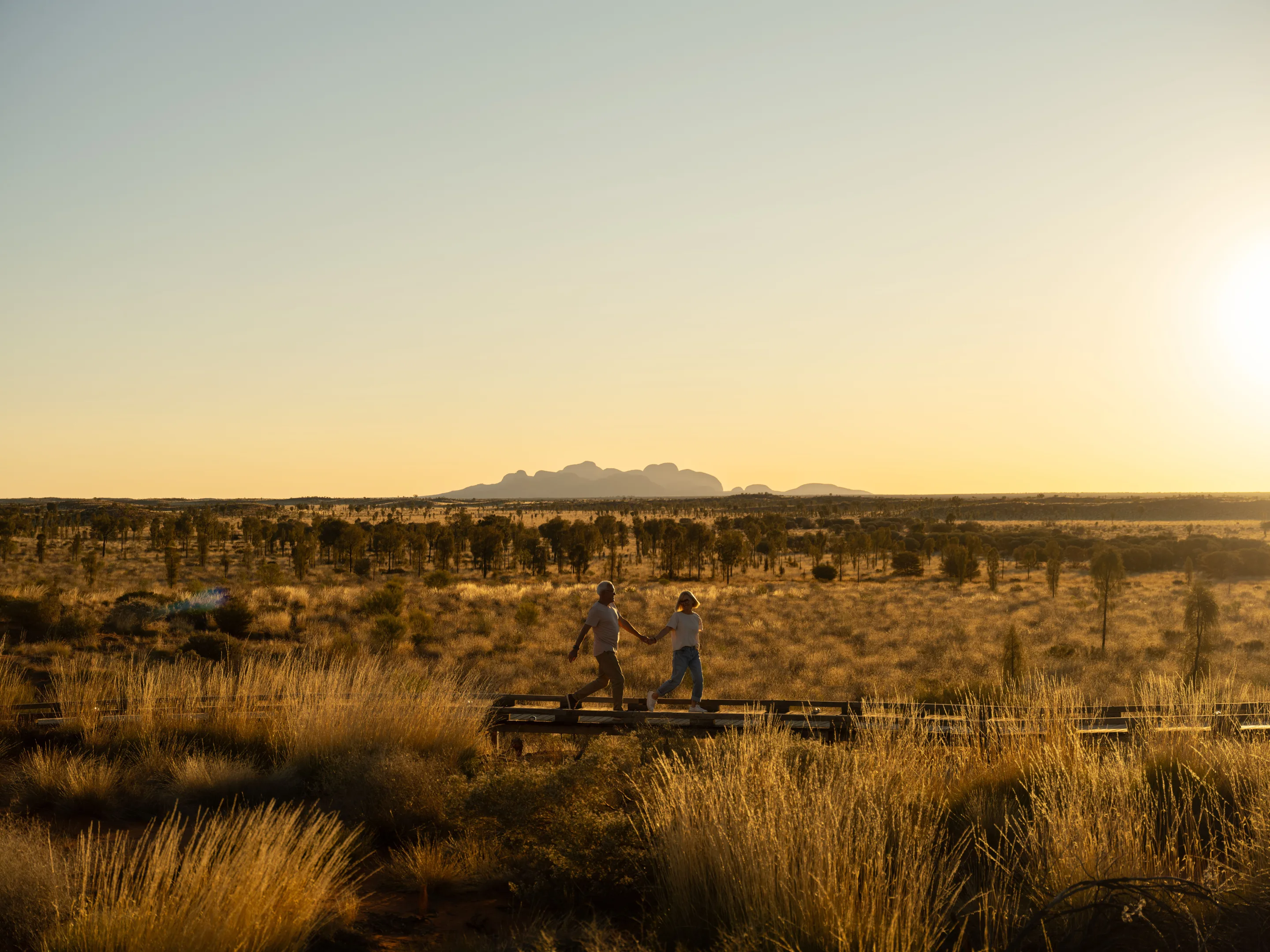
In the Red Centre, the scale of the landscape is difficult to comprehend until you’re standing in it. Endless horizon stretches out so far beyond you, it’ll leave you questioning your own significance.
Of course, Uluru and Kata Tjuta are the most renowned – seeing them without the peak-season crowds is a totally different experience. You have room to experience them at your own pace, whether that’s walking, taking in a sunrise or sunset, or joining an Indigenous-led experience that brings story and cultural context to the Country surrounding you.
Further north, Kakadu is similarly transformed by the seasons. From November through April, rain replenishes the park’s waterfalls and fills its waterways. The landscape suddenly becomes a luscious green. Some areas close during the wet season, but that’s part of the adventure and attraction: this country is not a static landscape, and seeing it change is an experience in itself.
If there’s one thing the Territory does particularly well, it’s making you want to stay out after dark.
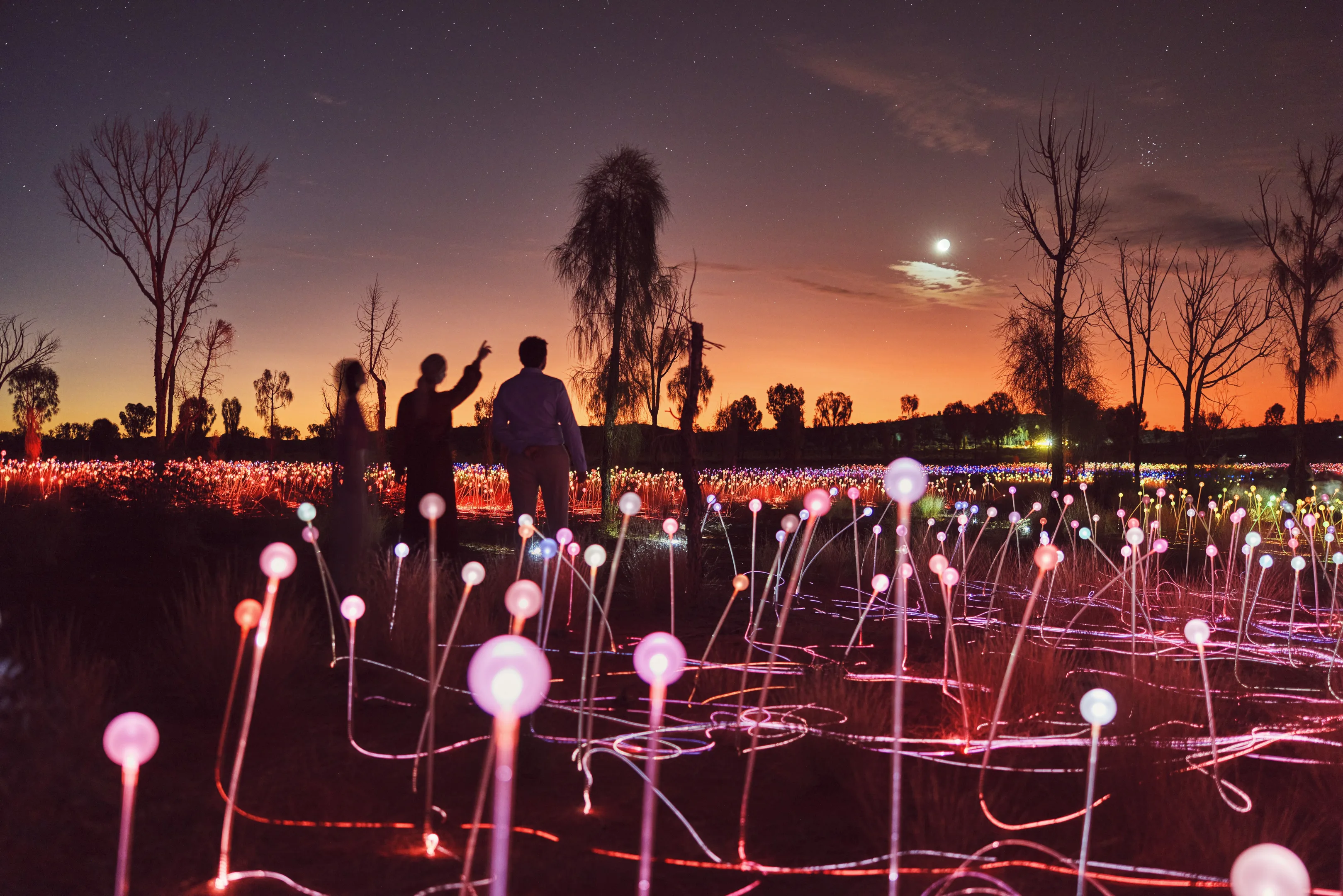
At Uluru, Bruce Munro’s Field of Light turns the desert into an illuminated landscape of more than 50,000 glowing stems. Spread across an area larger than seven football fields, the installation comes alive as darkness falls, with Uluru rising behind it. Munro has also created another large scale colourful installation Light-Towers in Kings Canyon (conveniently in between Alice Springs and Uluru).
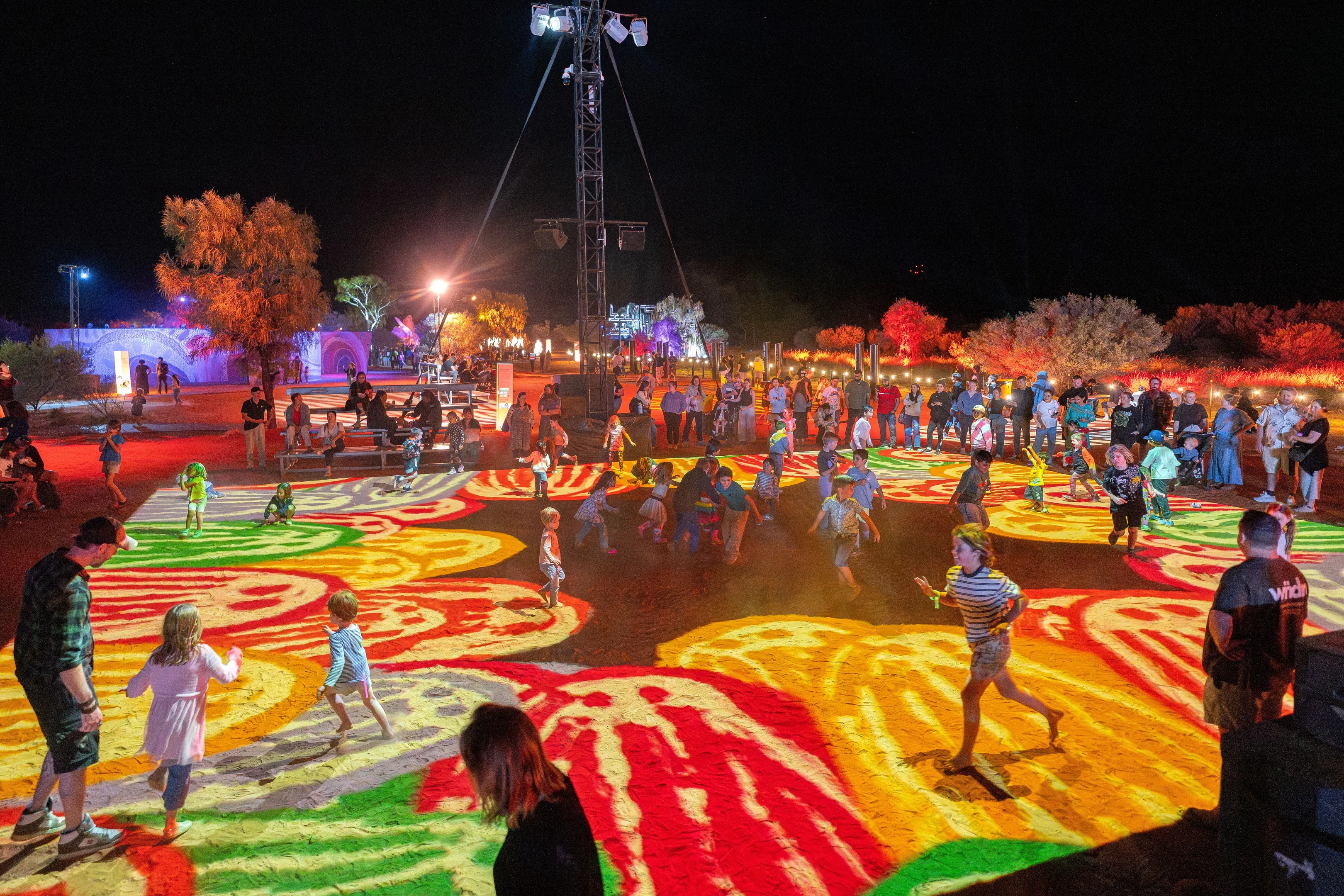
In Alice Springs, Parrtjima – A Festival in Light brings a different kind of illumination to the desert every April. The Arrernte word Parrtjima means “to shine a light on something”, both literally and in the sense of enlightenment. Held at Alice Springs Desert Park, the free festival combines large-scale light installations with music, storytelling, workshops, films and other experiences celebrating Aboriginal culture and creativity.
Nights in the Territory are an event in themselves – the night sky filled with stars in the outback is a view unlike any other. Plus, summer sunsets and sunrises are particularly spectacular.
For much of Australia, the arrival of summer means heading to the coast. In the Top End, it means getting onto the water.
The wet marks the beginning of barramundi season, especially from October to December as water temperatures rise, and then from March to April once all the run off from the rains start to settle.
There’s also a particularly lucrative reason to cast a line: the Million Dollar Fish competition returns for its 12th season from October 1, 2026, to March 31, 2027, giving anglers the chance to catch a tagged barramundi worth a million dollars. Registration is free, and fishing charters operate across the Top End, from Darwin and the Mary River to the Tiwi Islands, Arnhem Land and the Katherine region.
Even if you don’t land the big one, getting out onto a billabong or river offers a different perspective on the Territory. Crocs, birdlife and tropical vegetation become part of the scenery, while the water itself becomes the route through the landscape.
The wet season is not something to endure, but something to experience.
When the monsoon arrives, the Top End changes almost overnight. Waterfalls swell, rivers rise and thunderstorms roll across the landscape. Places that can feel stark and dusty in the dry season become lush and intensely alive.
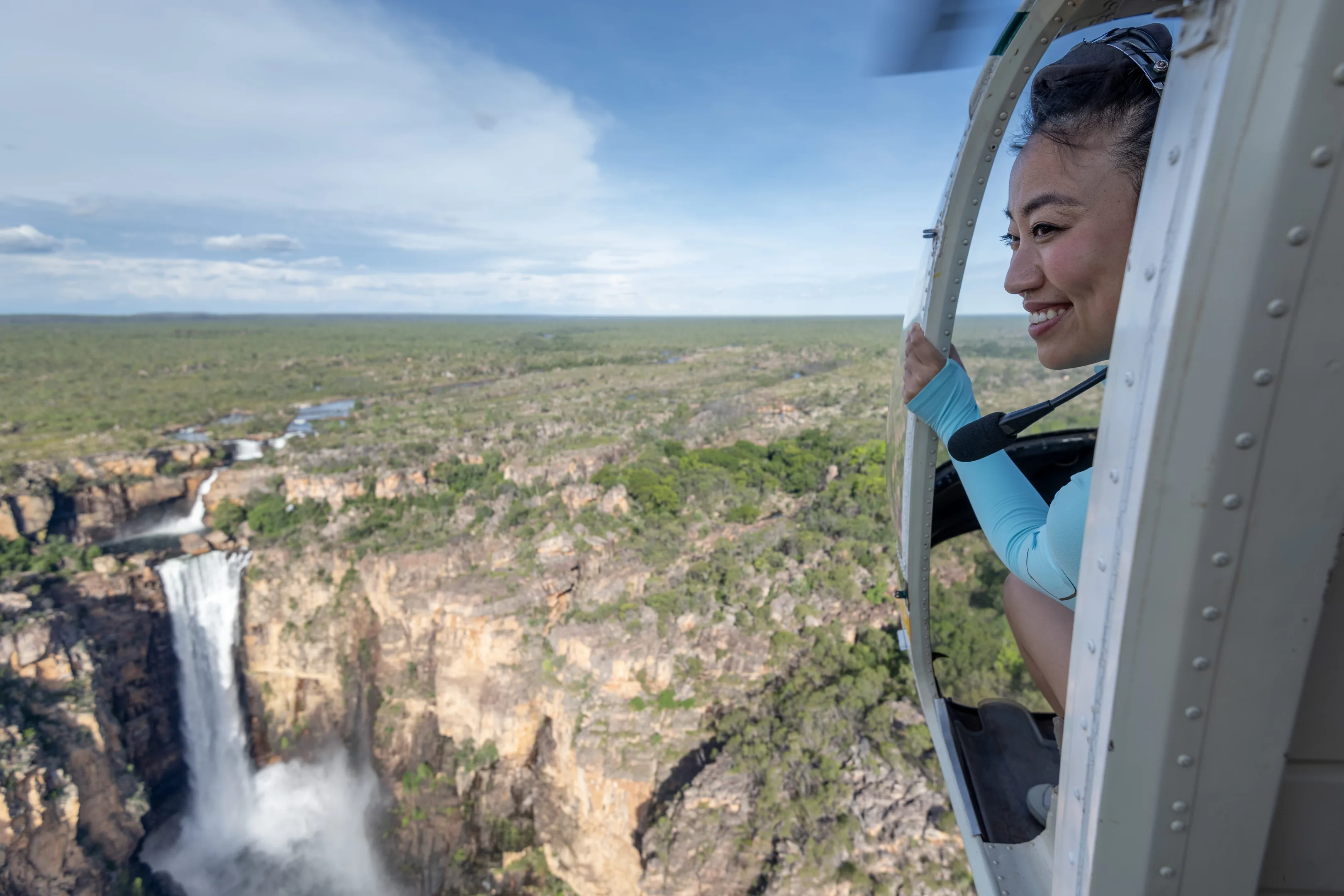
Kakadu’s Jim Jim Falls is perhaps the ultimate example of this change. Around 200 metres high, it’s one of the Territory’s most spectacular waterfalls, but during the wet season the road in often becomes impassable. You can see the falls in full glory from above though, with a scenic flight that reveals the water pouring over the escarpment and across the surrounding stone country.
The same transformation happens across Litchfield, Nitmiluk and the Top End’s other waterways, with the rain feeding waterfalls and replenishing waterholes.
The rain doesn’t stop at the tropics, either: occasionally, storms sweep across the Red Centre. Heavy summer rain creates temporary waterfalls and waterholes around Uluru, sometimes lasting weeks and attracting an explosion of life to the desert. As culturally significant places, they aren’t for swimming, but they offer a glimpse of how dramatically the Red Centre can change after rain.
The unpredictability is part of the appeal. During this period, the Territory doesn’t simply offer a rainy version of the dry season, it offers a completely different, quieter and more surreal experience across landscapes that change before your eyes.
If you’re ready to visit the Northern Territory, get some inspiration for your trip here.
This article is produced by Broadsheet in partnership with the Northern Territory.
Produced by Broadsheet in partnership with Northern Territory
Learn more about partner content on Broadsheet.

More from Broadsheet
Videos
More Guides
Recipes






-6e9e4d4cb1.webp)
-c121bced4e.webp)