Most Red Centre Itineraries Make a Big Mistake: Skipping the MacDonnell Ranges
-dc0fce47ab.webp)

-8f4b1b5736.webp)
-61bb6834a0.webp)
Words by Sophie Ranieri · Updated on 04 Nov 2026 · Published on 21 Sep 2026
Many tourists fly into or pass by Alice Springs as part of the legendary loop that connects it to Kings Canyon and Uluru, but don’t be in a hurry to leave immediately – the Red Centre’s largest town is worth exploring in its own right. Spend a few days discovering its thriving Aboriginal art scene, local food and fascinating outback history, then use it as a base to venture further afield.
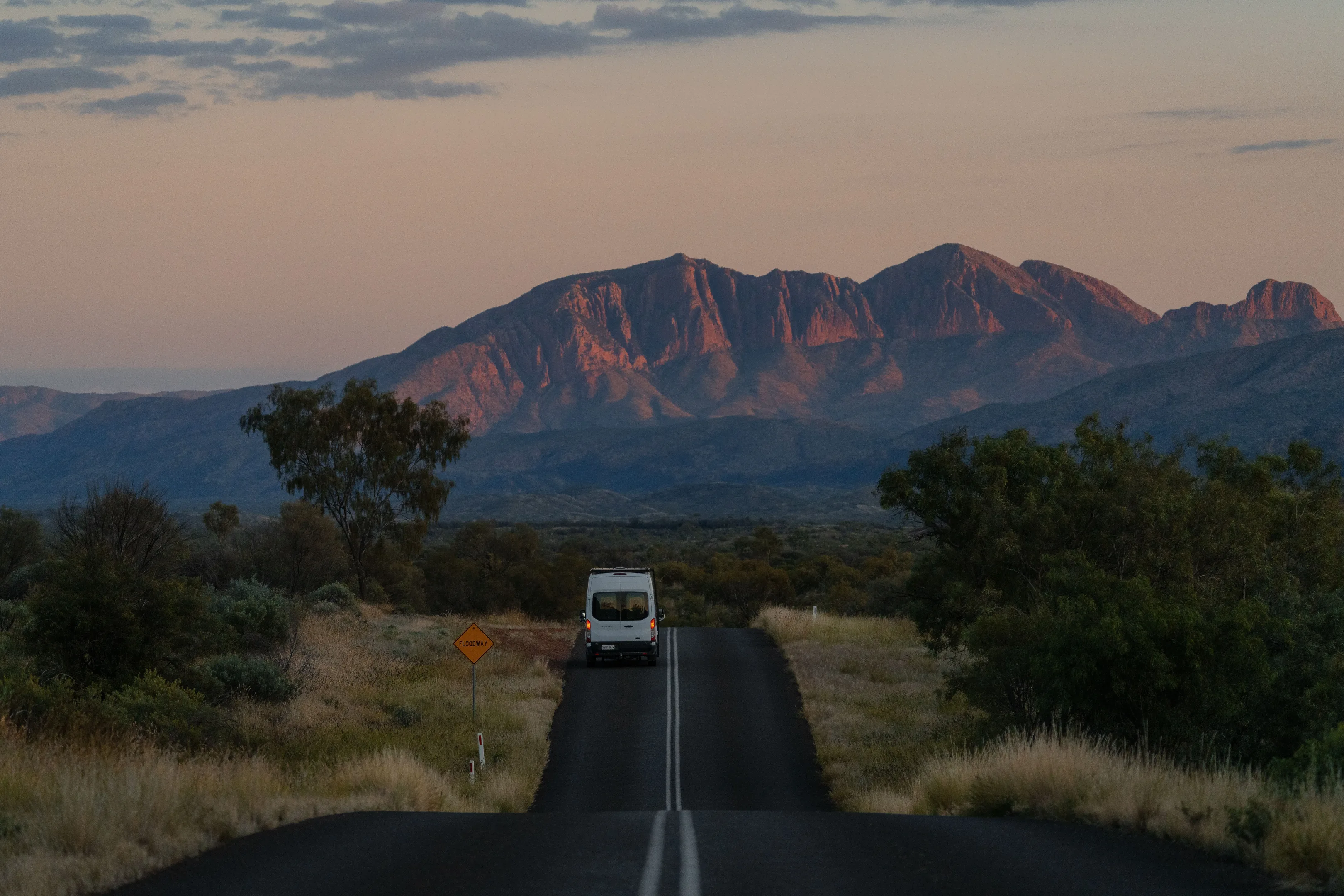
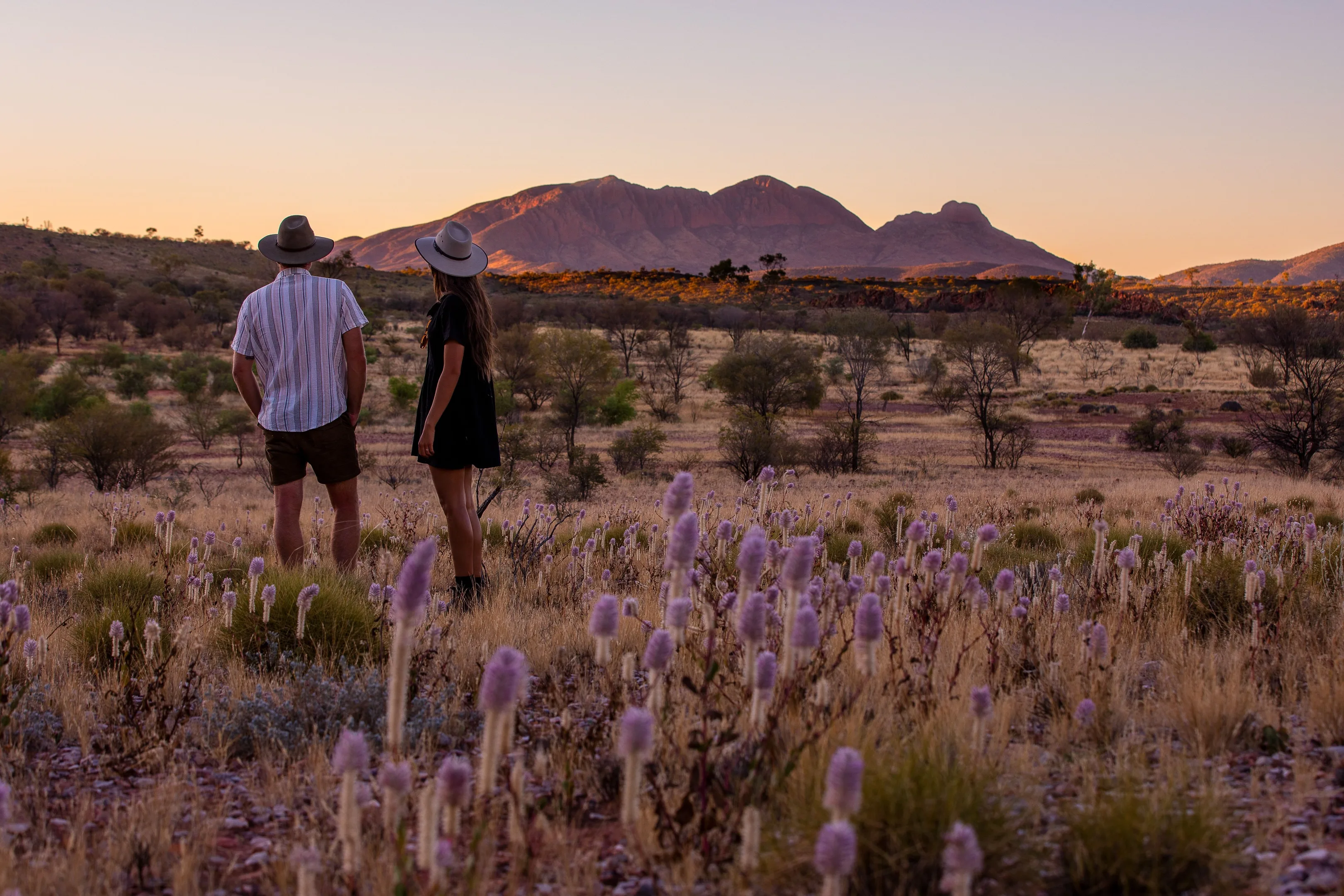
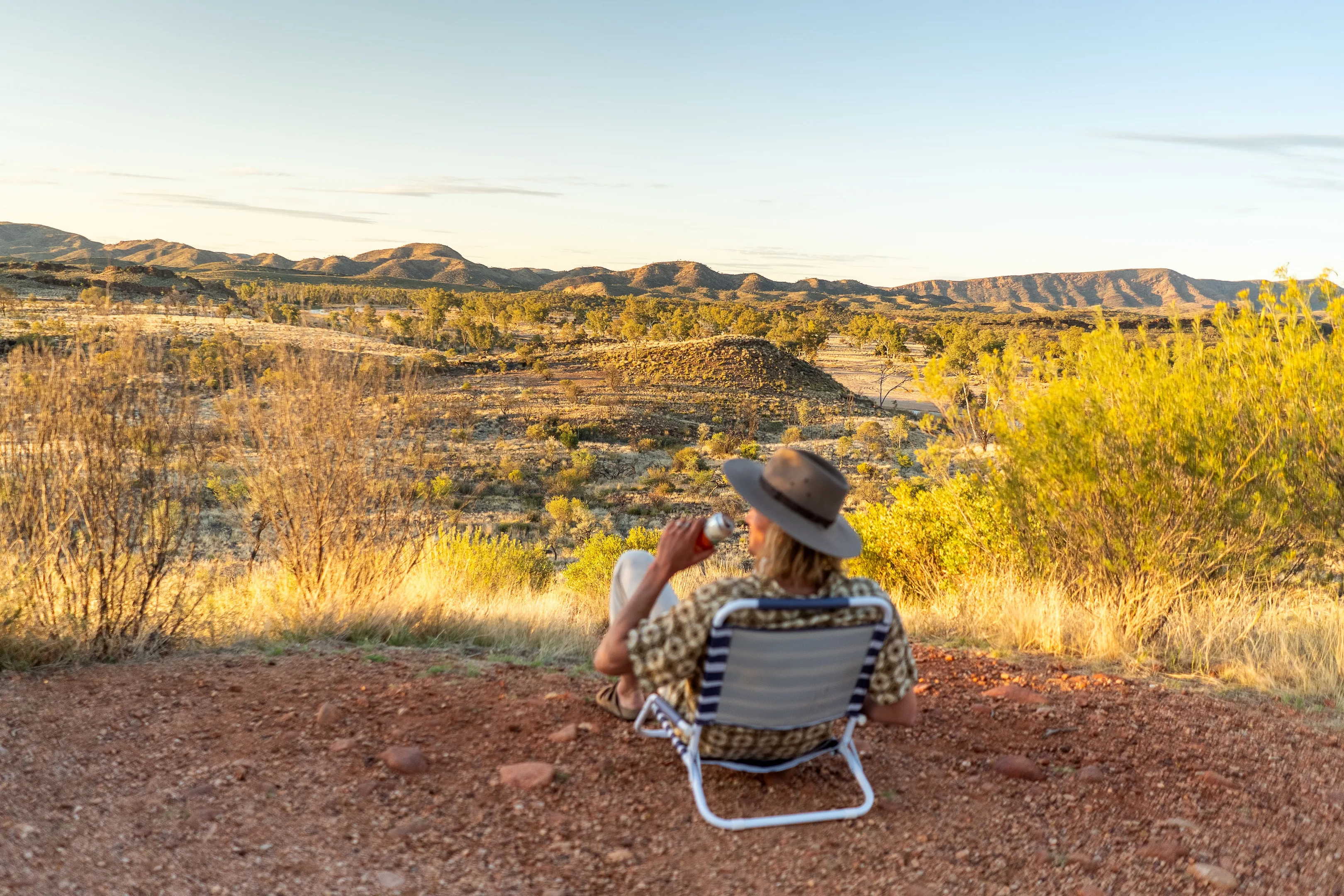
Just outside the town’s periphery are some of the most breathtaking natural sites in the desert. Drive either east or west from the town and it’s not long before you’re enveloped in the vast arid landscapes and ancient mountains of the MacDonnell Ranges, which run for hundreds of kilometres through Central Australia.
Tjoritja / West MacDonnell Ranges are renowned for the legendary Larapinta Trail, while the lesser-known East MacDonnell Ranges hide gaps, rock art, bushwalks, camping spots and Australia’s largest ghost gum. For Arrernte people, these mountains feature in caterpillar Dreaming stories, and some of the sights along the way feel like stepping directly into works by artists from the region.
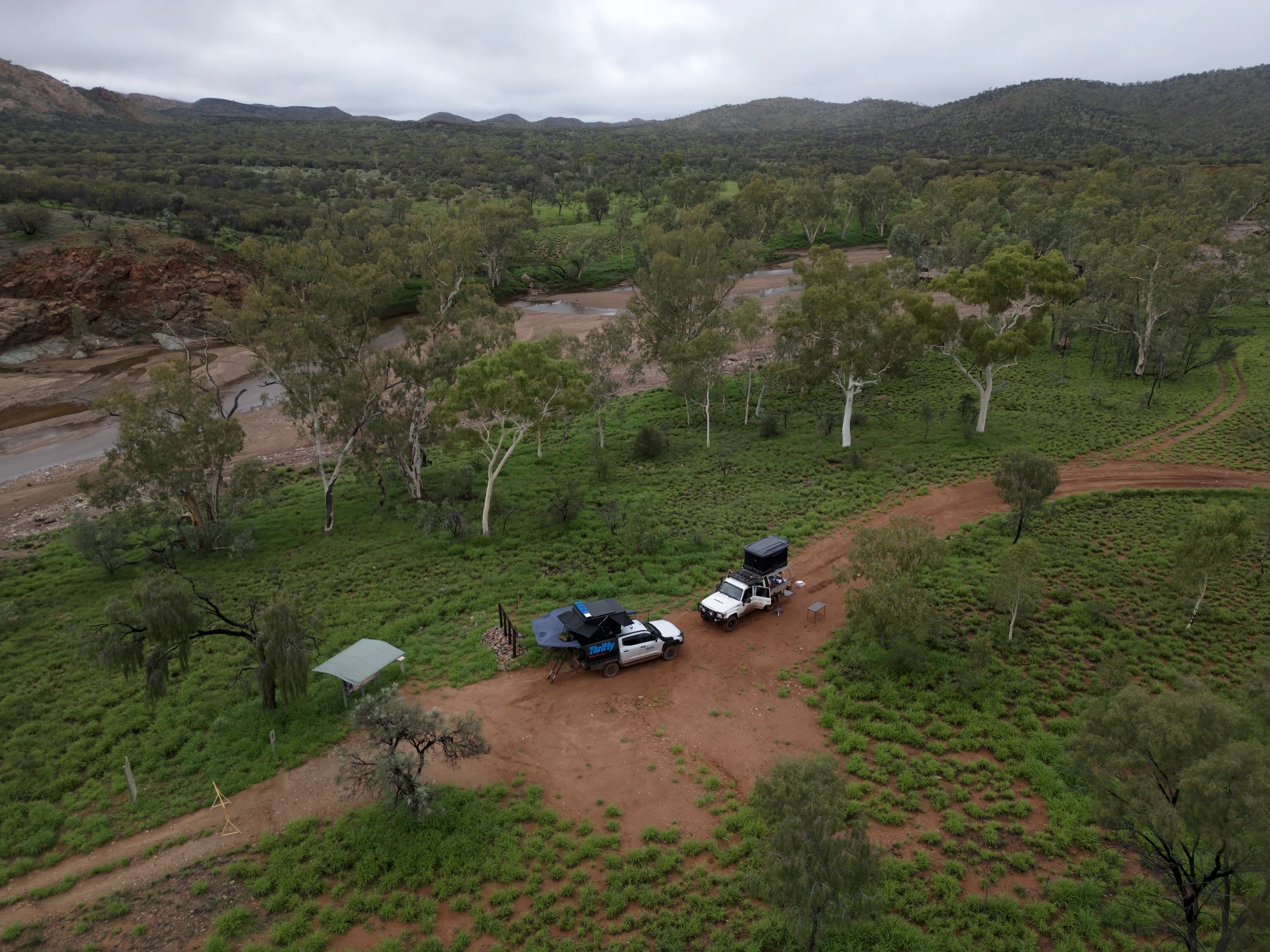
One day isn’t enough to do both sides – we recommend splitting them up, either into separate day trips in each direction from Alice Springs or staying overnight at different spots along the way. You can try and fit in as much as you can on the day trips, but carving out multiple days by spending the night in campsites in both the West and East Macs (or accommodation in the latter) means you can explore more of the ranges’ hidden gems and natural beauty.
Whether you’re searching for peaceful viewing spots, somewhere to swim or a hike, map out your perfect itinerary from the options below.
Tjoritja / West MacDonnell Ranges
Head west from Alice Springs and you’ll find yourself along the Larapinta Trail. While seasoned campers can choose to hike the whole trail over 12 to 15 days, you can still experience the best spots on a daytrip in a regular car – no four-wheel drive required.
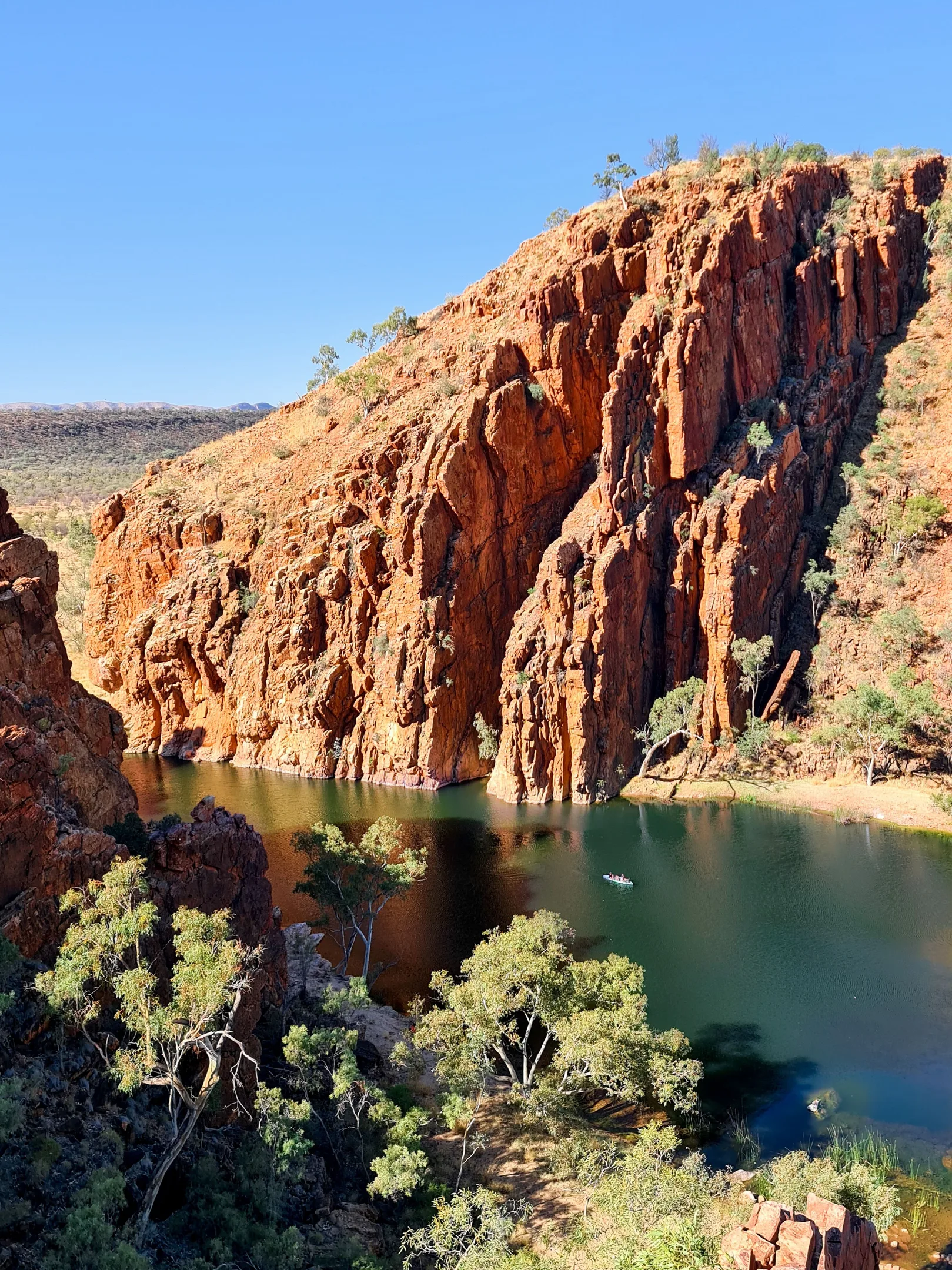
Just 20 minutes’ drive out of town, Simpsons Gap is a good place for a first taste of the terrain. Take a short and easy walk down to a permanent waterhole between two magnificent red rock faces; swimming is not permitted, but the waterhole attracts black-footed rock wallabies.
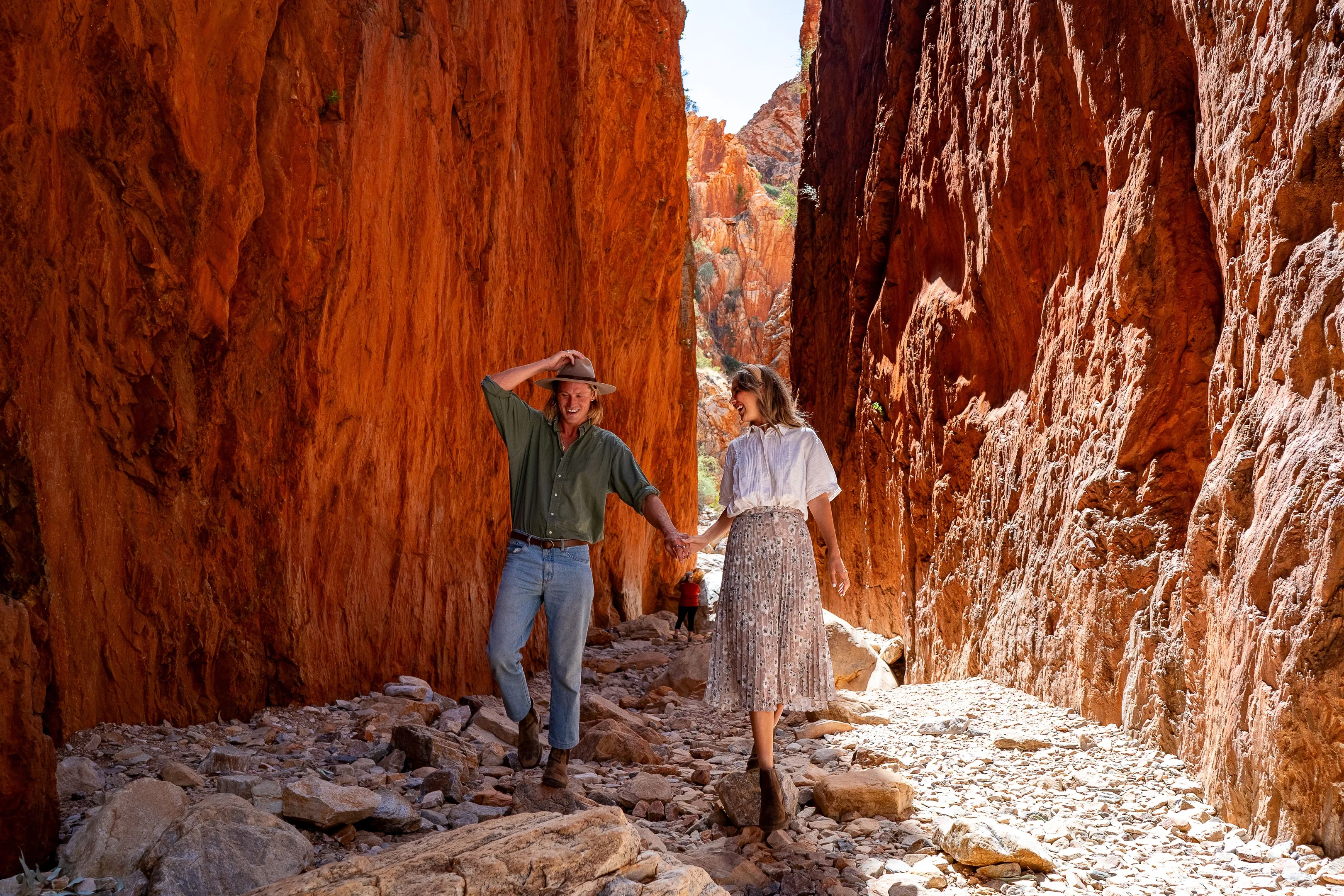
From there, Angkerle Atwatye / Standley Chasm is a sacred place of cultural significance to Arrernte people. Walking along a natural creek bed takes you to a dramatic 80-metre-tall rockface. Try to visit around midday, when the overhead sun casts an enchanting glow. You’ll need to purchase a day pass online or at the on-site cafe; there’s also a gift shop, picnic tables and barbeque facilities.
The main road, Larapinta Drive, soon reaches a fork – one turn heads down Namatjira Drive, named in honour of the late Western Arrernte artist Albert Namatjira. The road leads down to another site of artistic significance. At the Ochre Pits, you can trace cliffs coloured in bands of earthy white, yellow, orange, red and brown ochre, which Aboriginal people have collected for paintings and ceremonial body decoration for generations.
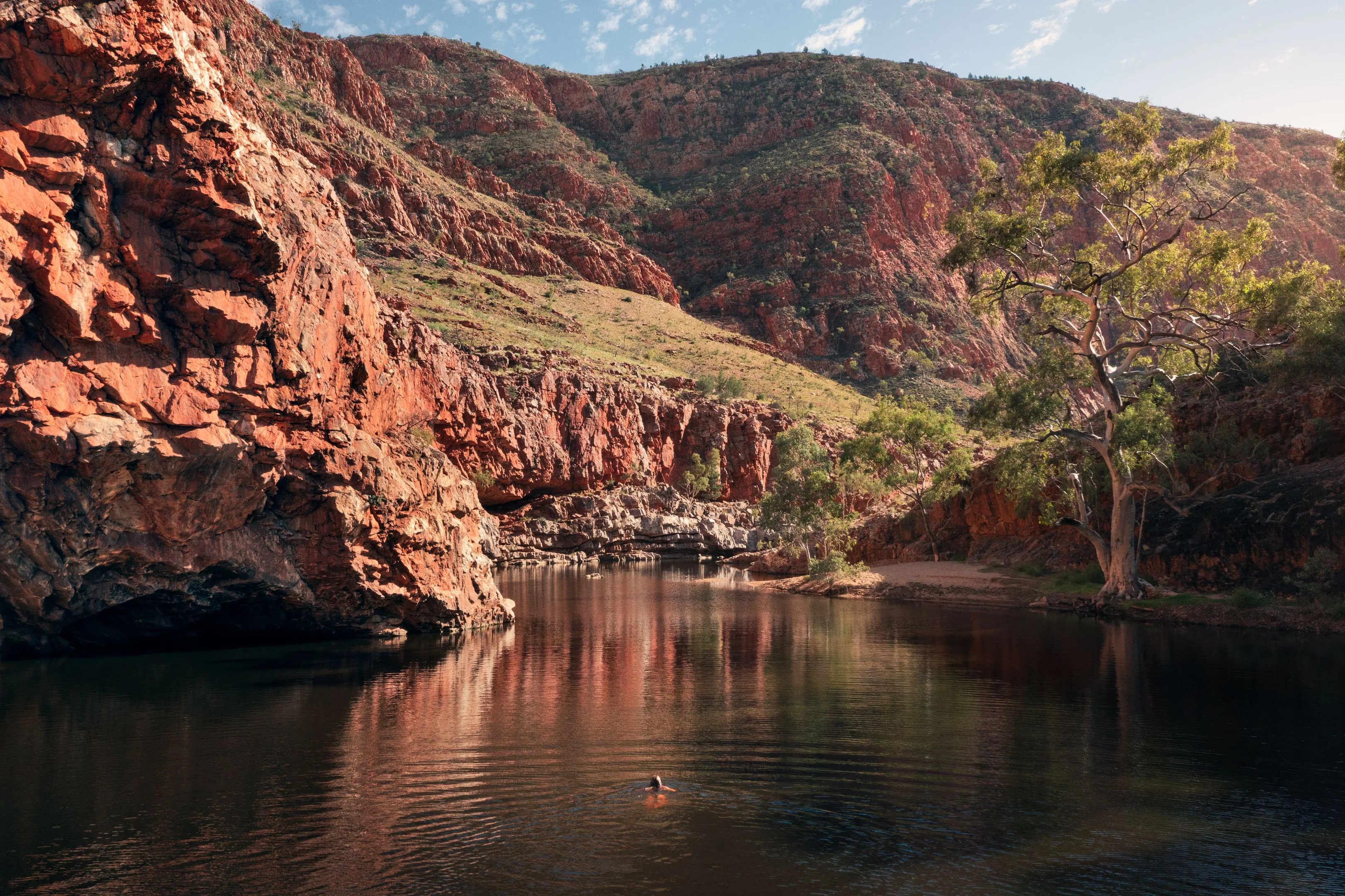
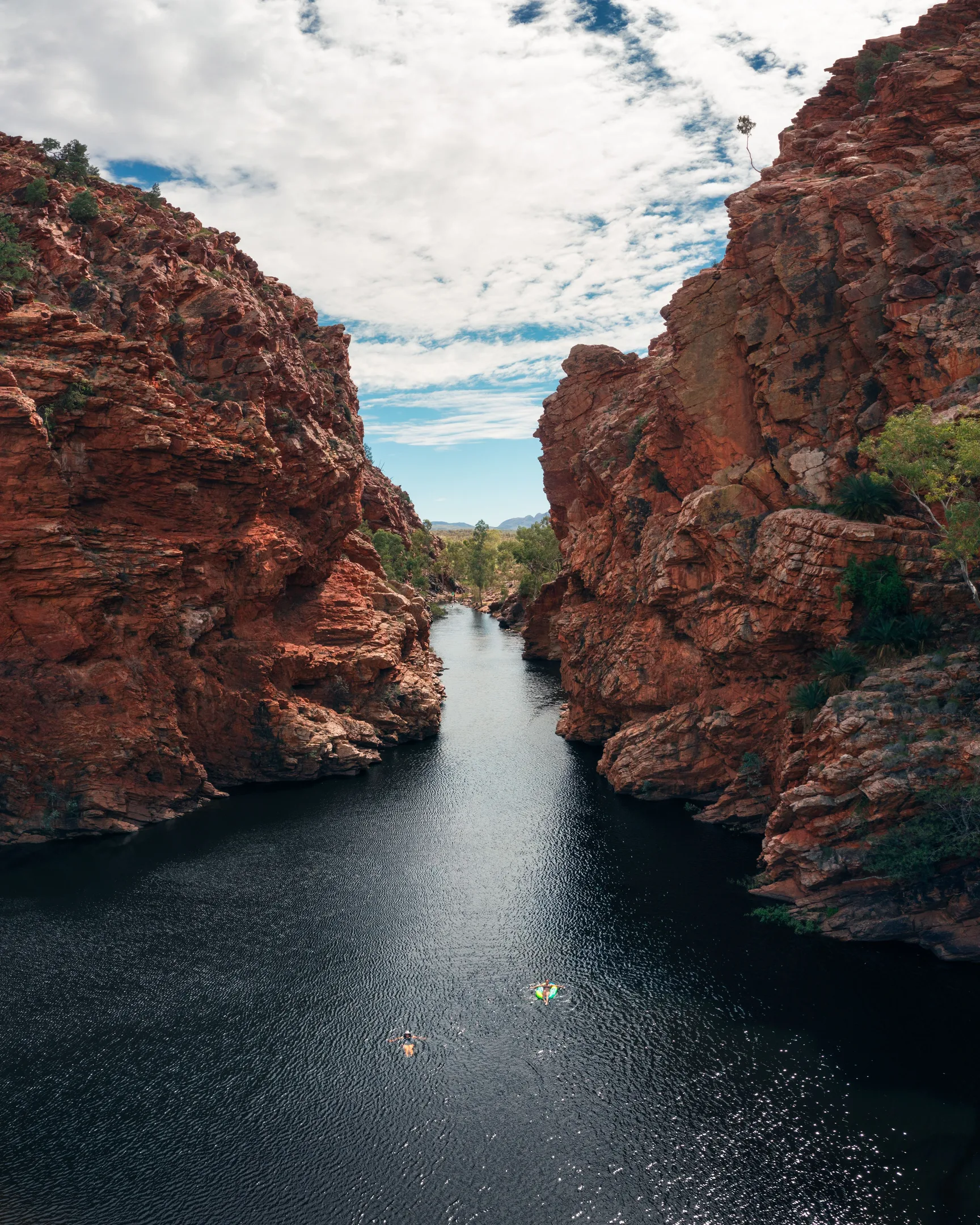
If you’re feeling the desert heat, stop at Ellery Creek Big Hole for a dip. This tranquil gorge is surrounded by rugged red cliffs and is popular with swimmers and picnickers. Redbank Gorge, a stunning chasm at the base of mighty Rutjupma / Mount Sonder, is another option for a swim, but you’ll need a four-wheel drive to access it. Glen Helen Gorge, a great viewing spot and swimming hole, slowly reveals itself on an alternate walking trail from the Glen Helen entry road. Be wary: these gorges are usually icy cold, so don’t underestimate the temperature. Bring a floatie to help you enjoy the water while steering clear of the chill, and a towel to quickly warm up after your dip.
The West Macs stop that has it all is Ormiston Gorge. Located 135 kilometres west of Alice Springs, Ormiston offers walks of different difficulties, a near-permanent waterhole ideal for swimming and a kiosk. You can head straight for a swim just 500 metres from the kiosk, or try the three- to four-hour Pound Walk first. This circuit crosses rocky slopes and comes back via the main waterhole. It can require a short swim through deep, cold water, so don’t start it if you’re not prepared to swim. For a dry alternative, the Ghost Gum Lookout is a 1.5-kilometre loop up the gorge’s western wall. From the lookout, you can join the longer 2.5-kilometre Ghost Gum Walk, which ends in the gorge itself. You can hike back to the waterhole, but you may need to scramble over some boulders.
East MacDonnell Ranges
The East Macs are quieter than their western counterparts, but that’s part of the appeal. It holds deep significance for the Eastern Arrernte people, and their rock art can be found at multiple sites – some engravings are estimated to be 10,000 years old. The absence of light pollution also makes it ideal for dark sky photography, with some of the clearest skies in the country.
There’s a sealed road for the first 75 kilometres, which’ll take you to a few spots, but a high-clearance four-wheel drive is recommended to experience the ranges at their best.
Stop one is Yeperenye / Emily and Jessie Gaps Nature Park, just 10 kilometres out of Alice Springs on the Ross Highway. Anthwerrke / Emily Gap is a sacred site where the caterpillar beings of Mparntwe originated, and you can see a large rock painting depicting the caterpillar Dreaming. The 7.2-kilometre Yeperenye walking and cycling trail connects Emily to Atherrke / Jessie Gap.
Another place of great importance to Eastern Arrernte people is Corroboree Rock. Formed 800 million years ago, this dark grey column of dolomite is a sacred men’s site. And a 30-minute drive from there is Trephina Gorge Nature Park, with its awe-inspiring cliffs, sandy creek beds and a choice of short walks; make sure to pull in at Australia’s largest ghost gum – easier to miss than it sounds.
It’s a nine-kilometre drive into Trephina Gorge from the sealed Ross Highway, with the last five kilometres on a gravel road. Experienced walkers can tackle the nine-kilometre Ridgetop Walk to John Hayes Rockhole, or you can drive to this popular swimming spot with a high-clearance four-wheel drive. Be aware that the rock hole and other Trephina Gorge waterholes can evaporate after long dry spells.
From there, Arltunga Historical Reserve showcases Central Australia’s first official town, born out of a gold rush in 1887 when Alice Springs was little more than the Overland Telegraph Station. It once housed 300 people – now, you can view the remains of mines, old miner’s camps and stone buildings. The road to Arltunga includes 33 kilometres of gravel road – if you don’t want to drive back just yet, Arltunga Eco Pub & Bush Retreat lets you camp or glamp, with pools and a restaurant for a different vibe of outback exploration.
For those with time, gumption and a high-clearance four-wheel drive, Ruby Gap Nature Park brings you to the remote eastern edge of the MacDonnell Ranges, 150 kilometres out of Alice Springs. With no marked walking tracks, much of the park’s terrain is very rugged and only suitable for experienced bushwalkers. Allow a full day and come prepared for a wilderness experience.
All this beauty, culture and history is conveniently on the doorstep of Alice Springs, but it’s important to plan your MacDonnell Ranges escapes before you’re on the road and out of range. Check the Northern Territory Government website for park conditions and whether you need a permit or NT Parks Visitor Pass for certain areas. Always bring lots of water, sun protection and let someone know where you are before starting a hike.
Alice Springs and beyond
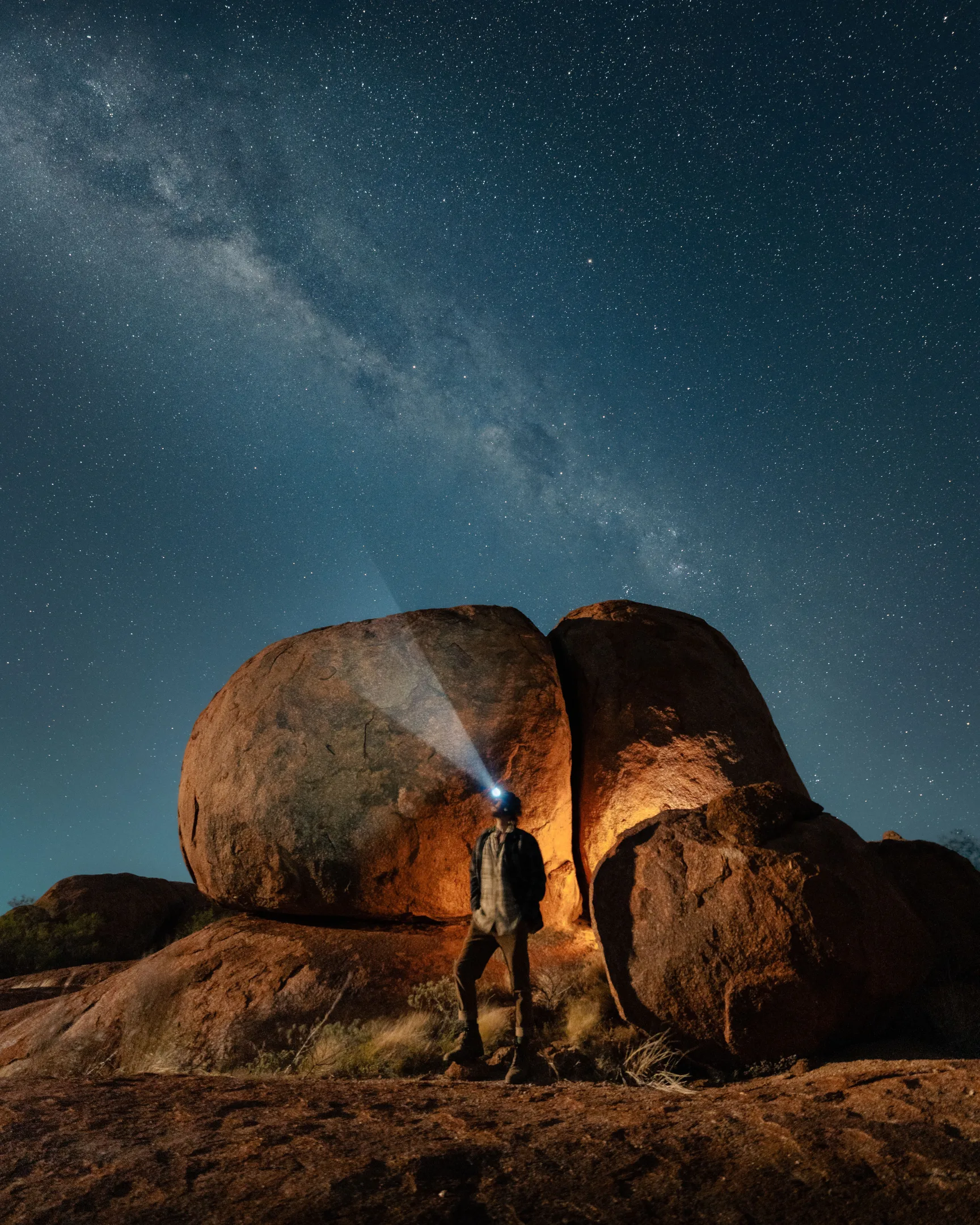
Aside from being a good base to explore the Macs from, Mparntwe / Alice Springs is worth spending a few extra days. From here you can head north to Karlu Karlu / Devils Marbles and explore some of the hidden gems of the Barkly regions. Or you can extend the trip further by dedicating a trip to Kings Canyon, or even doing it as part of the Alice Springs, Kings Canyon and Uluru legendary loop. Whatever your Central Australia visit looks like, check out our hub for more itineraries and travel inspiration.
This article is produced by Broadsheet in partnership with Tourism Central Australia.



MORE FROM BROADSHEET
-8e7567febd.webp)
-4e20a4077b.webp)