Home & LifestyleThese Brutalist Pet Bowls Are More Akin to Modern Art


Words by Alice Jeffery · Updated on 26 Oct 2026 · Published on 19 Oct 2026
Dog-friendly stays, interactive tech that keeps cats entertained, custom canine meal subscriptions that read like gourmet menus – pets are increasingly treated to the finer things in life. And there’s a $33 billion dollar industry to back it up, too. As demand for “human-style” pet care grows, premium nutrition, personalised services and considered accessories are becoming the norm.
For Sabi Pets co-founders Nicholas Gala and Antonio Inzitari, food and water bowls were an overlooked corner of the market. “We wanted to strike a happy medium between something that looks really beautiful but is also ergonomic for the pet using it,” Inzitari says.
After years of hiding his cat’s blue plastic bowl in the butler’s pantry, Inzitari began looking for a more aesthetically pleasing alternative. What he found often fell short on functionality, too. “The market offered two choices: cheap and disposable, or beautiful but never designed with the pet in mind,” he says.
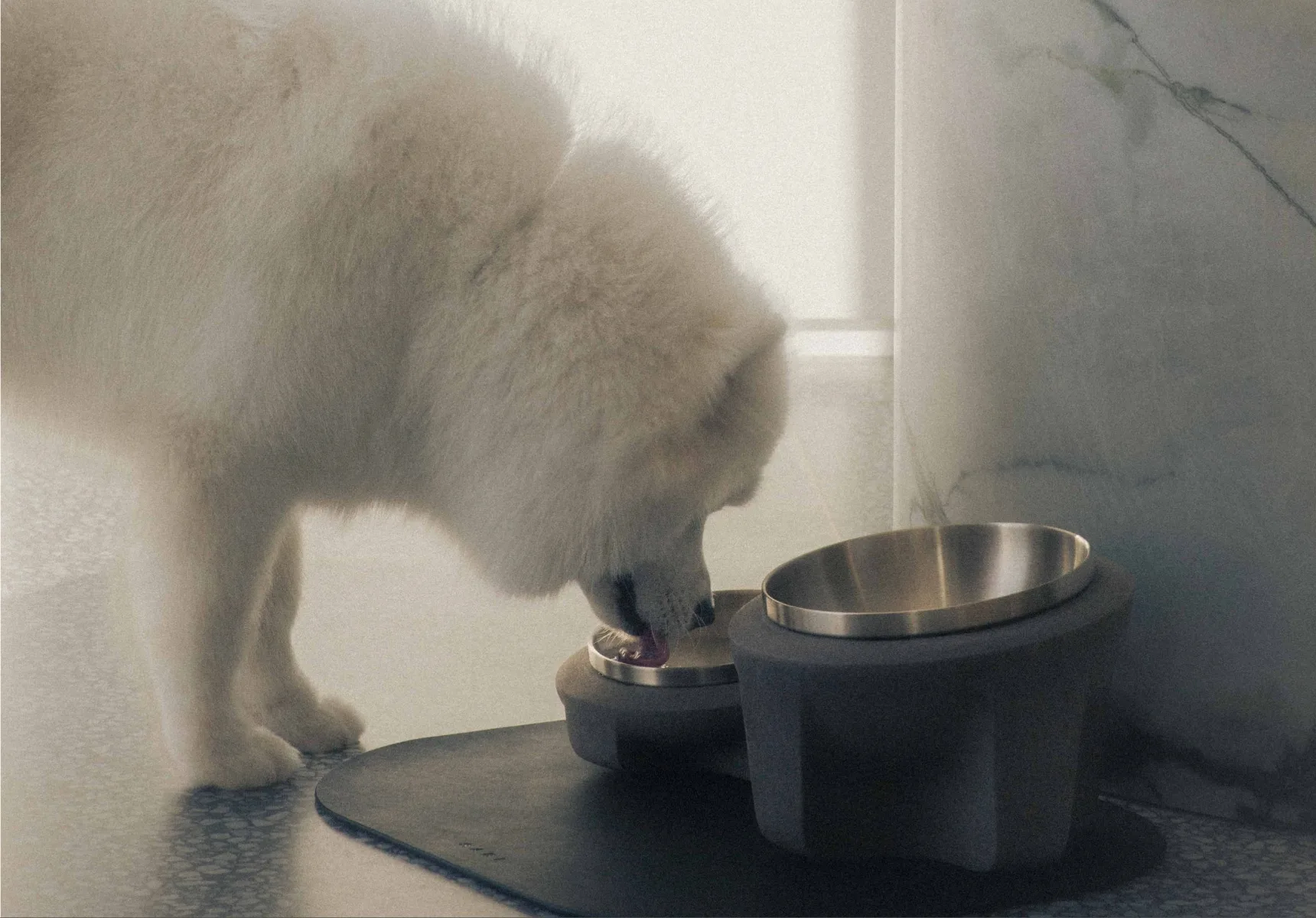
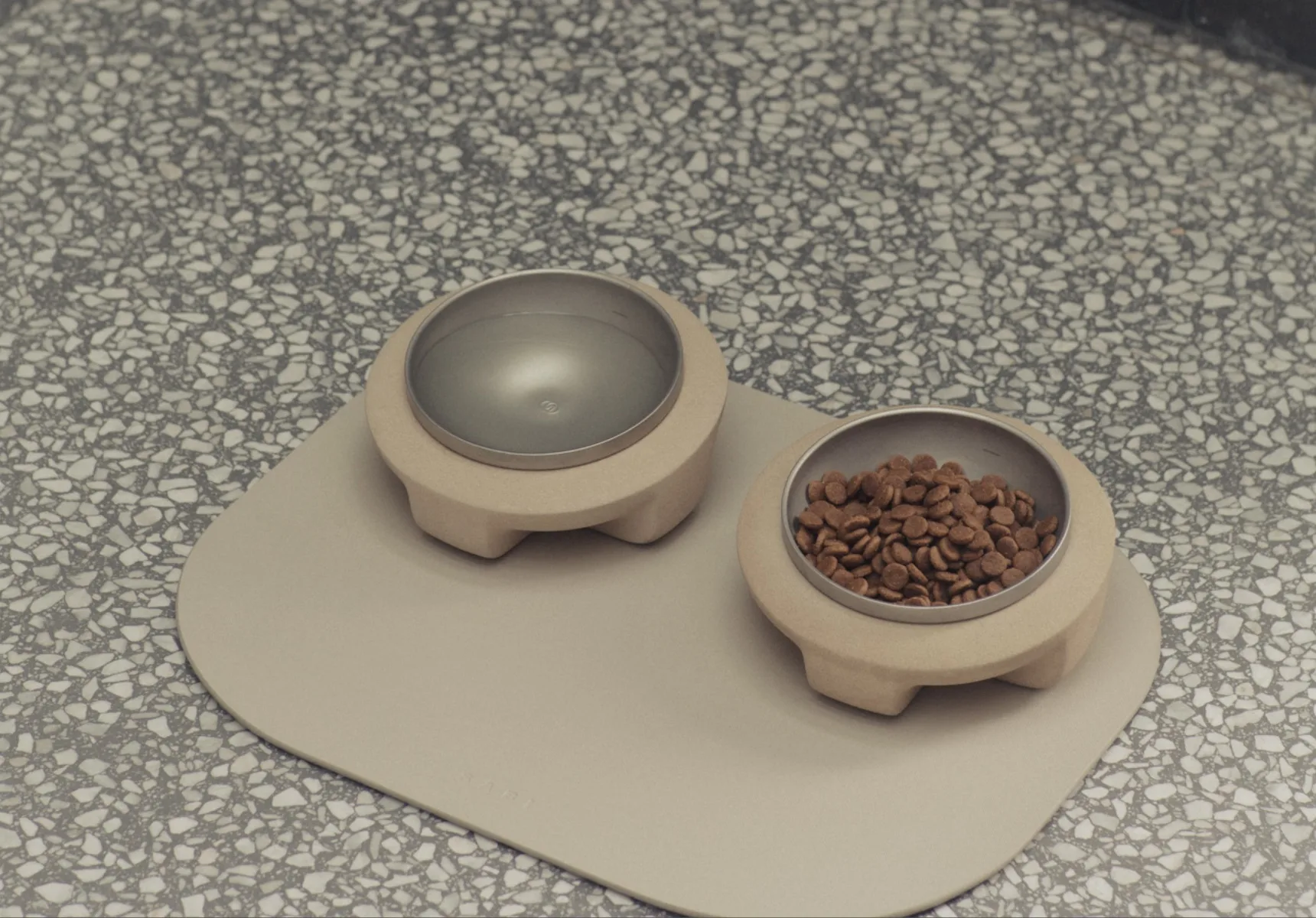
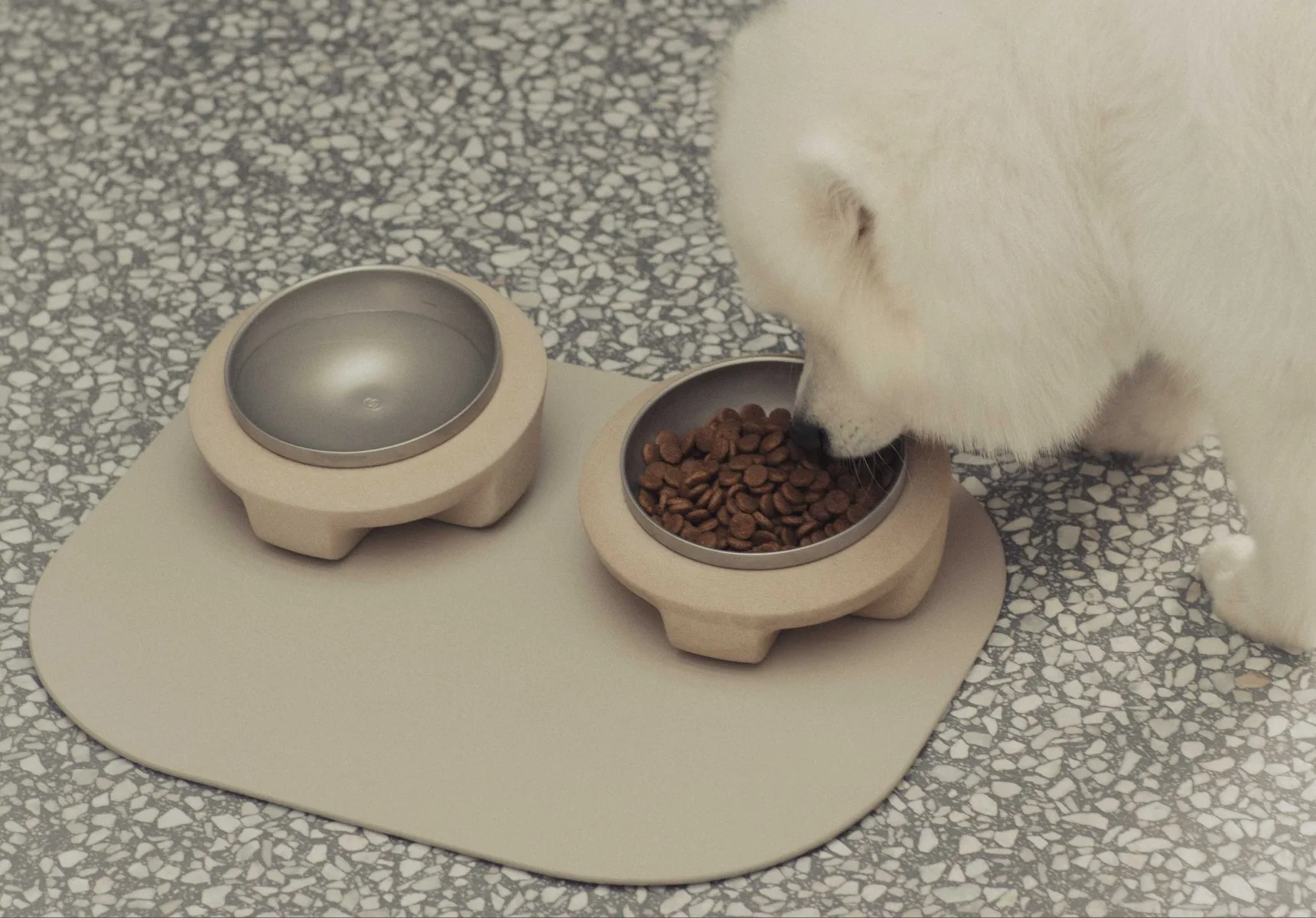
The duo launched Sabi in 2025, partnering with Redfern-based design firm Vert Studio. Drawing on brutalist architecture and minimalist design, they developed the brand’s first product: the
About the author

The win reinforces Inzitari and Gala’s belief that a pet bowl on the floor deserves the same thought as the chair beside it. “The objects our pets live with should be held to the same standard as everything else we choose,” Inzitari says. “The Good Design Award told us the design world is ready to take that seriously.”
Each vessel is handmade by Shapeshift, an Australian design and engineering company, specialising in building facades, stadiums and public sculpture. A pet bowl was a first for them.
“We needed that skill, because concrete is about the worst material you could choose for something that holds water,” Inzitari says. “We solved its porosity inside the mix itself, so there’s no coating to wear off, and it showed no staining or odour in testing, even with oil-based food.”
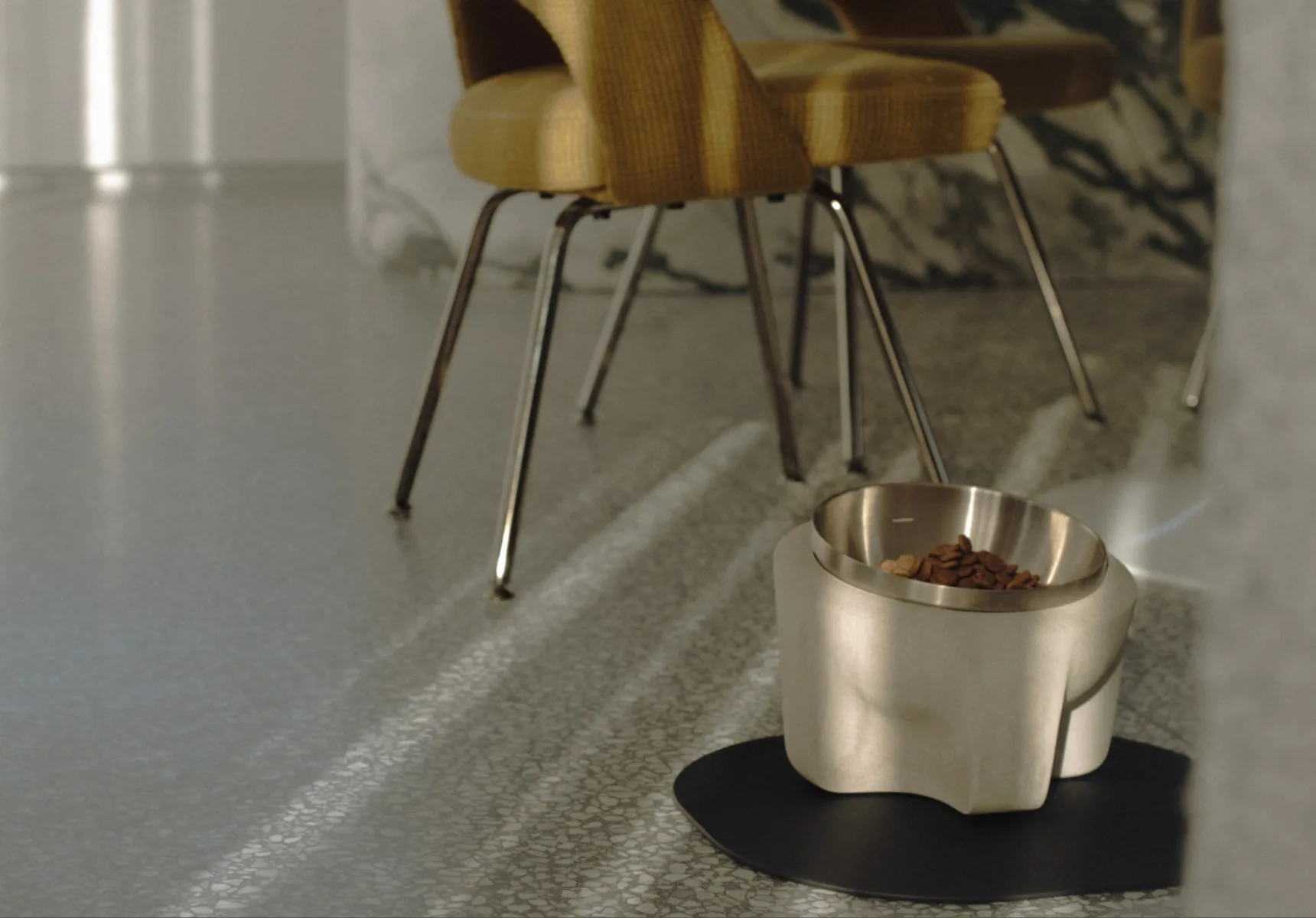
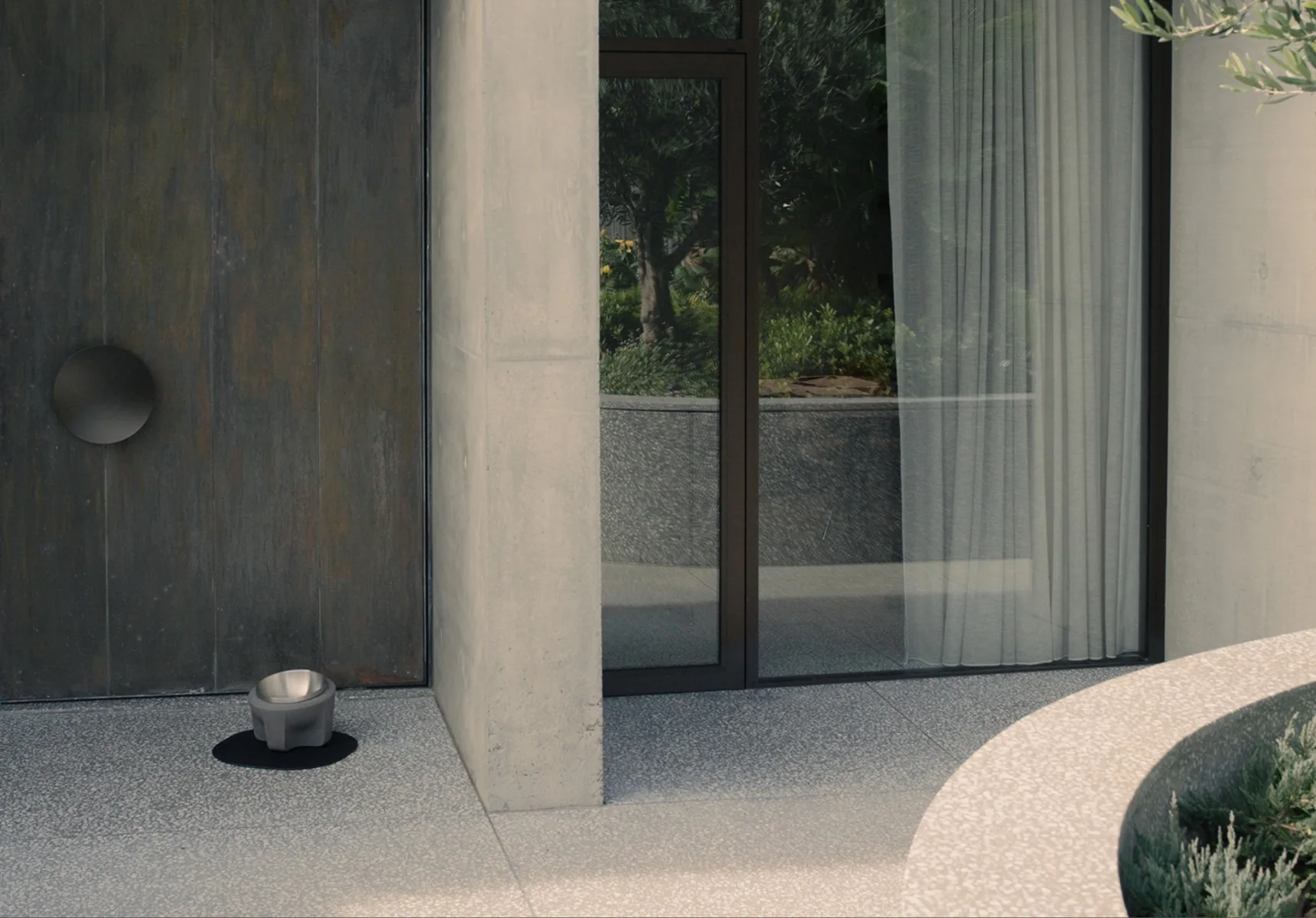
Why use concrete, given those drawbacks? After trialling with sand-casting, machined marble and solid timber, the pair landed on cast concrete for its weight and bold look. “There’s no issues with pets knocking over the bowls and making a mess,” Gala says.
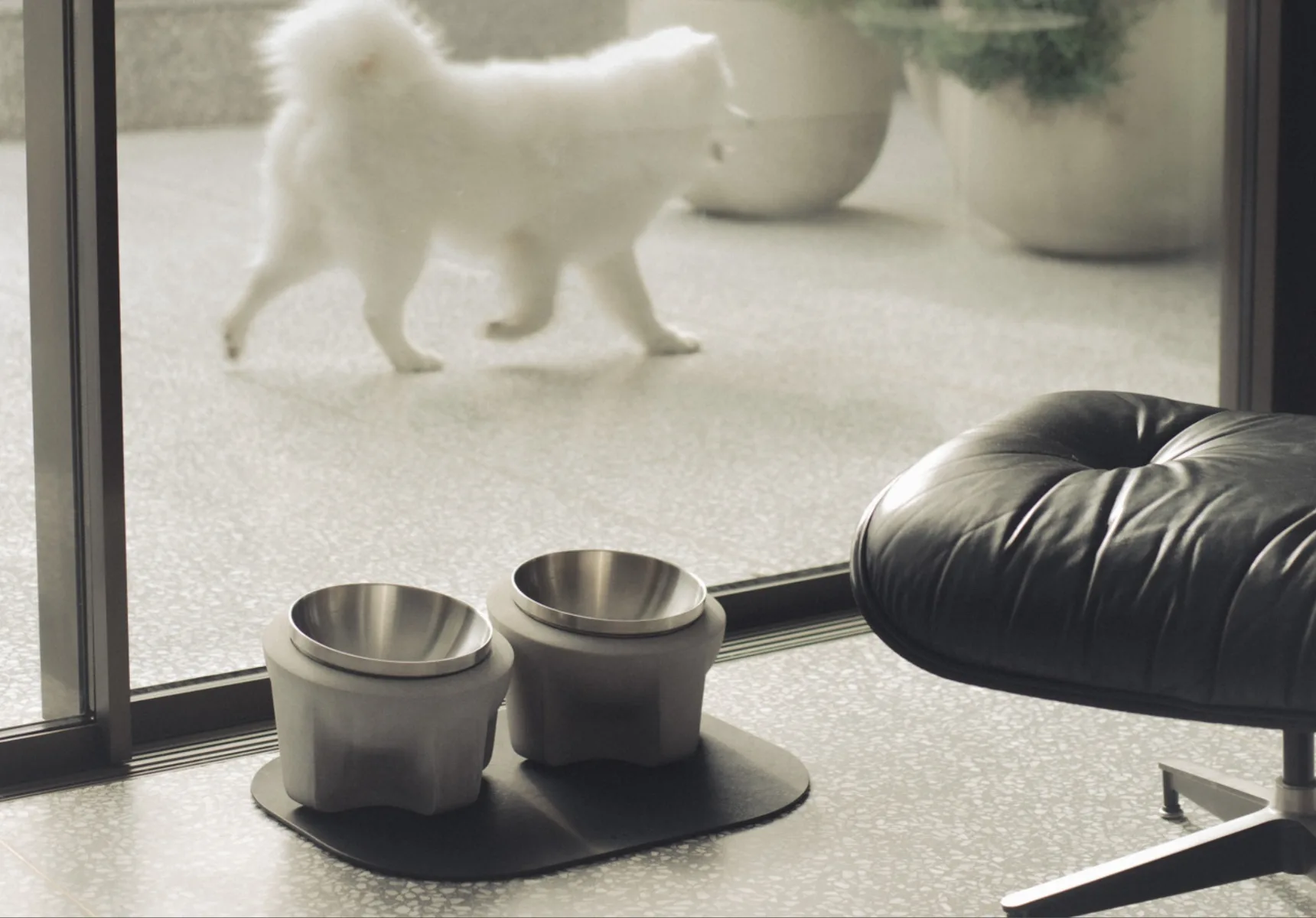
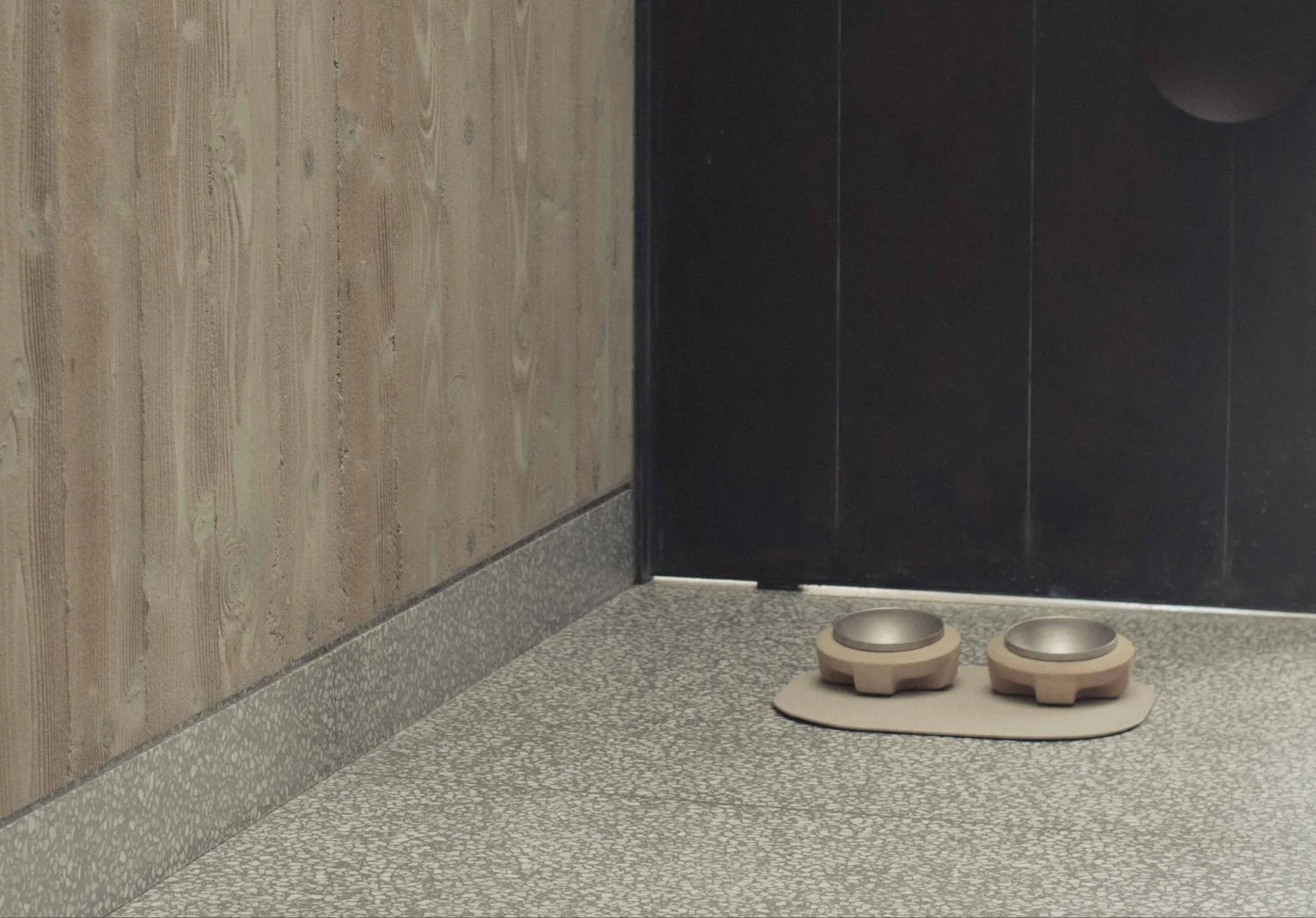
The small vessel weighs 2.7kg and holds a 350ml bowl, while the large vessel steps up to 8.3kg and a 950ml capacity. Mid-grey, sandstone and charcoal colours complement minimalist interiors. The stainless steel bowls come in brushed or matte finishes, each with a silicone base to prevent slipping. It sits at an eight-degree forward tilt, an angle Inzitari says helps pets eat and drink more comfortably. “Food comes to your pet instead of your pet chasing it. That means less strain on the neck and easier access for flat-faced breeds.”
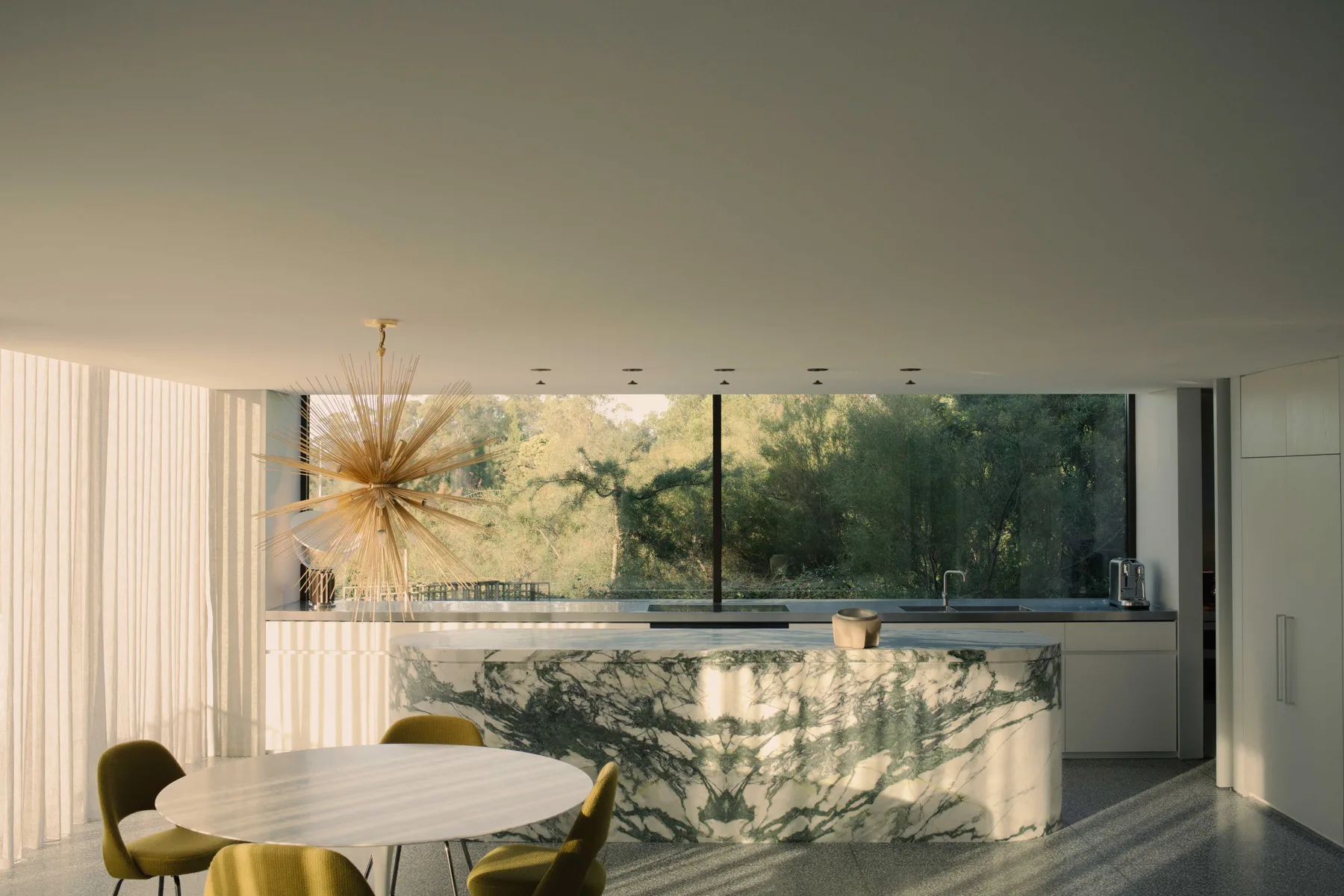
Gala and Inzitari refer to their creations as “pet hardware” – a small, architecturally minded piece for the floor. “You can build memories around these pieces. They’re not a bowl that you’re going to throw out after a few years,” Inzitari says. “We felt like there wasn’t much out there that really resembles how meaningful the relationship between pets and humans is.”
At $250 for the small bowl and $350 for the large, the prices reflect the craftsmanship and longevity of the design. It’s a significant investment for a pet bowl, but the duo sees the vessels as functional design objects. Cast in small batches and finished by hand, no two pieces are exactly alike. “These are pieces you invest in for your home and that can last for forever,” Inzitari says.

More from Broadsheet
Videos
More Guides
Recipes



-6e9e4d4cb1.webp)
-c121bced4e.webp)