Top Chefs Love These Stainless-Steel Pans. Do They Stack Up for Home Cooks?
Words by Dan Cunningham · Published on 15 Sep 2026
I did not grow up in a household of stainless-steel cookware. Rather, our family’s kitchen was a temple of scuffed Teflon, and there’s a reasonable to likely chance a bouquet of forever chemicals is coursing through my bloodstream thanks to Mum’s exquisite apricot chicken.
This was, of course, long before the age of Serious Eats and celeb chefs extolling the virtues of stainless steel and cast iron as superior mediums for non-stick cooking. As the research around PFAS in non-stick coatings continues to be a PR nightmare for many brands and retailers, there are no such concerns with stainless steel. That’s why the arrival of Made In feels like a timely entry into the Australian market.
Since it debuted last year, the American cookware brand’s stainless-steel range has become the “it” pan among many top chefs. In a recent edition of Broadsheet’s subscriber-only newsletter, Justin James of Aptos in Adelaide called Made In pans “simply the best” he’d ever come across. Andy Hearnden (aka Andy Cooks) and Stokehouse executive chef Justin Staudt are also reported fans.
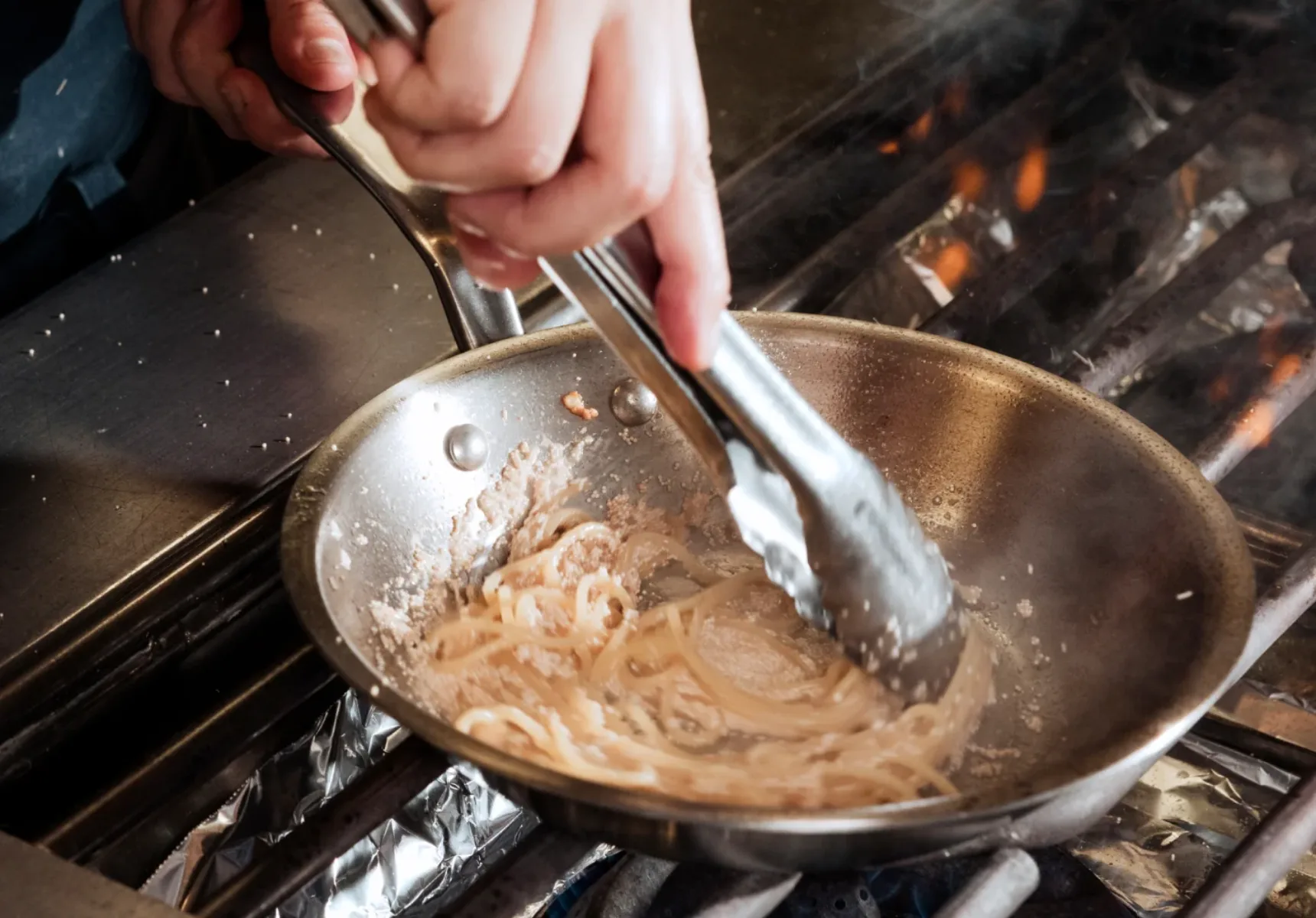
For a few years now, I’ve done most of my cooking in a high-walled titanium pan from a different brand, and it does pretty much everything I need it to, from searing steaks to reheating yesterday’s leftovers. Cooking with Made In’s 25-centimetre stainless steel flagship for a week was a different experience. Here’s how it stacked up.
The look
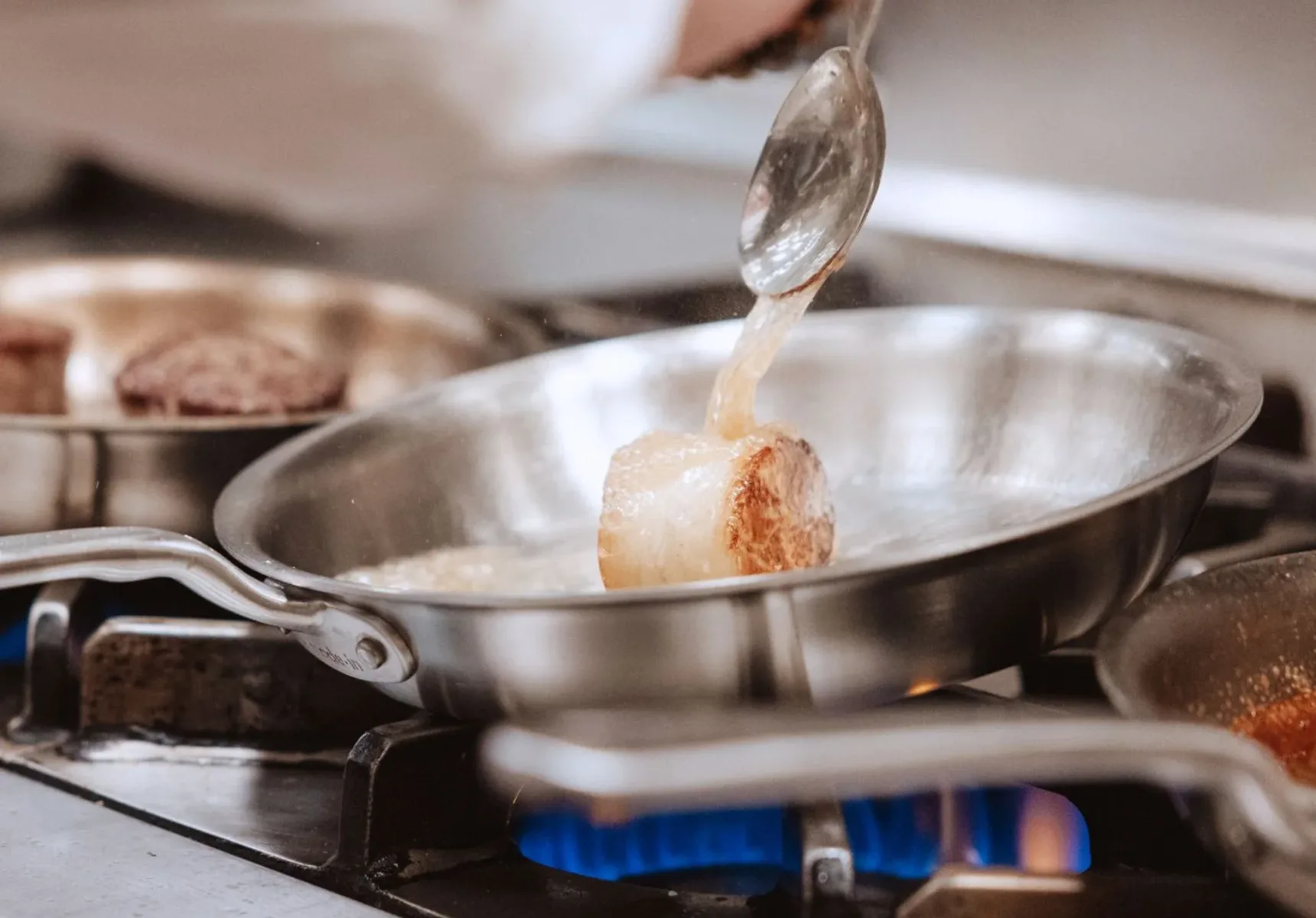
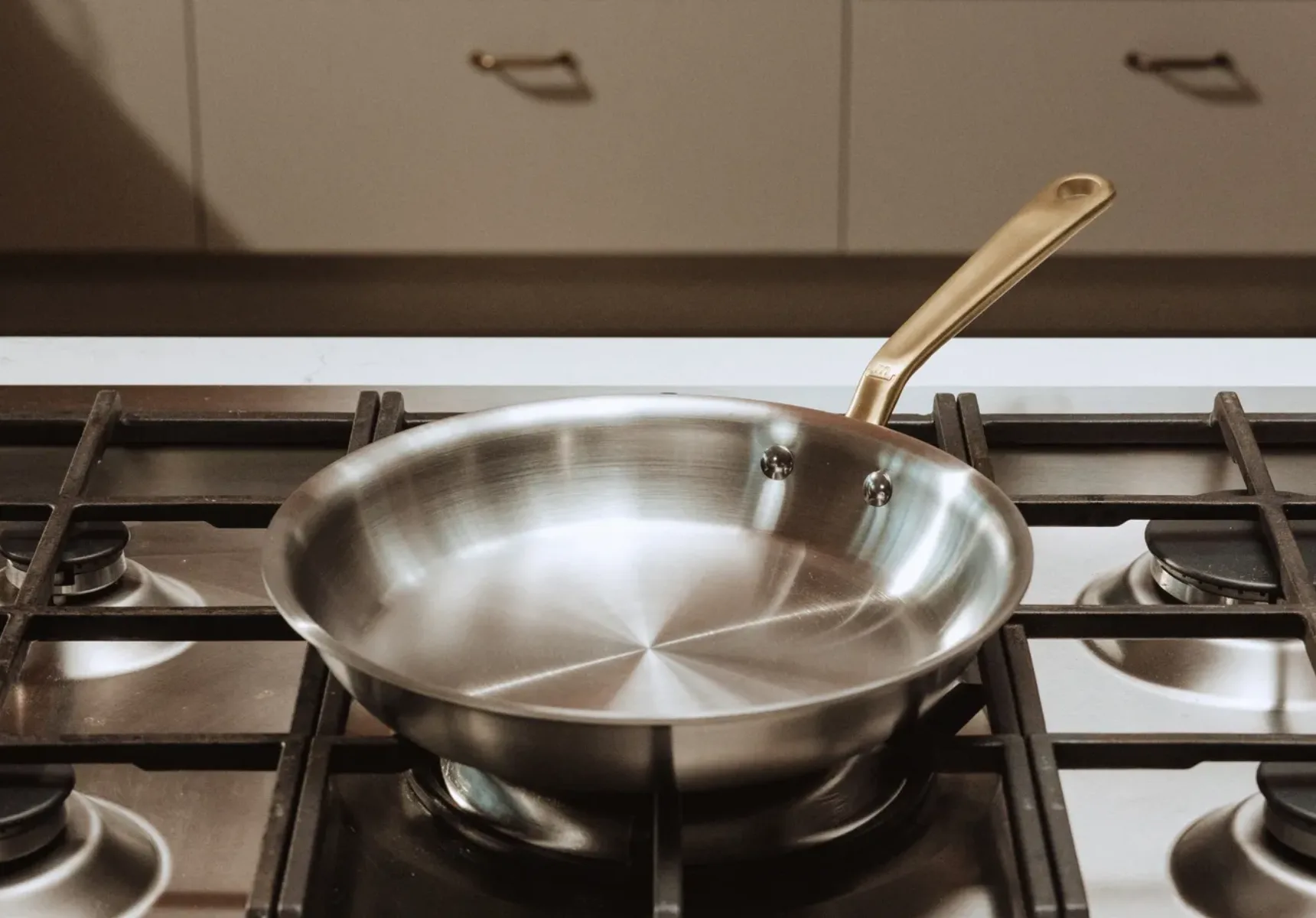
Made In pans are constructed in Italy with five layers of metal cladding, which makes them feel robust as hell without being unwieldy. They also help to distribute heat evenly throughout the pan, whether you’re cooking on induction, gas or induction cooktops. These things are also oven-safe up to 426 degrees Celsius, and have been third-party tested for toxic materials.
The pan’s ergonomic “Stay Cool” handle is crafted with a hollow core for easy maneuvering between oven and cooktop, and of course, flawless flipping. But as the name suggests, the handle is designed to redirect heat back into the pan, meaning you can safely grab it with bare hands even if it’s been sitting on the stove for a hot minute. You can customise in stainless steel or antique brass, but personally, I think there’s something elite about the all-stainless-steel look.
Speaking of, it’s no wonder top Aussie chefs love these pans. The quality is immediately evident, and for a consumer product, these wouldn’t look out of place in Bourdain’s Les Halles during a Saturday dinner rush. That is to say: they look like they could take an absolute beating on an industrial stovetop for hours and still buff to a brilliant shine afterward.
The cook
Cooking with stainless steel can be disastrous if you don’t know what you’ve signed up for. By not preheating the metal sufficiently (look up the Leidenfrost effect), you effectively turn the ultimate non-stick surface into a magnet for your food. First-time users going in blind can and will ruin that rib eye.
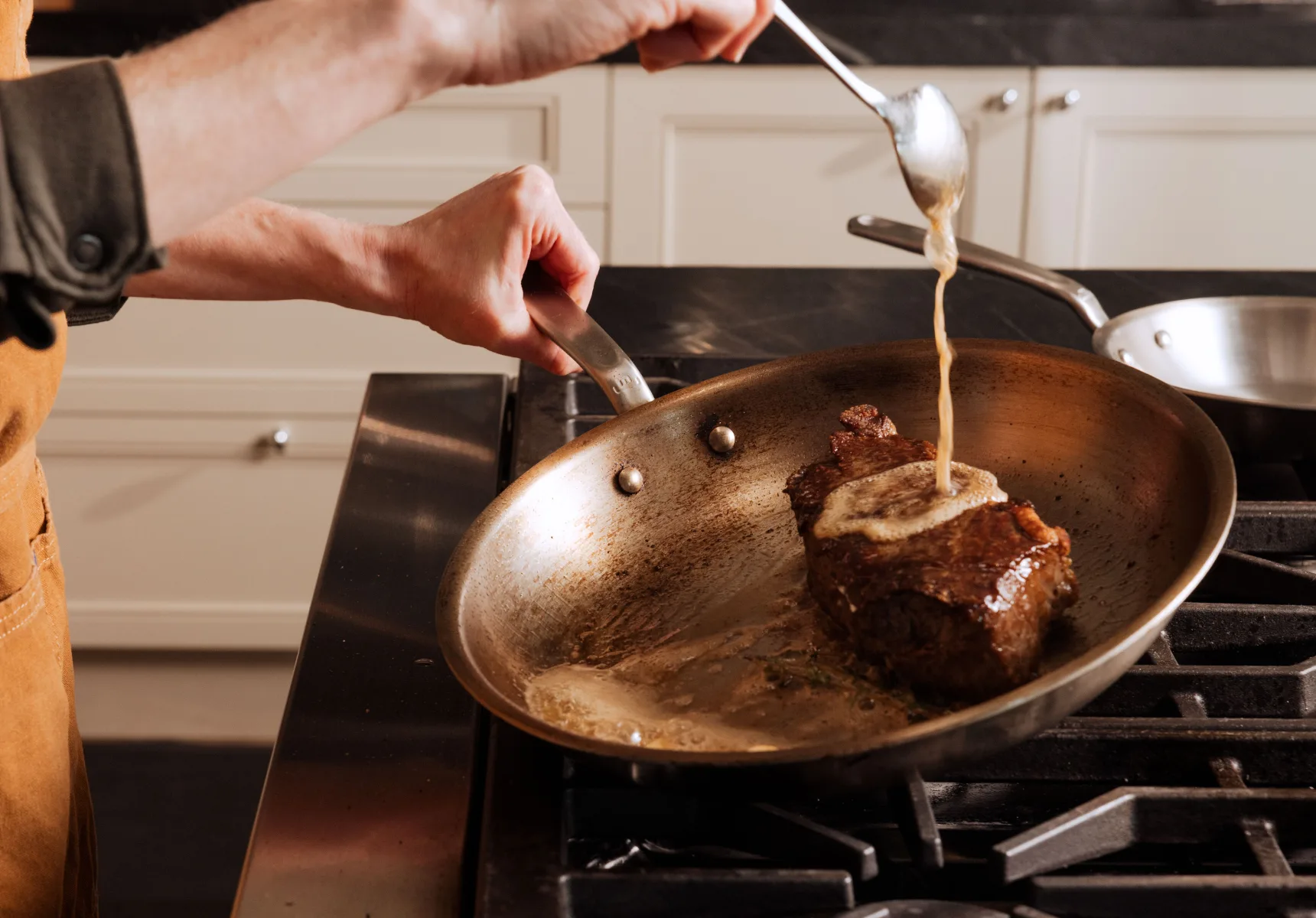
Throughout the week I did indeed cook steak, which is one of the ultimate litmus tests for stainless steel because it demonstrates the pan’s high-heat endurance and requires precise thermal control. A successful Maillard reaction delivers a beautiful brown crust and a blushing interior. Failure looks like the dog having steak for dinner.
It became instantly apparent that the 25-centimetre size was going to be too snug for a pair of rumps, so I cooked them separately. I was too hasty getting the first one out of the pan, and so didn’t achieve the sear I was looking for. The second steak turned out like something you’d happily pay for in a restaurant, with excellent fond for a pan sauce.
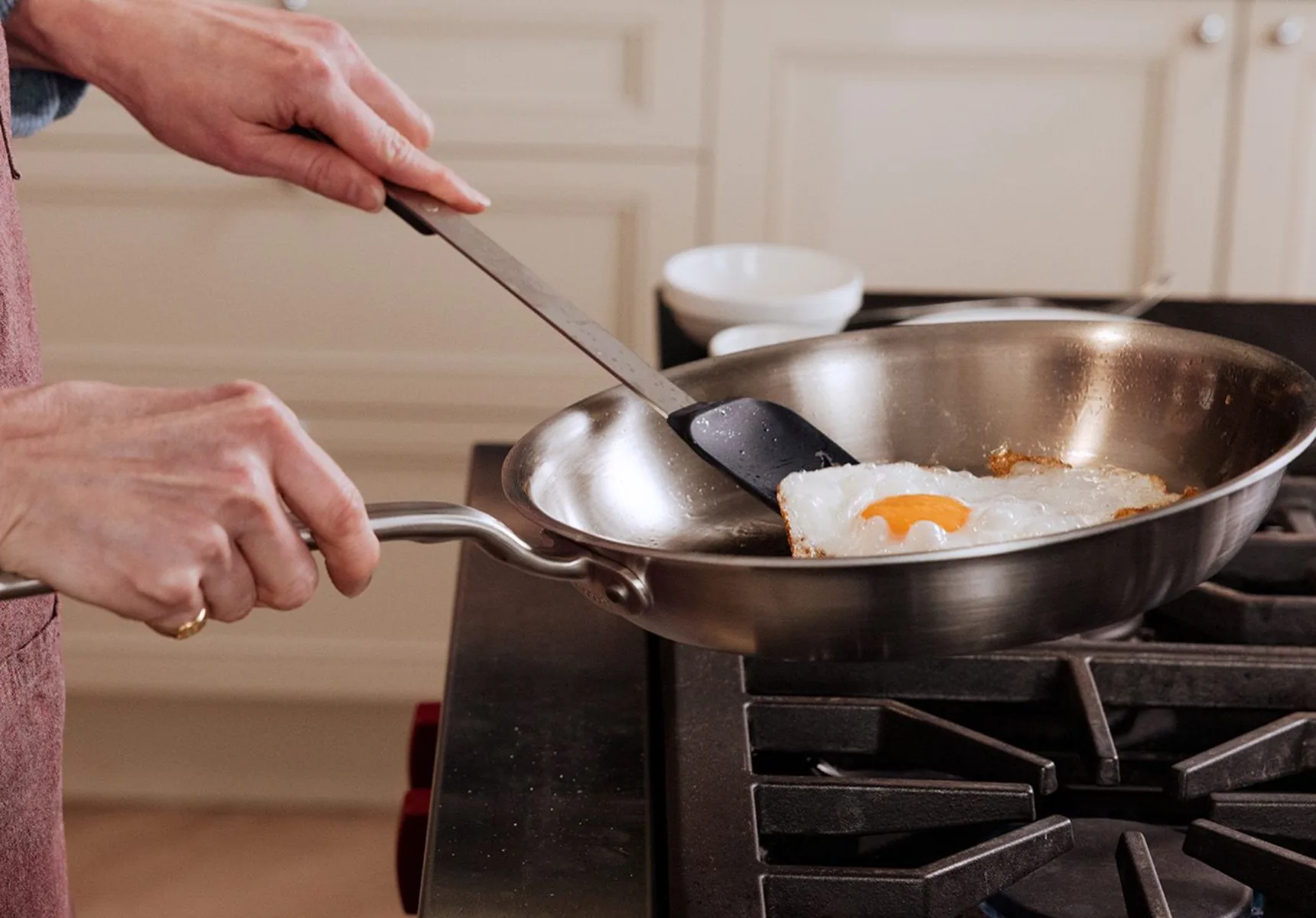
Next, the fried egg – one of the final bosses of stainless-steel cookery – which tests the pan’s low-temperature heat distribution and stick resistance. I was almost more nervous about this application thanks to fried-egg failures of the past. But with proper preheating and enough canola oil, I came up with crispy fried eggs that would make Kenji proud.
The verdict
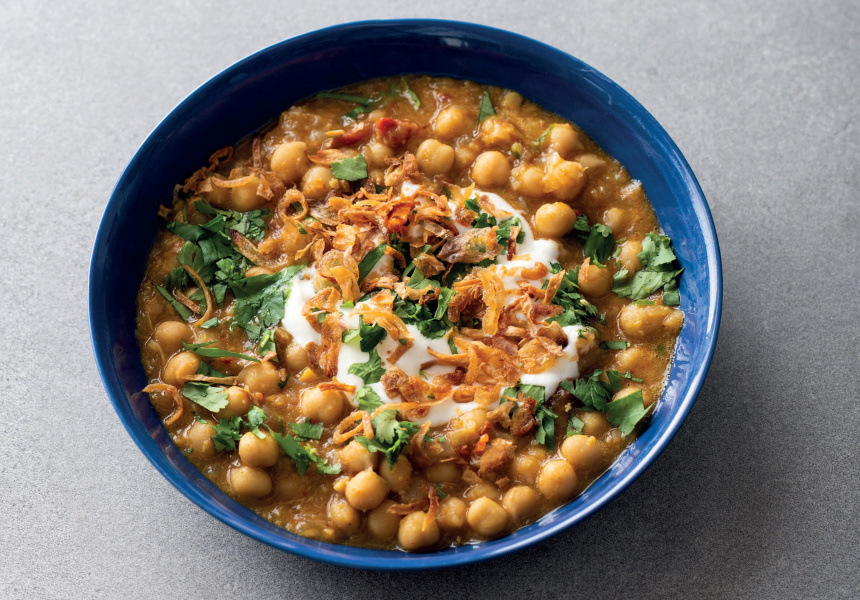
The steak and fried egg tests are the most effective – and the most challenging – applications of stainless steel. The rest of my cooking that week didn’t require nearly as much nuance, and the pan made easy work of a simple pomodoro sauce and a more involved lentil curry. But because I’m always cooking for two people (my partner calls me “Cookie”) and plan for leftovers, I found myself wanting a few extra centimetres, and would personally go for Made In’s largest pan.
While user error is certainly not the manufacturer’s problem at the end of the day, whether you can be bothered with the nuances of cooking with stainless steel might be something to consider. But stainless-steel cookware is a lifetime investment after all, so you’ve got plenty of time to learn how to cook with it, and a warranty to match.
We hope you like the products and services we recommend on Broadsheet. Our editors select each one independently. Broadsheet may receive an affiliate commission when you follow some links.
About the author
Dan Cunningham is Broadsheet’s features editor (food & drink).
MORE FROM BROADSHEET