The Best Baking Trays, According to 10 Professional Bakers and Chefs
Words by Holly Bodeker-Smith · Updated on 24 Sep 2026 · Published on 23 Sep 2026
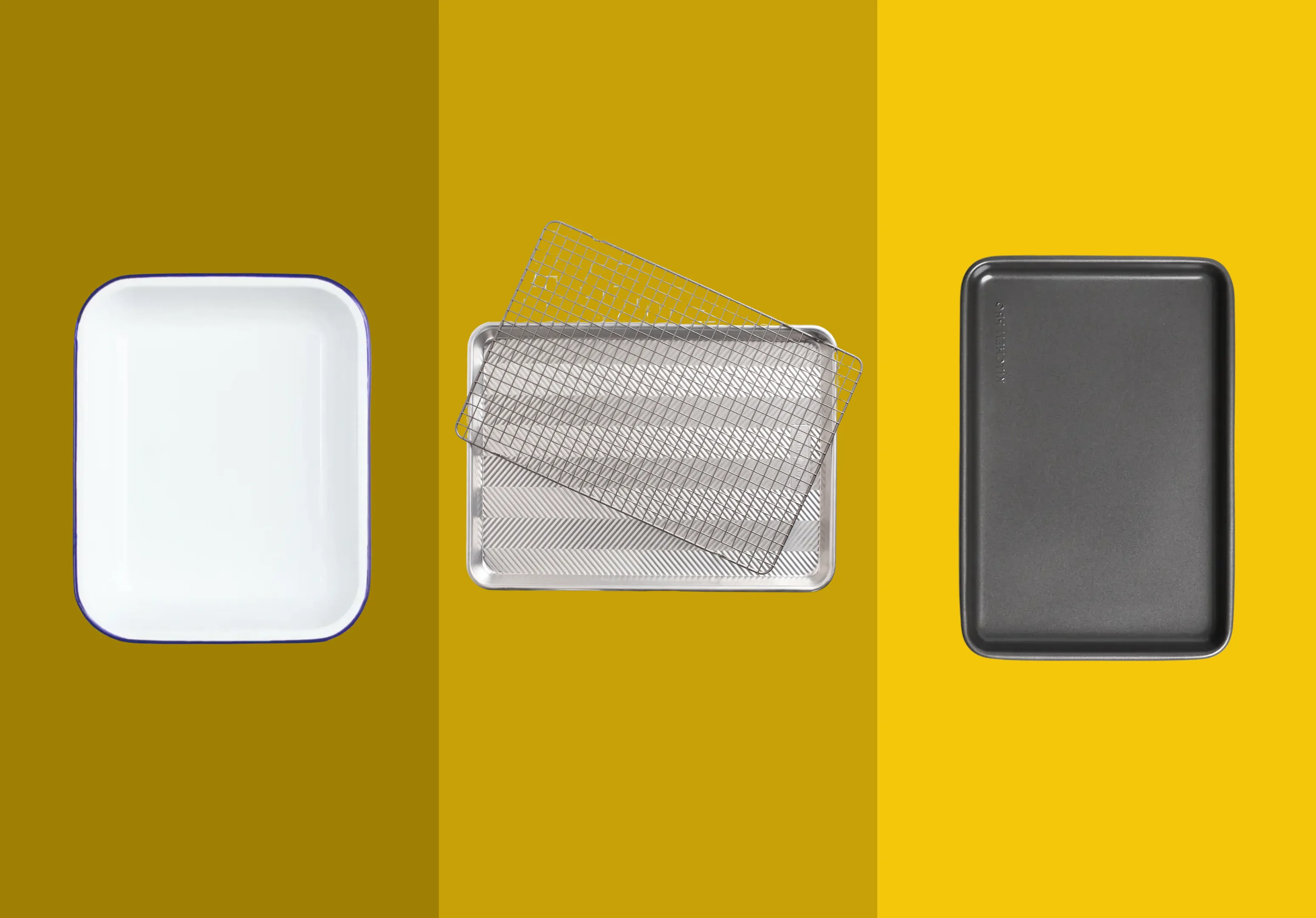
Every home cook needs a good oven tray. It’s the timeless kitchen workhorse, as versatile as it is sturdy, mastering everything from cookies and sheet-pan dinners to crisping up nuts or breadcrumbs.
Choosing one, though, isn’t so simple. Enamel, aluminium, blue steel, silicone: each material comes with its own perks and pitfalls. Silicone mats, for instance, are great for non-stick, but won’t add any colour to your bake (and may come with health risks of their own).
So we asked 10 top chefs and bakers from across Australia which trays they use and love most, from Stephanie Alexander to Madeleine de Proust’s Hyoju Park and Masterchef alum Justine Schofield. Beyond baking and roasting, these pros put their trays to creative use. Pastry chef and cookbook author Kirsten Tibballs even preps on hers, rolling out dough straight on the flat surface to add fillings and toppings.
Whether you use yours for every step or just the final bake, here are the best trays and sheets to consider, plus how to keep them in shape.
Michael James, co-founder, head baker, Urbanstead
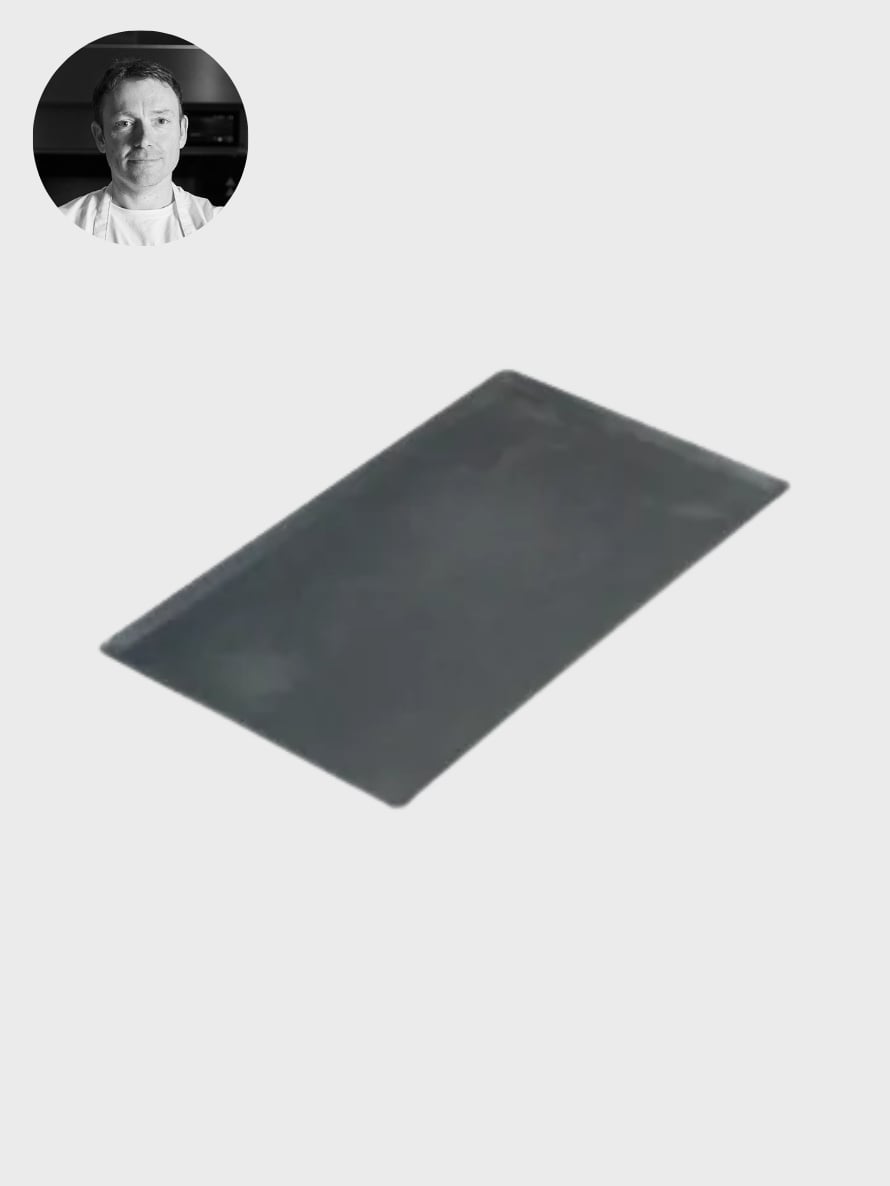
Why is this your favourite baking tray?
I love using this solid metal tray at home and the bakery. It’s great for baking anything from palmier to cookies to scones. It transfers the heat so well and is very solid. It’s easy to clean and, if seasoned well, it can also be non-stick. It won’t scratch, twist or bend while you’re baking, like some models. It’s also made from metal and it’s Teflon-free, which is important.
Anything to note before buying?
Check your oven size and get the tray that best fits your oven and kitchen space. It may not be cheap but you will use it for a lifetime.
What do you use it for at home?
Everything from roasting veg to spices or nuts, to baking cookies and scones. I use it to assemble pastry items like wagon wheels or Florentines. It’s also a good holding tray to put your cake on while you bake. Palmiers are also great, or anything where you want some colour on the bake. I make a savoury palmier with ham, cheese and mustard and it bakes so beautifully on these trays.
Alec Lowe, group chef, Jocelyn’s Provisions
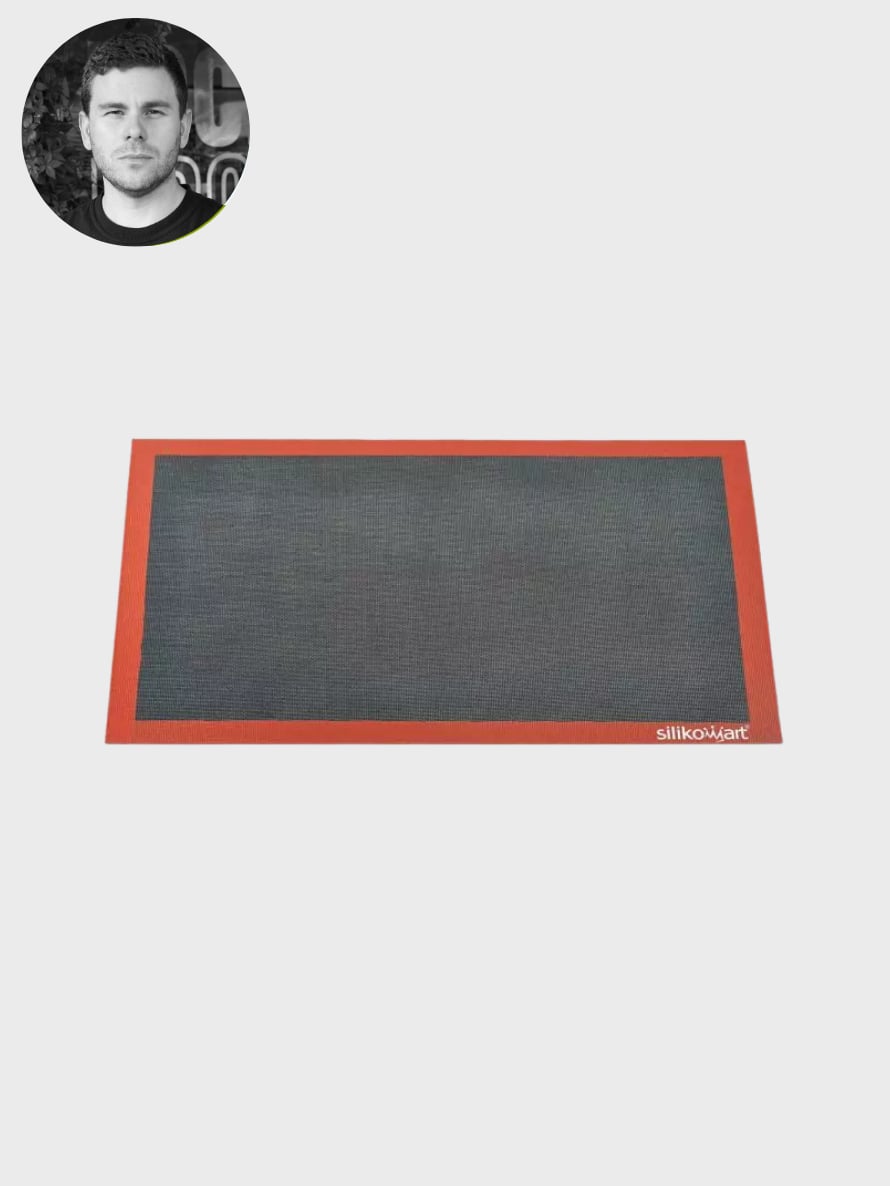
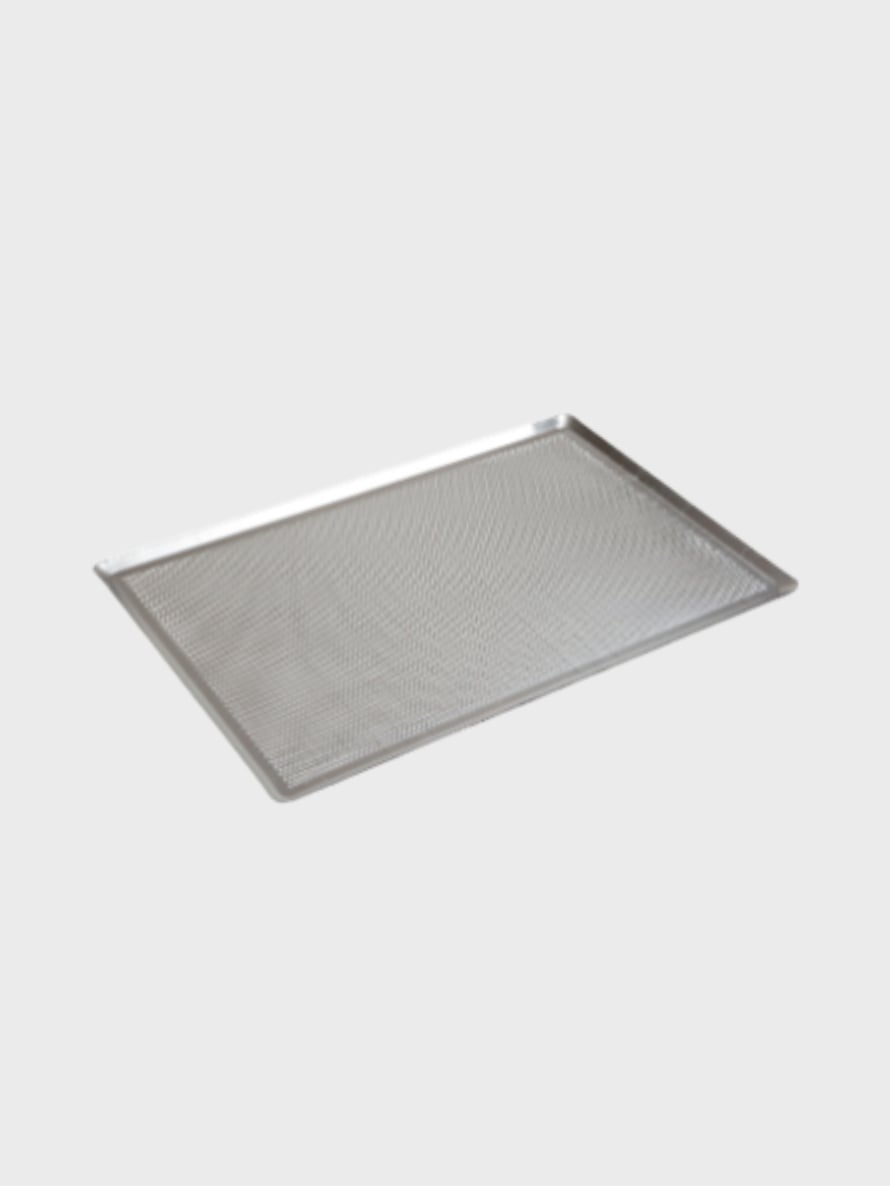
Why are these your favourite baking trays?
This is the professional set-up, so you get bakery results at home. The perforations circulate the air for crisp, even bases and no soggy bottoms. The mat gives flawless non-stick release with no parchment, and it’s reusable. The tray above is the full 600x400-millimetre size I use at work; at home I use the exact same set-up in half that size, 30x40 centimetres.
Anything to note before buying?
It’s a two-part buy, don’t heat the tray empty, and handwash the mat.
What do you use them for at home?
Biscuits and sables are my go-to. The mat helps them hold a clean, even shape and, because it’s light, the batch cools quickly. Granola is another good one – it toasts evenly into crisp clusters without catching or sticking to the base. It’s great for home cooks who usually battle a soggy or stuck bottom. For example, when cooking meringues or pavlova bases, the perforations dry them out evenly and they lift straight off the mat with a crisp, clean base.
Megan Bowditch, co-founder, Prove Patisserie
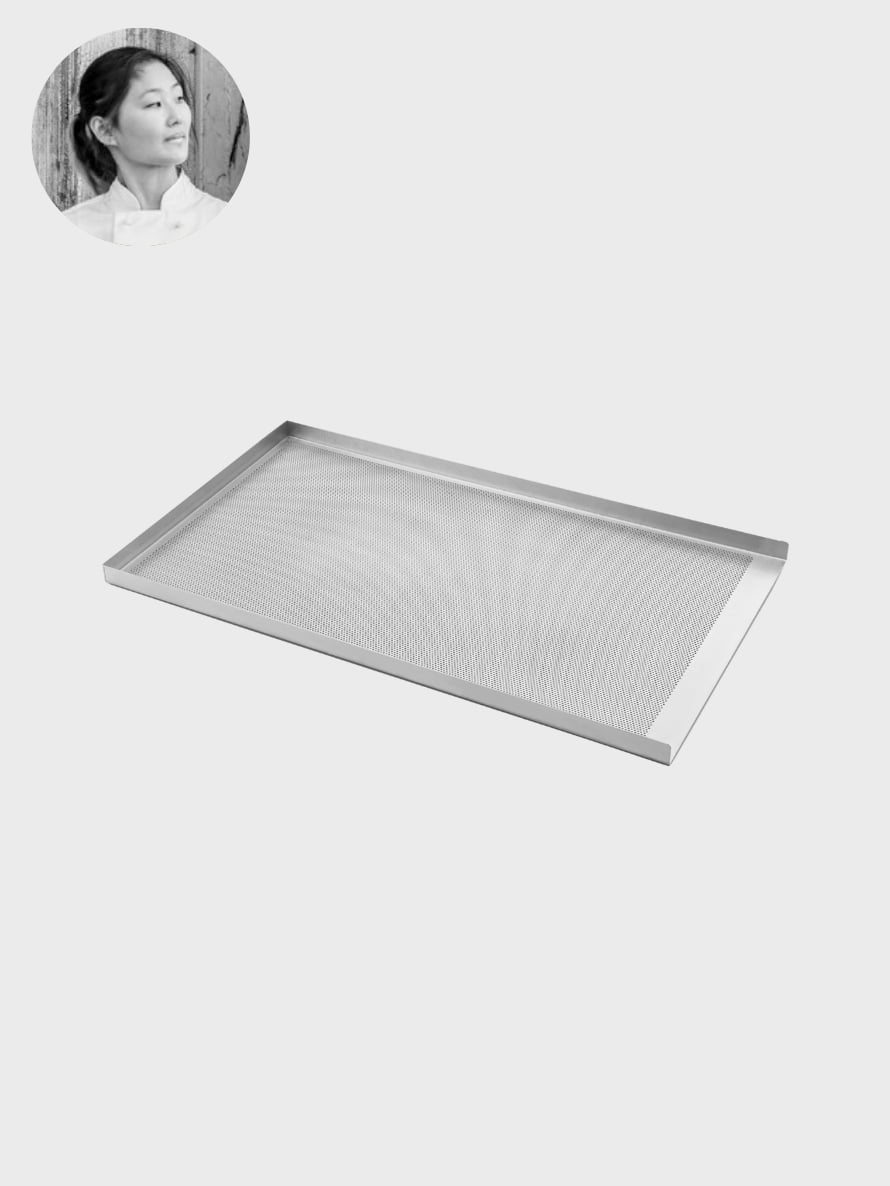
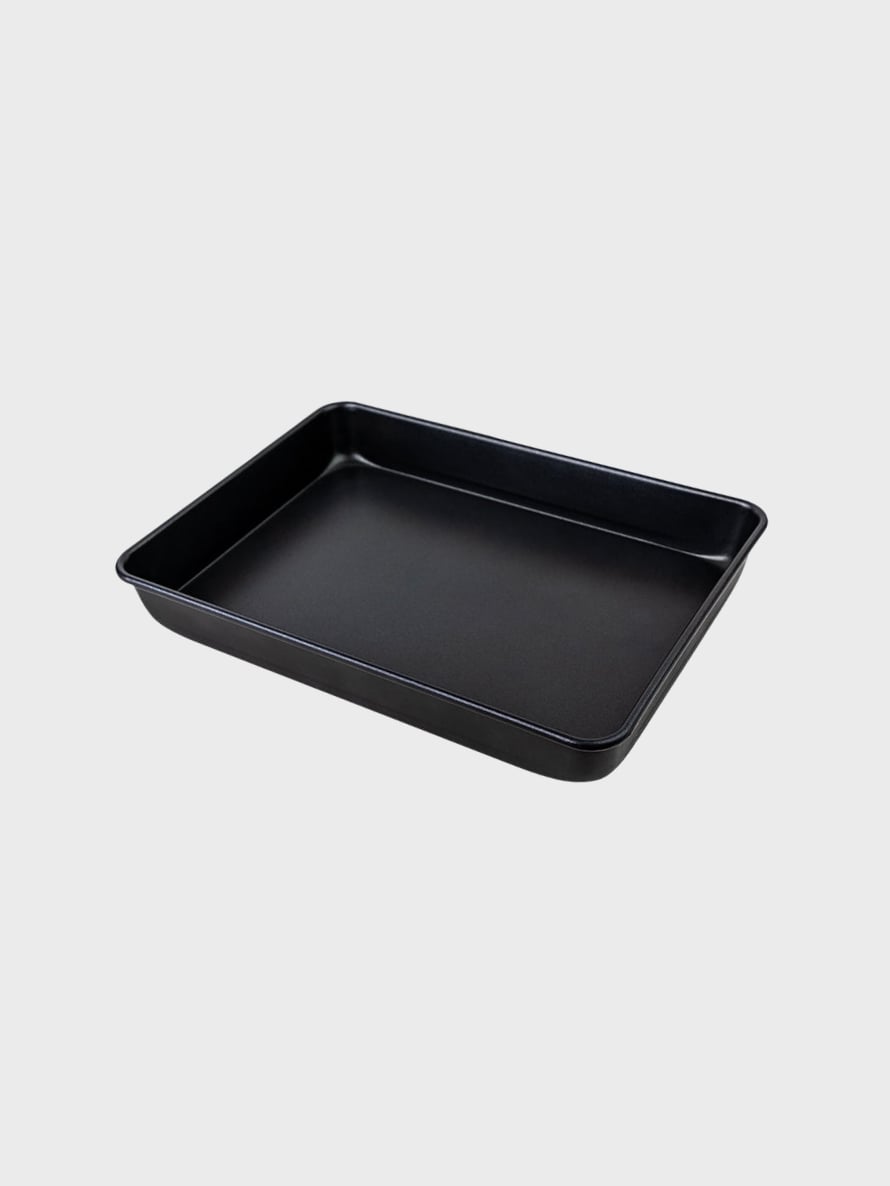
Why are these your favourite baking trays?
San Neng is our go-to brand. Their four-sided aluminium trays are fantastic for focaccia, salt bread and cardamom buns – anything where we want a beautifully crisp bottom. For pastries, cookies and other baked goods, we use perforated trays from Grants Bakeware, which provides excellent airflow in our convection ovens.
The solid aluminium trays conduct heat exceptionally well, producing crisp, evenly coloured bases on breads and pastries. Our perforated trays are equally valuable because they allow air to circulate underneath the product, helping create crisp bottoms and preventing pastries from becoming soggy as they cool.
Anything to note before buying?
Like any aluminium tray, they can become slightly misshapen over time with regular use. Thicker-gauge trays tend to resist warping better, although they take a little longer to heat, which slightly alters baking time and colour.
What do you use them for at home?
Roasting vegetables, as well as baking cookies, macarons, pastries and bread. They’re also fantastic for baking focaccia, as the aluminium conducts heat well and creates a wonderfully crisp, golden base.
Hyoju Park, co-founder, head pastry chef, Madeleine de Proust
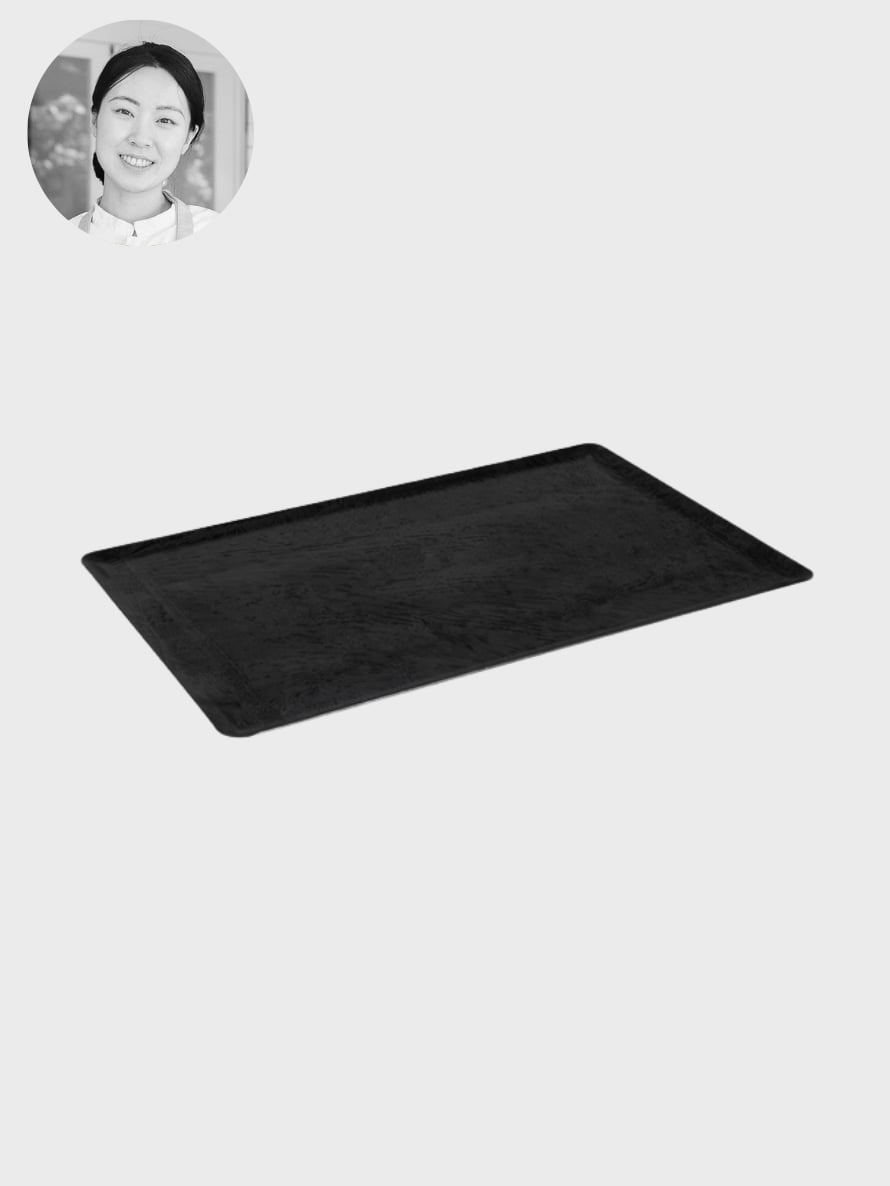
Why is this your favourite baking tray?
Blue steel heats quickly and holds heat well, helping pastries and baked goods develop an evenly coloured, crisp base. It’s also consistent. Once you understand how the tray behaves in your oven, it’s extremely reliable and consistent. Finally, it stays flat and doesn’t twist or warp easily at high temperatures. This is especially useful when working with delicate pastries, tart rings or individual moulds. There’s nothing more stressful than watching a tray turn into a propeller in the oven.
Anything to note before buying?
Blue steel requires more care than aluminium or stainless steel. It can rust if it’s left damp, so it needs to be dried immediately and thoroughly after cleaning. It should never go into the dishwasher.
Because the surface is dark and transfers heat so efficiently, the bottoms of cookies and pastries may colour faster than they would on aluminium. Depending on your oven, you may need to adjust the baking temperature, time or tray position.
Over time, the tray develops a natural patina. Don’t try to scrub it back. That seasoning is part of the tray’s character and can actually improve its performance.
What do you use it for at home?
Baking cookies, canelés and tarts. We often use it to bake sourdough. We preheat the oven to 230 degrees Celsius for one hour with the tray inside. Once it’s heated, we place the sourdough onto the tray, score the surface and bake it. Because blue steel transfers and retains heat so effectively, the bread bakes evenly and develops a beautiful golden crust with a crisp, well-baked base. It’s also excellent for roasting nuts, as the strong heat transfer helps them develop an even colour and deeper roasted flavour.
Kirsten Tibballs, pastry chef, chocolatier, cookbook author, founder of Savour Chocolate & Patisserie School
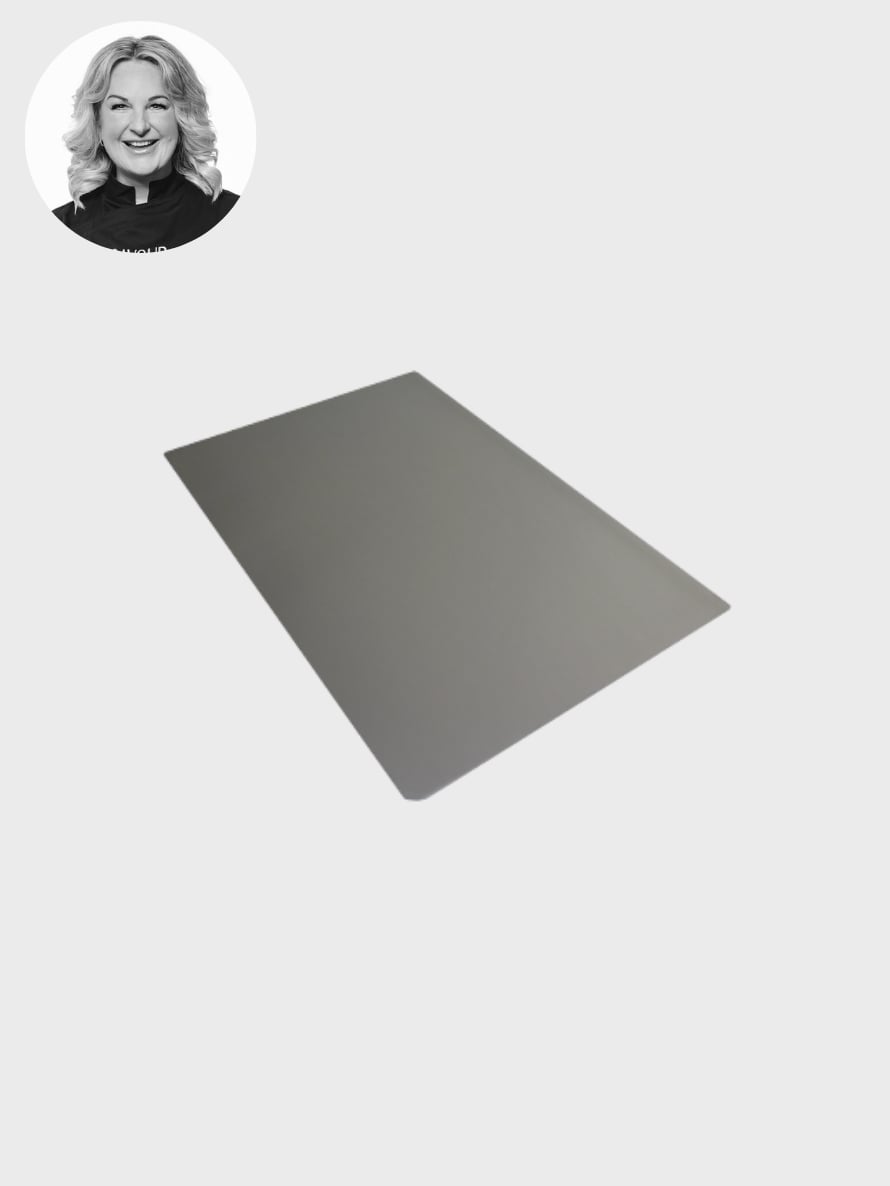
Why is this your favourite baking tray?
I first worked with this size tray while I was in Europe and couldn’t find an equivalent in Australia, so I had them manufactured. They’re now the trays I use every day in my kitchen.
Aluminium is an excellent conductor of heat, second only to copper. It heats quickly and evenly, reducing hot spots and helping cakes, biscuits and pastries bake with consistent colour and texture. Secondly, unlike cast iron or ceramic, aluminium cools relatively quickly once removed from the oven. This prevents delicate baked goods from continuing to cook after they’ve come out of the oven. Finally, these trays are made from heavy-gauge aluminium, making them more resistant to warping than thinner baking trays. They hold their shape beautifully, even with frequent use.
Anything to note before buying?
These trays are not non-stick, so they should be greased or lined with baking paper or a reusable baking mat before use. Like all uncoated aluminium, they can discolour if they come into direct contact with highly acidic ingredients like lemon, berries or tomatoes.
What do you use it for at home?
Because the tray is perfectly flat, I often roll pastry directly onto a sheet of baking paper placed on the tray. If the pastry softens too much while I’m working, I place the tray in the fridge to chill before continuing. I can then cut and bake the pastry on the same tray, making the process much more efficient.
These trays are the perfect weight to sandwich together when baking puff pastry or filo pastry. This keeps the pastry flat while allowing it to bake evenly and become crisp.
Zee Scott, founder Bento and Bubbles
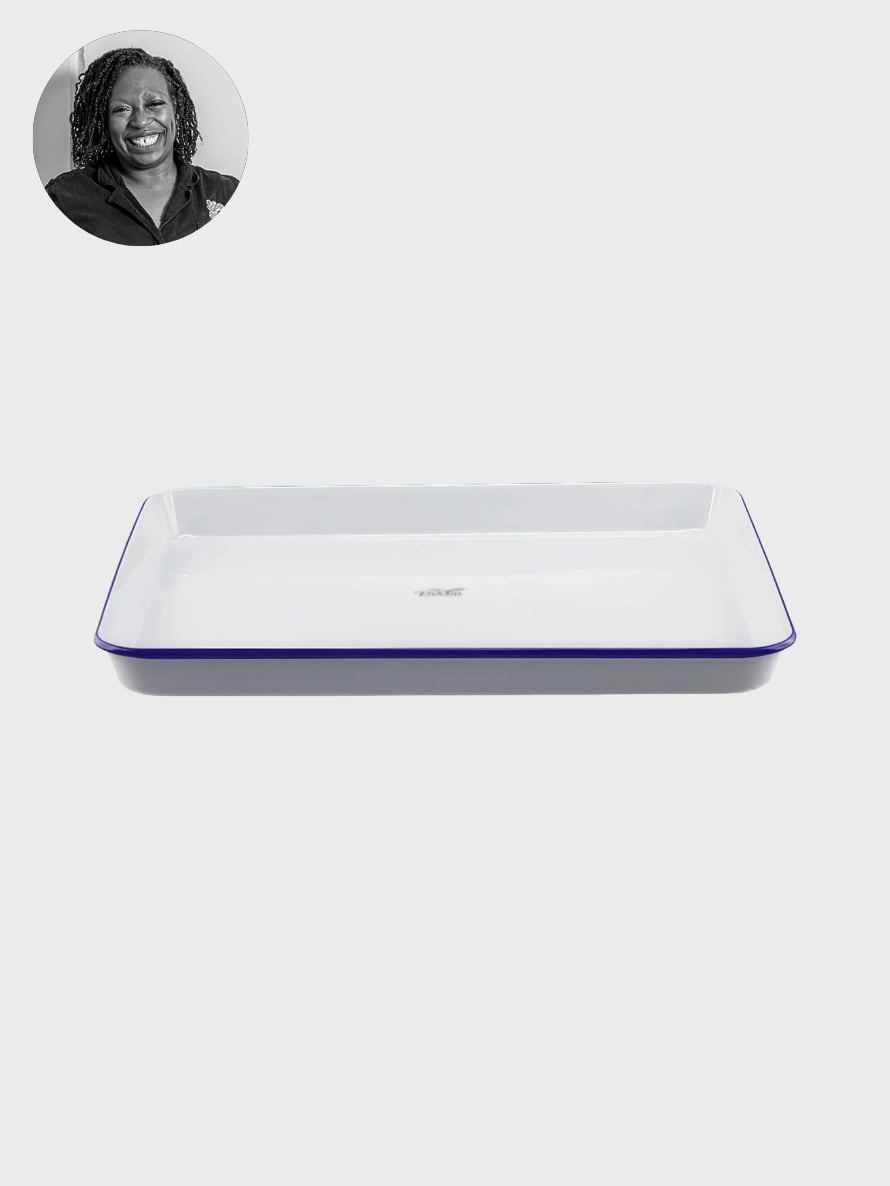
Why is this your favourite baking tray?
My staple is Falcon Enamelware. I’m originally from the UK, so Falcon has been part of my kitchen for as long as I can remember. It’s been trusted by home cooks for generations. It probably goes into my oven more than any other piece of bakeware I own. I use it for cookies, roasted vegetables, roast meats, sheet pan dinners, slices and tray bakes. They’re incredibly versatile and beautifully made. Sometimes the classics really are classics for a reason.
It does just about everything – baking, prep, roasting and even serving food straight to the table. It’s dishwasher-safe. After a long day of baking or catering, that’s a feature I appreciate. Finally, it’s built to last. Falcon trays have a timeless design and, with a little care, they’ll happily stay in your kitchen for years.
Justine Schofield, Masterchef alum, cookbook author
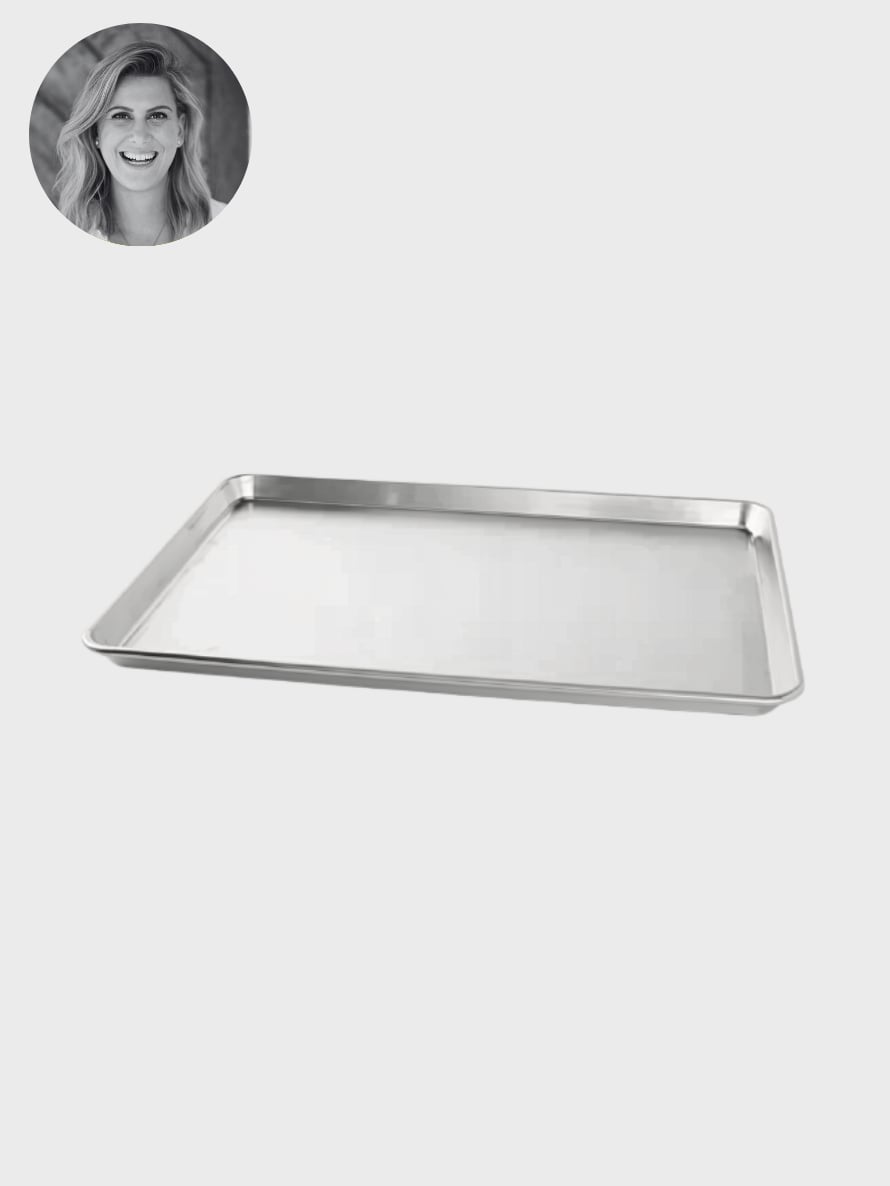
Why is this your favourite baking tray?
It doesn’t warp in the oven and heats up to 240 degrees Celsius. Aluminium is an excellent heat distributor – it heats quickly and evenly, which helps biscuits, pastries and cakes bake consistently. It’s also very lightweight.
What do you use it for at home?
It’s great for making focaccia, as you get a lovely even heat which helps develop a crisp base. That also goes for sheet-pan pizzas! It’s also great for the usual suspects like biscuits, cookies, roasting vegetables, toasting muesli and one-tray bakes.
Stephanie Alexander AO, chef, cookbook author
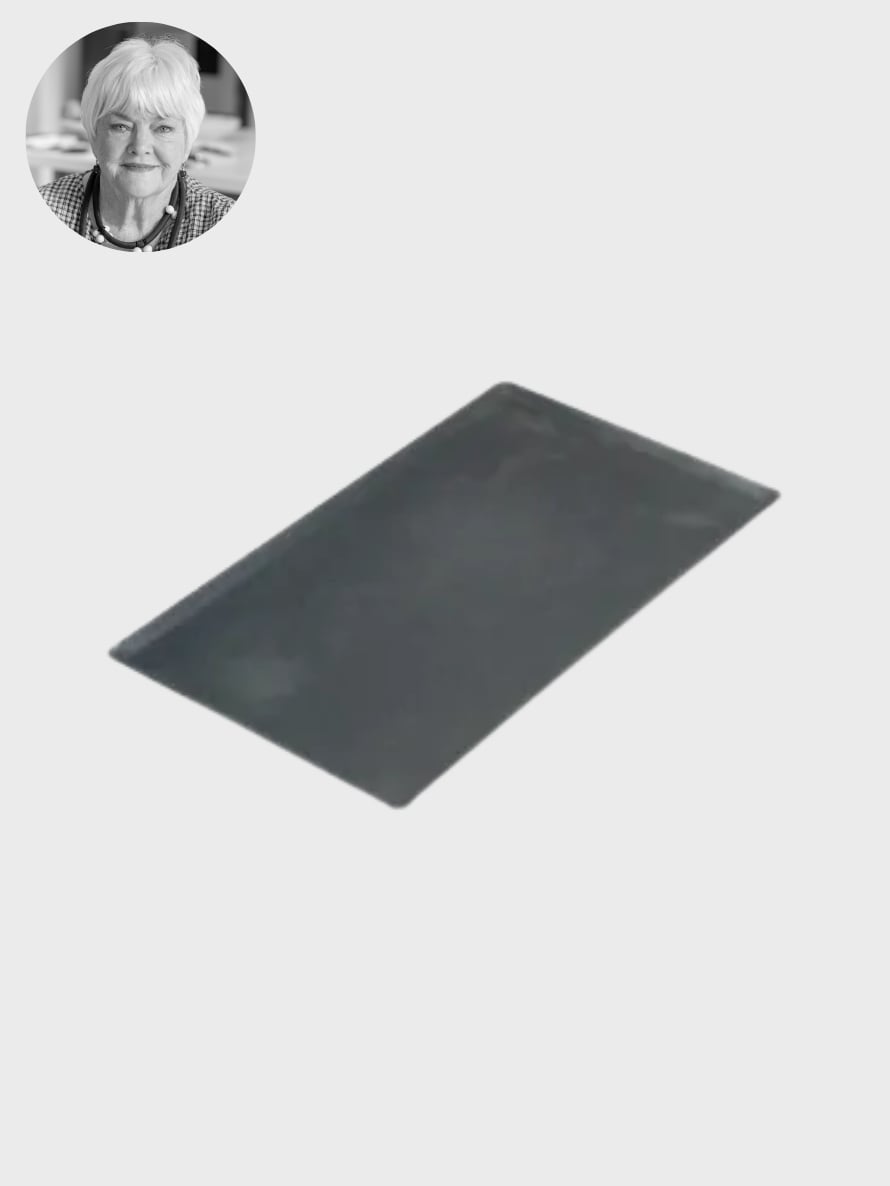
Why is this your favourite baking tray?
Either best-quality aluminium or pressed steel trays, in a 30x40-centimetre size. I don’t have any special brand in mind – search on a specialist retail store such as Chef’s Hat [or go in-store] for good advice. Pressed steel is usually heavier, but also has a non-stick coating, making it ideal for baked goods. This one is easy to clean and it doesn’t buckle.
What do you use it for at home?
I use it preheated for baking bread; or as extra support under tart tins with liquid fillings. Also, as one of a pair, you can use the top one to press down on a pastry lid or biscuit to concentrate the layers and inhibit the rising.
Emily Teese, pastry chef, Ophelia
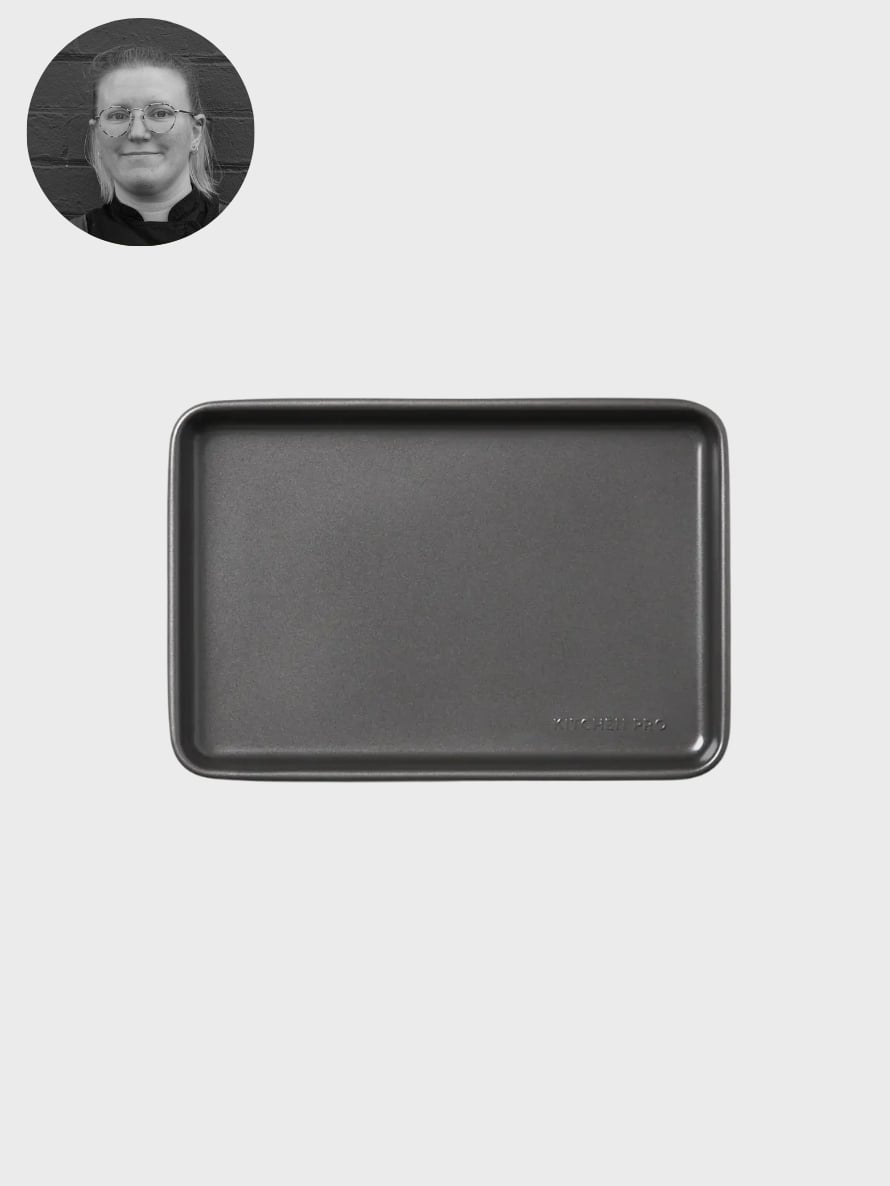
What do you use it for at home?
It’s great for single-serve items when you don’t want to dirty a large baking tray. For a single-serve roast dinner, simply roast all your veg and meat on one small tray. It’s just the right amount for one person, with no leftovers. It’s also great for reheating food or holding mise en place when preparing a small meal for one or two people. The clean-up is easier, too.
Victoria Theng, content creator, Style My Plate
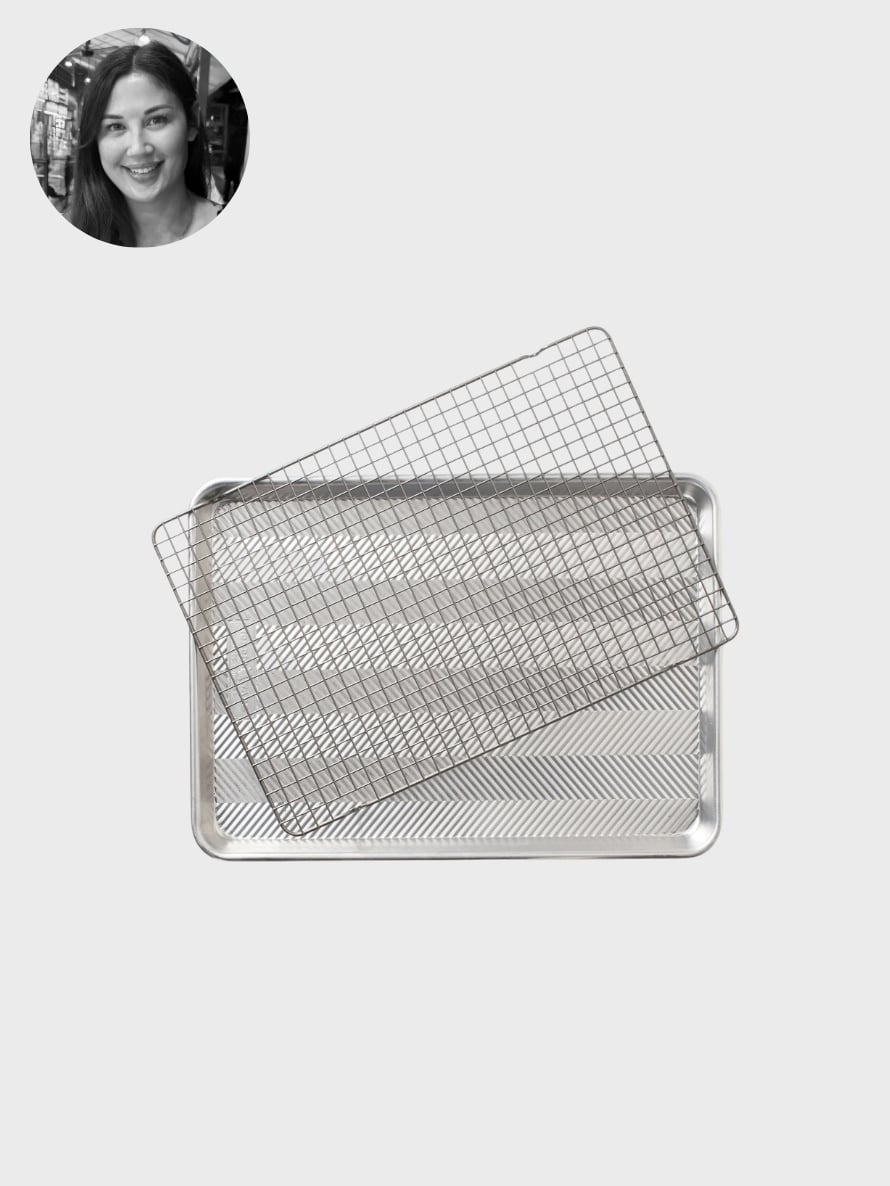
Why is this your favourite baking tray?
It’s one of those staples I reach for almost every day. It’s made from uncoated aluminium, so I don’t have to worry about synthetic non-stick coatings. The prism surface gives vegetables great colour and caramelisation. It cooks really evenly, and it’s lightweight and affordable.
Anything to note before buying?
It’s not dishwasher-safe, so I always handwash mine. The prism pattern can also take a little longer to clean if food gets stuck in the grooves, but I don’t find it difficult.
If you’re buying one, I’d definitely get the matching oven-safe rack too. I use mine to air-dry pork belly in the fridge before roasting. It lets the air circulate all the way around while the tray catches any drips, which gives you really crisp crackling.
What do you use it for at home?
Roasting vegetables, baking cookies and freezing homemade dumplings or curry puffs before transferring them to freezer bags. The matching oven-safe rack is so multifunctional. I use it for roasting meats, resting fried food so it stays crispy and cooling baked goods.
More tips from the experts
How do I look after my oven trays?
The experts we spoke to agreed: if you invest wisely and take care of your trays, they’ll last for years. The trick is prevention, not cure.
Lining and protecting your tray is the first line of defence. “I line my trays with baking paper, which makes clean-up quick and keeps them in great condition,” says Bowditch. Some materials, like blue steel, develop a seasoning over time and don’t always need that extra layer. “Once you’ve seasoned [blue steel], it’s best to just clean it with a cloth and hot water,” says James.
When it comes to washing up, most experts opt for handwashing, and everyone agrees on avoiding abrasive materials. Bowditch, Park and others simply use a soft, non-abrasive sponge and mild detergent. For something tougher, Schofield recommends using a paste of bicarb soda and water to lift baked-on grease or brown residue. To avoid warping, let your tray cool completely before cleaning it.
Some materials need extra care. Blue steel, for instance, rusts easily – avoid soaking it, and dry it immediately after use.
Finally, don’t get complacent about drying and storing. “Dry it immediately and thoroughly after washing to prevent rust. I also apply a thin layer of neutral oil before storing it, particularly if it won’t be used for a while,” says Park. Tibballs, meanwhile, lays hers flat when she stores it.
Which baking sheet pan size is best for a home cook?
Before you pull out your wallet, get your measuring tape out. This is one tip that most experts agreed on. “My biggest advice is to measure your oven before buying. Domestic ovens vary more than people expect. A beautiful tray is not very useful if the oven door refuses to close!” says Park.
Once you’ve done that, there’s a fairly clear favourite size to aim for. If it fits (baking gods willing), the experts suggest starting out with a classic 40x30-centimetre sheet. “For most home cooks, it’s the most practical and versatile size,” Park says. “It gives you enough space for a batch of cookies, pastries or roasted vegetables without being too bulky to handle, clean or store.” Scott sizes up just slightly larger, her pick is 41x32 centimetres. “I own multiple sizes and many products but this is definitely my workhorse!” she says.
It’s also worth having a smaller tray in your rotation for smaller projects. “I own both a half-sheet and a quarter-sheet and use them all the time. The half-sheet is perfect for roasting a big batch of vegetables because everything has enough space to caramelise instead of steaming. The smaller sheet is great for quick weeknight dinners or when I’m cooking for one or two,” says Theng.
We hope you like the products and services we recommend on Broadsheet. Our editors select each one independently. Broadsheet may receive an affiliate commission when you follow some links.
About the author
Holly Bodeker-Smith previously worked on Broadsheet’s newsletters and directory. Her writing has appeared in VICE, Refinery29, Frankie and others.
MORE FROM BROADSHEET



-cc7203651b.webp)