Food & DrinkLight Soy Sauce Versus Dark Soy Sauce
Words by Nick Connellan · Updated on 20 May 2025 · Published on 09 Jan 2025
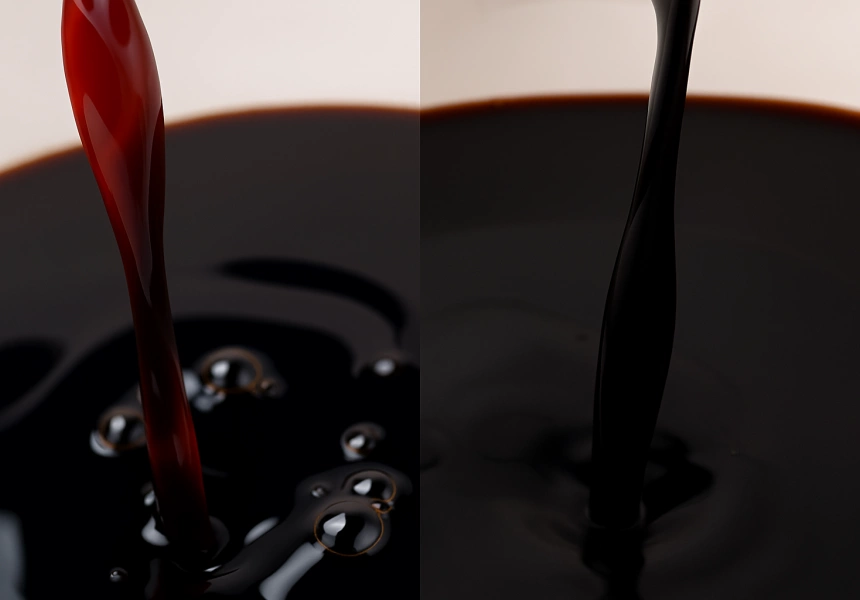
If a label or recipe says “soy sauce” with no other qualifiers, it’s referring to light soy sauce. This is the most basic, all-purpose type, primarily used to make food saltier and more umami. Traditionally made from just soybeans, wheat, salt and water, it’s suitable for marinading, dipping, stir-frying and dressing. It has a complex, delicate flavour due to being made from earlier draws of the fermented soybean mix. Use liberally.
Dark soy is mainly a cooking ingredient used to add colour and a hint of sweetness to braises, stews and stir-fries, often in concert with light soy sauce. It’s sweeter and less salty, with 10–30 per cent added sugar, and sometimes cornstarch for thickening. It’s made from later draws and aged longer, giving it a simpler, more robust taste. Use sparingly and don’t be tempted to sub it in place of light soy. (Confusingly, this light/dark logic is inverted in Japanese cuisine – dark soy is the default, “regular” style, though still used for cooking rather than dipping, dressing or finishing dishes.)
What about tamari, white or sweet soy sauces? Or Japanese versus Chinese soy sauces? We have these answers and more in our explainer on soy sauce, Asia’s most important seasoning.
About the author
Nick Connellan is Broadsheet’s Australia editor and oversees all stories produced across the country. He’s been with the company since 2015.


More from Broadsheet
Videos
More Guides
Recipes



-e5dfc61846.webp)



-6e9e4d4cb1.webp)
-c121bced4e.webp)





-3b308e01c9.webp)