The Secret Ingredient of Craft Japanese Spirits? It’s Not What You Think It Is

Words by Evan Jones · Updated on 16 Sep 2026 · Published on 04 Sep 2026
We are in the midst of a huge obsession with Japanese drinking right now. Whether it’s the spate of kissaten-inspired vinyl listening bars that have become mainstays or the precise ice of Japanese cocktail bars, Japan’s drinking culture is fast becoming a part of Australian routines, too. And, at the heart of it all, you’ll find Japanese craft spirits.
For House of Suntory ambassador Natalie Ng, the popularity of Japanese drinks makes sense as part of a broader international interest in Japanese culture, but it’s not the whole story. Rather, it’s the uniquely Japanese style of those spirits – especially the world-beating whiskies – that makes them so appealing.
“In the 1800s and 1900s, all the whisky and all the spirits coming from the West were of really high quality, but they were deemed a little bit too robust or too strong for the Japanese palate,” she says. “[Suntory founder Shinjiro Torii] set out to create a particular style of whisky that was subtle, refined and complex for the Japanese people.”
There are some other unique attributes in Japanese spirits, too. One is the philosophy of wa, which emphasises community, peace and harmony; for Ng, the role it plays in spirits is akin to a “harmonious connection to nature” that reflects Japan’s climate and landscape. Forces like temperature and humidity play a big role in how fast a whisky ages, for instance, while the regional botanicals that go into Japanese gin are another distinctive element. But there’s one lesser-known aspect of Japan that plays an outsized role in why these world-class spirits taste the way they do.
Water.
You might not even think about it in the context of spirits but, as Ng explains, it’s one of the most vital – if underappreciated – ingredients.
“We use the water in every part of the distillation, whether it’s mixing hot water with the crushed grains in the mashing process, or watering it down to an ABV – and that’s more with your gins and your vodkas. Essentially, the purity of water will affect the final product.”
Purity in this context isn’t about how clean the water is – it’s about its mineral content, or whether the water is “hard” or “soft”.
“Soft water means water that has less minerals and impurities in it,” Ng says. Suntory’s preference is to use softer water for making its spirits. “Essentially all the water that we use in Japan is a lot softer, especially when you’re comparing it to water from Scotland.”
The provenance of the water available at each distillery also makes a big difference in how the final product tastes.
“Yamazaki, for example, is in the outskirts of Kyoto, and the three rivers that meet creates a magical fog around the distillery,” Ngsays. “The water type there is slightly harder, meaning more mineral-rich than Hakushu [distillery], resulting in whisky that is profoundly multi-layered in taste and flavour.”
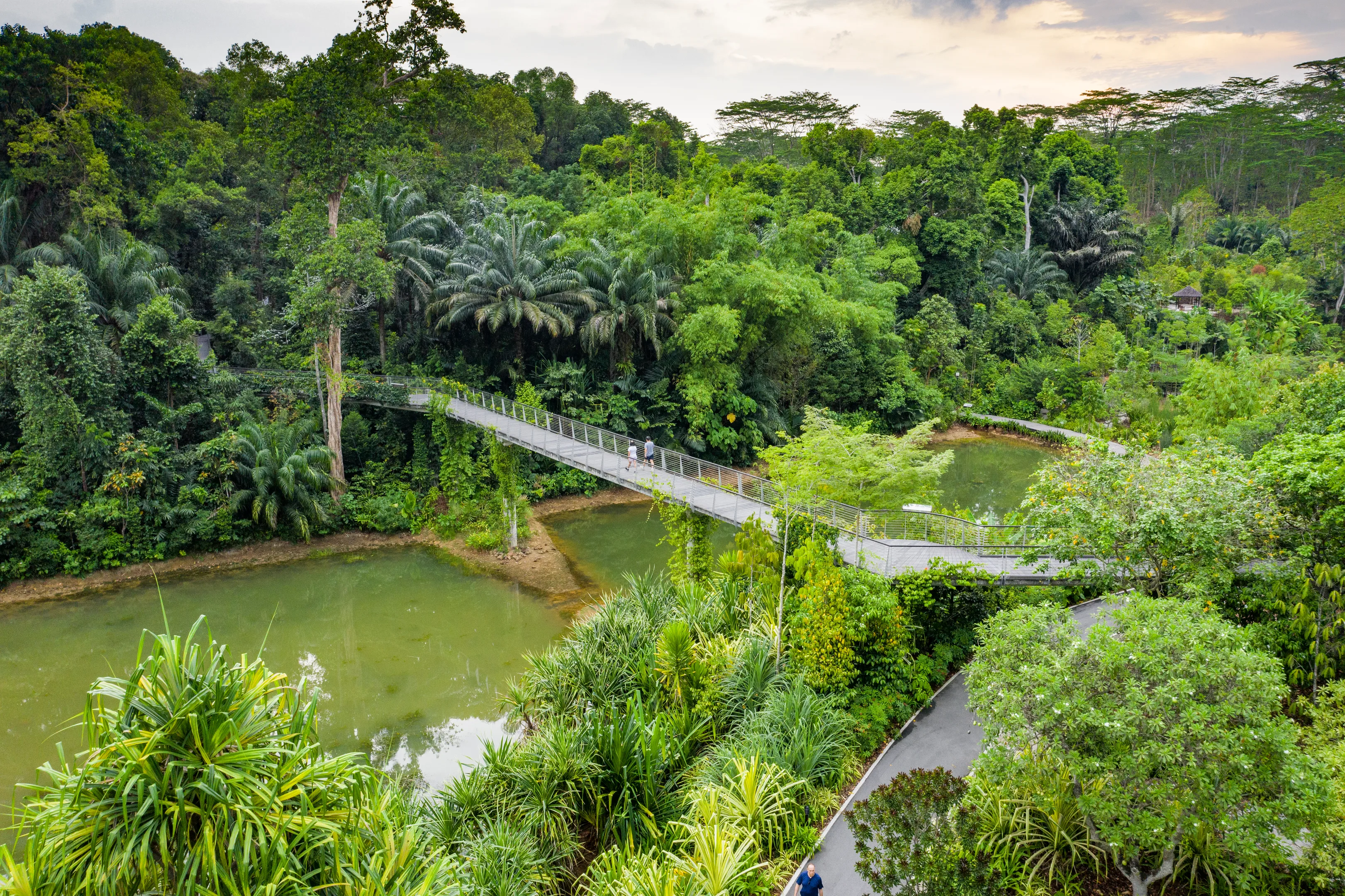
On the other hand, the Hakushu distillery is in the alpine forests of Hokuto in Yamanashi prefecture. The snowmelt and rainwater of Mt Kaikoma-gatake is filtered naturally though limestone and white granite rocks, giving the Hakushu single malt whisky its distinct subtle and refined complexity. This environment is also responsible for its forest-floor freshness and herbaceousness.
On the other hand, the Hakushu distillery is in the alpine forests of Hokuto in Yamanashi prefecture. Here, the water is extremely soft and flavoured gently by its natural environment, which ends up giving the whisky a green apple-like freshness.
Considering the importance of water in producing the Japanese whiskies, gins and vodkas that are so popular right now, Ng says that it’s the responsibility of distillers to make sure they’re protecting their water sources.
“Whatever you take from the earth, we have a responsibility to give back to it,” she says. For Suntory, water sustainability practices are the focus of its Natural Water Sanctuary initiative, which includes forest preservation and groundwater replenishment.
It’s an ingredient easily taken for granted, but as the popularity of Japanese spirits continues to grow, clean water should remain part of the process long into the future. Something to keep in mind next time you drink a whisky highball at a listening bar.
This article is produced by Broadsheet in partnership with Suntory.
 (3) (1)-cbeaefbc20.webp)
Produced by Broadsheet in partnership with Suntory
Learn more about partner content on Broadsheet.
About the author
-8e7567febd.webp)

MORE FROM BROADSHEET