Food & DrinkChef’s Kiss: Supermarket Parmesan Tested and Rated by Ellie Studd
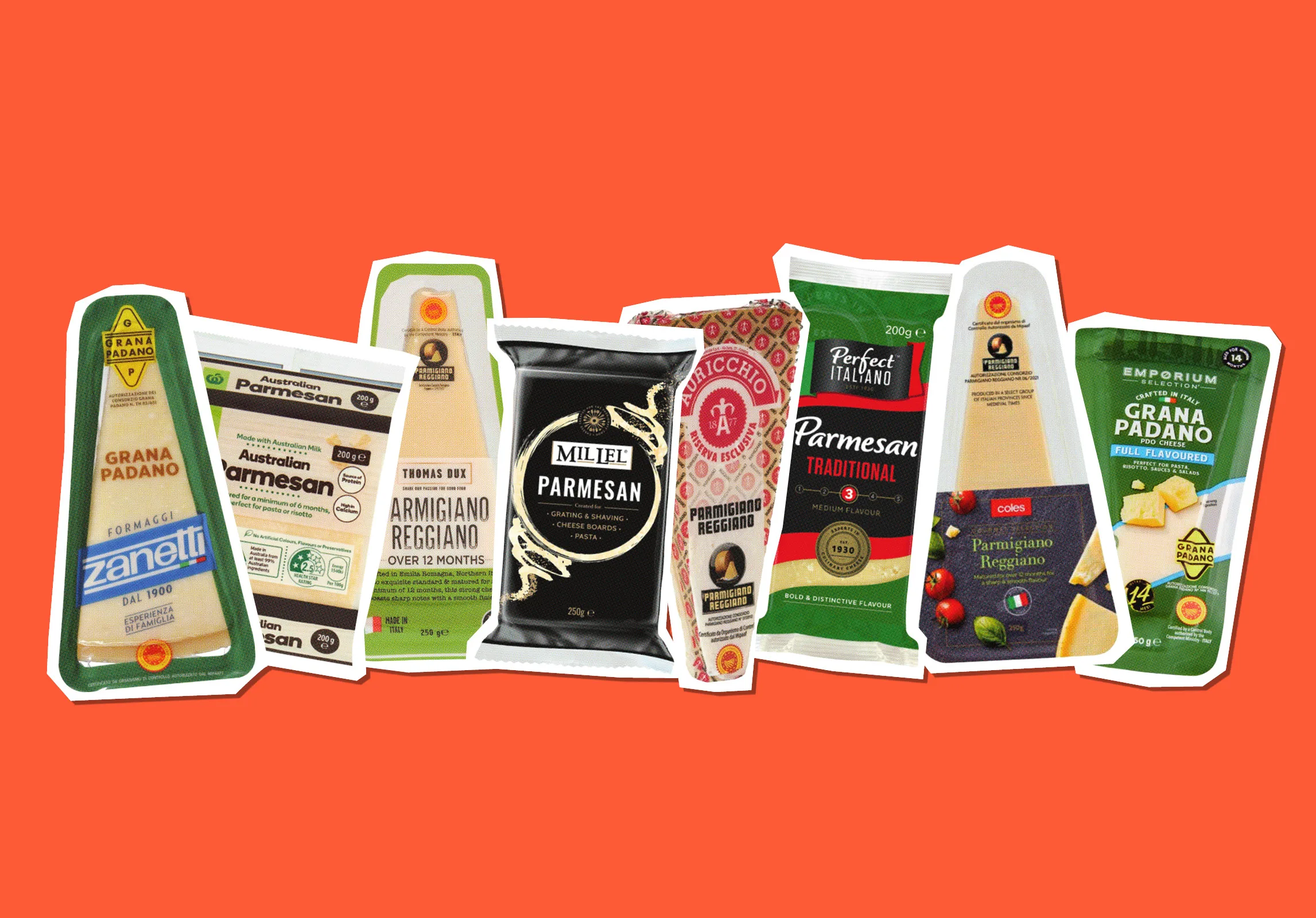
Some pleasures are felt before they’re tasted. The sight of freshly grated parm falling like snow, gathering into a glorious mountain over a steaming bowl of pasta. The savoury, nutty aroma, the anticipation, the way your mouth begins to water before the fork reaches your lips. A meal cooked with love deserves a grand finale.
But step into a supermarket hard-cheese section and the romance quickly unravels. There’s a bewildering array of wedges and blocks, each promising something similar yet different. Parmesan, parmesan-style, Grana Padano, Parmigiano-Reggiano. What’s the difference?
In the world of cheese, a name can tell you a great deal. Parmigiano-Reggiano PDO (Protected Designation of Origin) and Grana Padano PDO belong to a family of hard, cooked cheeses known as grana, named for their distinctive granular texture. Their origins stretch back nearly 900 years to northern Italy’s Po Valley.
Parmigiano-Reggiano PDO is the undisputed monarch, its prestigious title earned through centuries of craftsmanship and strict rules governing everything from where it’s made to what the cows eat (grass and hay, never silage). Made from just three ingredients – raw milk, rennet and salt – it takes around 1100 litres of milk to make two wheels, affectionately known as twins. Each must mature for at least 12 months before undergoing a rigorous assessment, with inspectors even tapping the wheels with a special hammer, listening for hidden imperfections. Those that fail to meet the required standards lose the right to carry the name.
You can recognise authentic Parmigiano-Reggiano by the distinctive dotted lettering stamped into its rind and, if you’re lucky, a paste spotted with tiny white crystals of tyrosine – an amino acid that forms as proteins break down during maturation. These little crunchy jewels are a welcome sign of ageing, adding a delightful textural surprise to each bite.
Grana Padano PDO has long lived in the shadow of its more celebrated cousin, though its softer character deserves to be appreciated on its own terms. Produced on a larger scale across a broader geographical area of northern Italy, it follows different production rules and can be sold younger, from just nine months. Cows may be fed silage, and cheesemakers are permitted to use lysozyme, an enzyme derived from egg white, to prevent unwanted fermentation. You can recognise it by the distinctive diamond-shaped markings stamped into its rind and a taste that tends to be sweeter, milkier and more delicate than Parmigiano-Reggiano.
Which brings us to the rather slippery category of cheeses simply labelled “parmesan”. Within the European Union, the word is protected as a reference to Parmigiano-Reggiano. In Australia, however, parmesan remains a generic name that local cheesemakers can legally use for their own hard-grating cheeses: the word alone doesn’t guarantee a particular origin, production method or minimum maturation period. So while we make some excellent cheeses in this country, Aussie parms can vary enormously.
I’ll admit I came into this edition of Chef’s Kiss with a rather particular benchmark. My desert-island cheese is Parmigiano-Reggiano, specifically one matured by Giorgio Cravero, and I go out of my way to ensure there’s always a hunk in my fridge. There’s something extraordinary about the way it yields in your mouth, revealing layers of sweet caramel, salted butter and toasted nuts before settling into a deep, lingering savouriness. But a weeknight bowl of pasta doesn’t always call for a trip to a specialist cheesemonger. So I was curious to see how the supermarket offerings measure up.
I’ve chosen whole cheese blocks rather than the pre-grated stuff, which I don’t recommend buying (more on this in my notes). For the cooking test, I wanted to honour the northern Italian roots of these cheeses, so I settled on veal tortellini in chicken broth, inspired by the traditional tortellini in brodo of the Emilia-Romagna region. With no rich sauce to hide behind, it was a wonderfully simple way to let each cheese speak for itself.
I’ve included the recipe at the end of this article, as well as some essential tips to help guide your own parmesan tastings beyond these eight supermarket staples. But here’s my most important tip: with good Parmigiano-Reggiano or Grana Padano, a little goes a long way. So understanding what’s behind the label should help you decide where your money is best spent. Because that final snowfall of cheese shouldn’t be an afterthought. Sometimes it’s the best part of the meal.
Want more chef-approved supermarket staples? Check out Broadsheet’s Chef’s Kiss series featuring Danielle Alvarez, Brendan Pang, Julia Busuttil Nishimura and more.
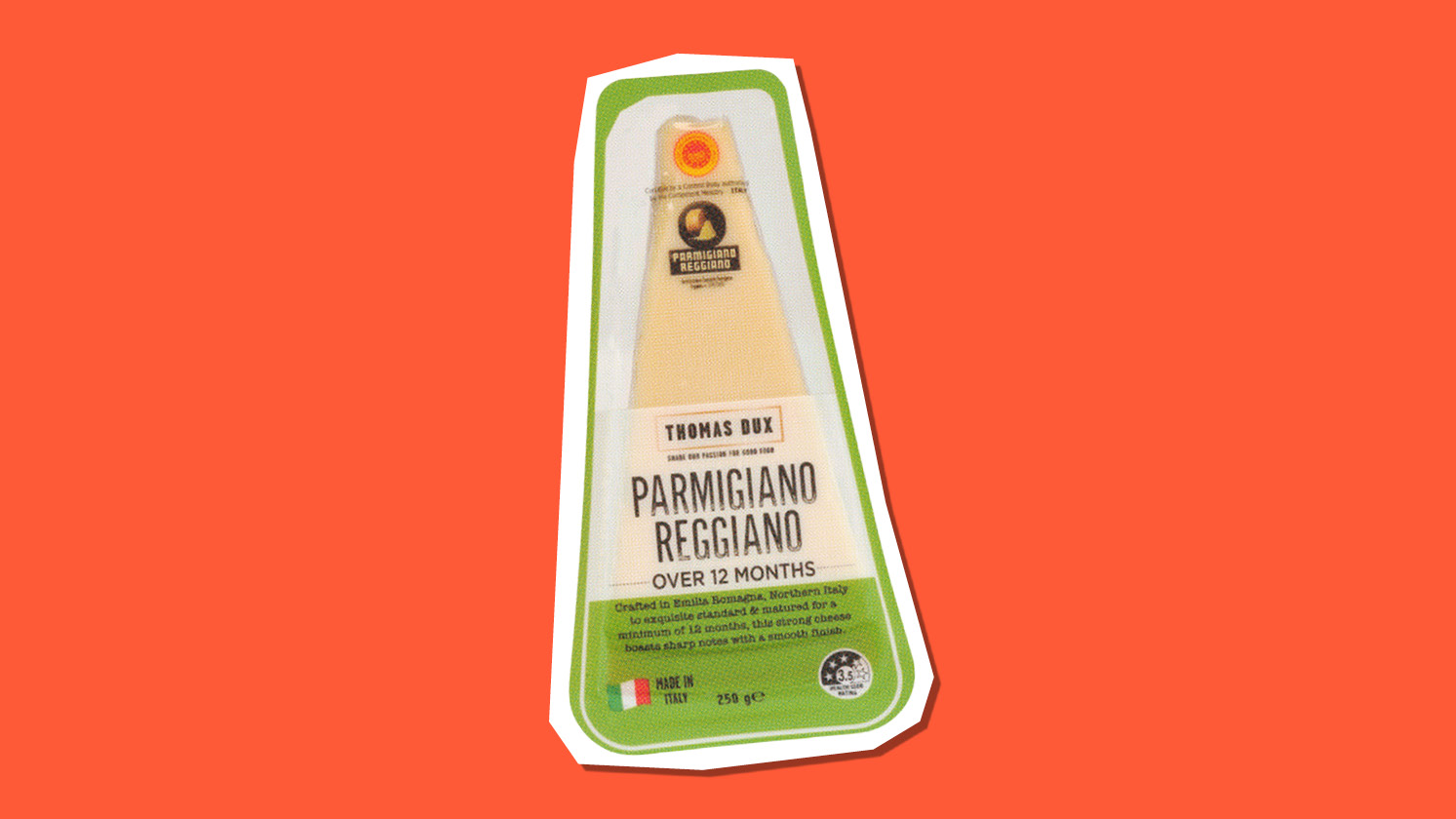
Sample price: $14.50 (250g) from Woolworths
Ingredients: Milk, salt, animal rennet
Product of Italy
Appearance: Pale, relatively dry-looking rind with the characteristic dotted Parm-Reggi markings. The paste is a uniform pale straw colour, with a dense, even appearance and scattered tyrosine crystals throughout.
Aroma: Delicate, buttery and sweet, with notes of dried hay at the forefront. There’s a gentle nuttiness underneath, leaning towards cashew and macadamia. Overall fresh, clean and pastoral.
Texture: Smooth and condensed. Breaks into small nugget-like pieces rather than large shards, then becomes chalky in a pleasant way as you chew, with fine granules spreading across and coating the whole mouth. Scattered tyrosine crystals add a light crystalline crunch.
Flavour: Harmonious and multidimensional, with sweet milk, balanced salt and a gentle chicken-broth savouriness. The flavour is soft rather than forceful, but still layered and satisfying, with enough depth to keep you coming back for another bite. Moreish, balanced and quietly complex.
Integrates harmoniously into the dish, adding sweet richness, balanced salt and a gentle chicken-broth savouriness. It deepens the flavour without dominating, bringing a soft, rounded umami character and enough complexity to make the broth feel fuller and more complete. An excellent all-rounder for dishes where Parmigiano-Reggiano is allowed to shine. I’d use it in tortellini in brodo, risotto alla Parmigiana or a simple butter and sage pasta. Equally lovely shaved over roasted vegetables or enjoyed as a table cheese. Curious to try the 24-month (and older) versions.
Score: 4/5
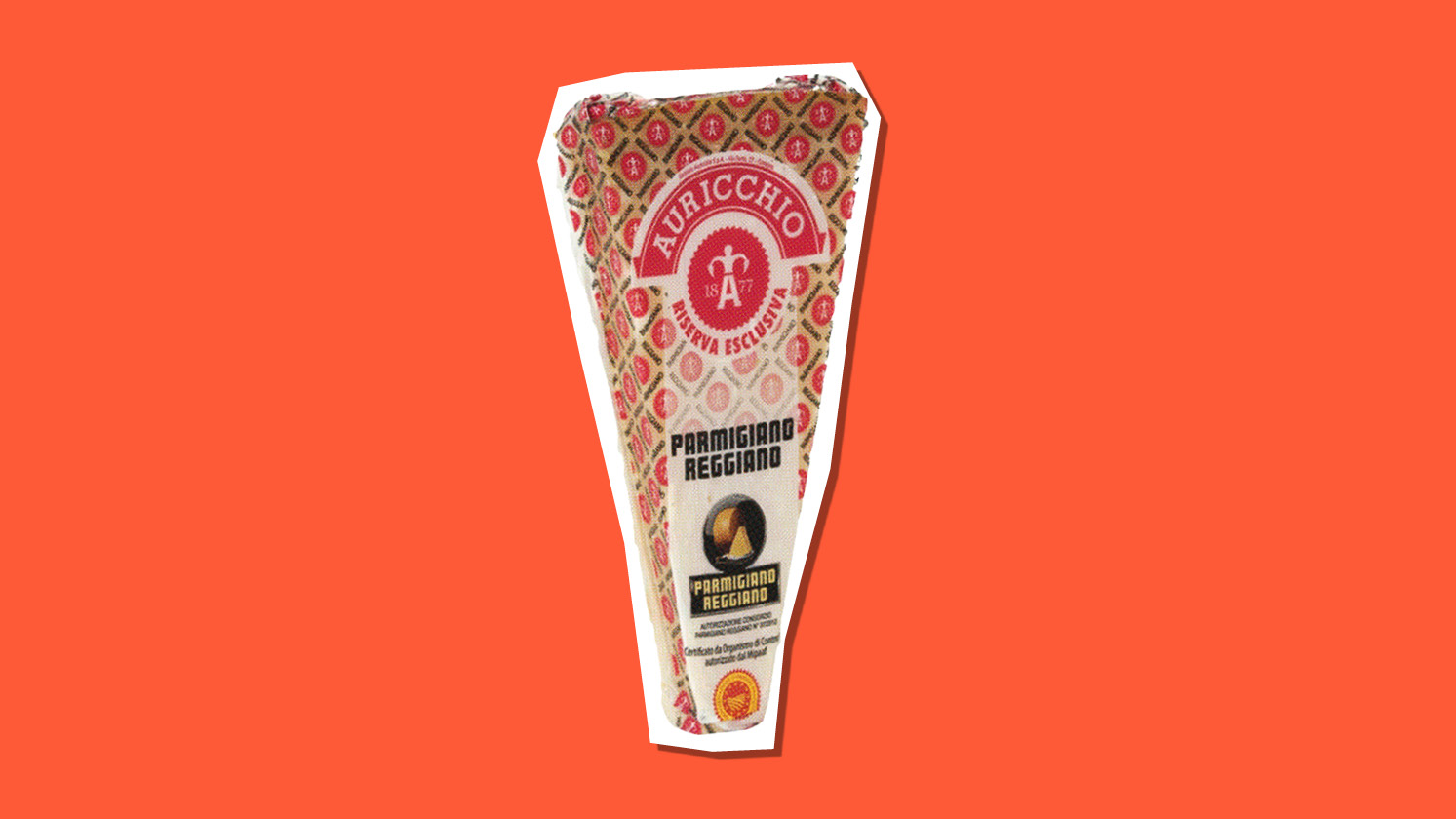
Sample price: $13.99 (200g) from Italianos Fresh
Ingredients: Cow’s milk, salt, rennet, natural culture
Product of Italy
Appearance: Dark amber rind with a slightly oiled sheen, clearly marked with the characteristic dotted Parmigiano-Reggiano lettering. The paste is pale straw to creamy ivory. Prominent speckled tyrosine crystals are visible throughout, becoming particularly concentrated towards the rind.
Aroma: Strong when first opened, similar to pecorino. Grass, old hay, sweet, buttery. Nutty (walnut shell). Umami (soy sauce). Classic Parm-Reggi smell: layered, nutty, lactic and complex rather than simply “cheesy”.
Texture: Dense, smooth and compact, with a classic grana-style grainy texture. The paste is firm and relatively brittle, breaking into fine, rice-sized grains. There’s a satisfying dry crumble rather than a waxy or rubbery break, with the crystalline structure becoming more apparent as you chew.
Flavour: Opens with a noticeable tang and plenty of punch, then unfolds slowly across the palate. Savoury and nutty, with notes of old hay, browned butter, aged barrel and a gentle brothy depth. The tyrosine crystals are very pronounced, giving a satisfying crunch. Rich and voluminous in the mouth, it coats the whole palate and lingers well after swallowing. Good “smackability” (that’s when you finish a piece, wander away from the cheeseboard, and find yourself still smacking your lips, thinking about the next bite.)
Adds real dimension to the chicken broth, bringing brothy, nutty, buttery and savoury notes that feel very traditional. The cheese softens rather than fully disappearing, with finer particles dispersing more evenly through the broth. The result is richer and more layered, with clear umami depth. Would be beautiful shaved over mushroom risotto, stirred through polenta with butter, or dusted over a simple sage and butter pasta. I’d also happily serve it as a table cheese with ripe pears and aged balsamic vinegar, where its crystalline crunch and lingering umami can take centre stage.
Score: 4/5
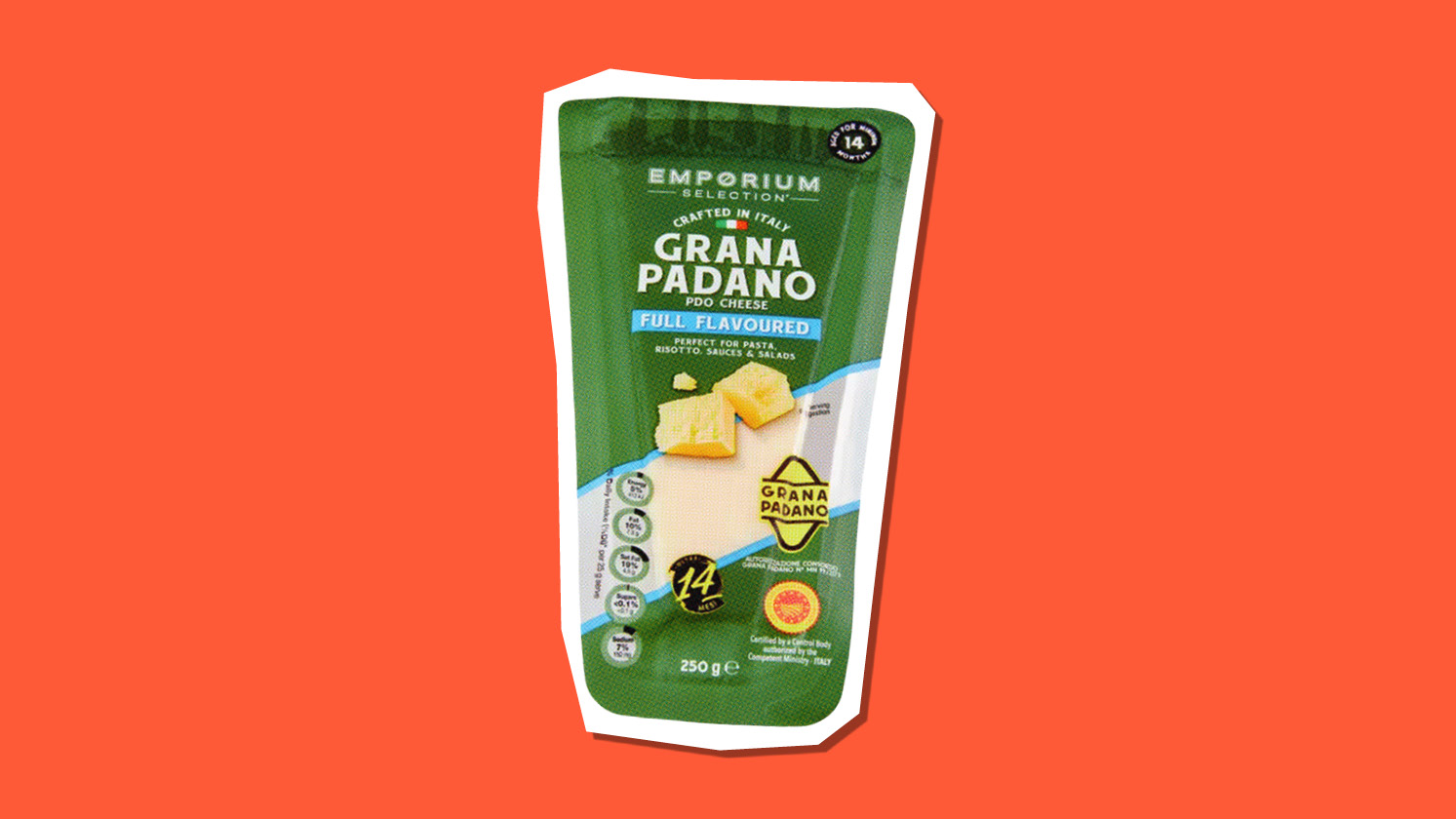
Sample price: $8.29 (250g) from Aldi
Ingredients: Unpasteurised milk, salt, starter cultures, enzyme (rennet), preservative (1105) (egg)
Product of Italy
Appearance: Clearly identifiable as Grana Padano from the rind, with the characteristic pale markings and arrow-like patterning giving the game away. The paste is a warm straw colour, with a clean transition from rind to interior. Very few visible tyrosine crystals.
Aroma: Pleasant and fairly gentle, with milky sweetness, melted butter and soft button-mushroom notes. There’s also a mild nuttiness reminiscent of cashews. Overall clean, mellow and approachable.
Texture: Dense and well-consolidated, with a fine, modest granularity. In the mouth it breaks down into very small particles, giving a delicate sandy texture. No noticeable tyrosine crystal crunch.
Flavour: Authentic Grana Padano: round, pleasant, sweet, milky, buttery. Mildly salty.
Grated nicely. Added a rounder, sweeter dairy character to the dish, with a delicate milky richness rather than a big savoury punch. Flavour is gentle and well-integrated, bringing softness and balance without dominating the broth. Good if after sweeter cheese. Nothing remarkable, but better than the Aussie options.
Score: 3.5/5
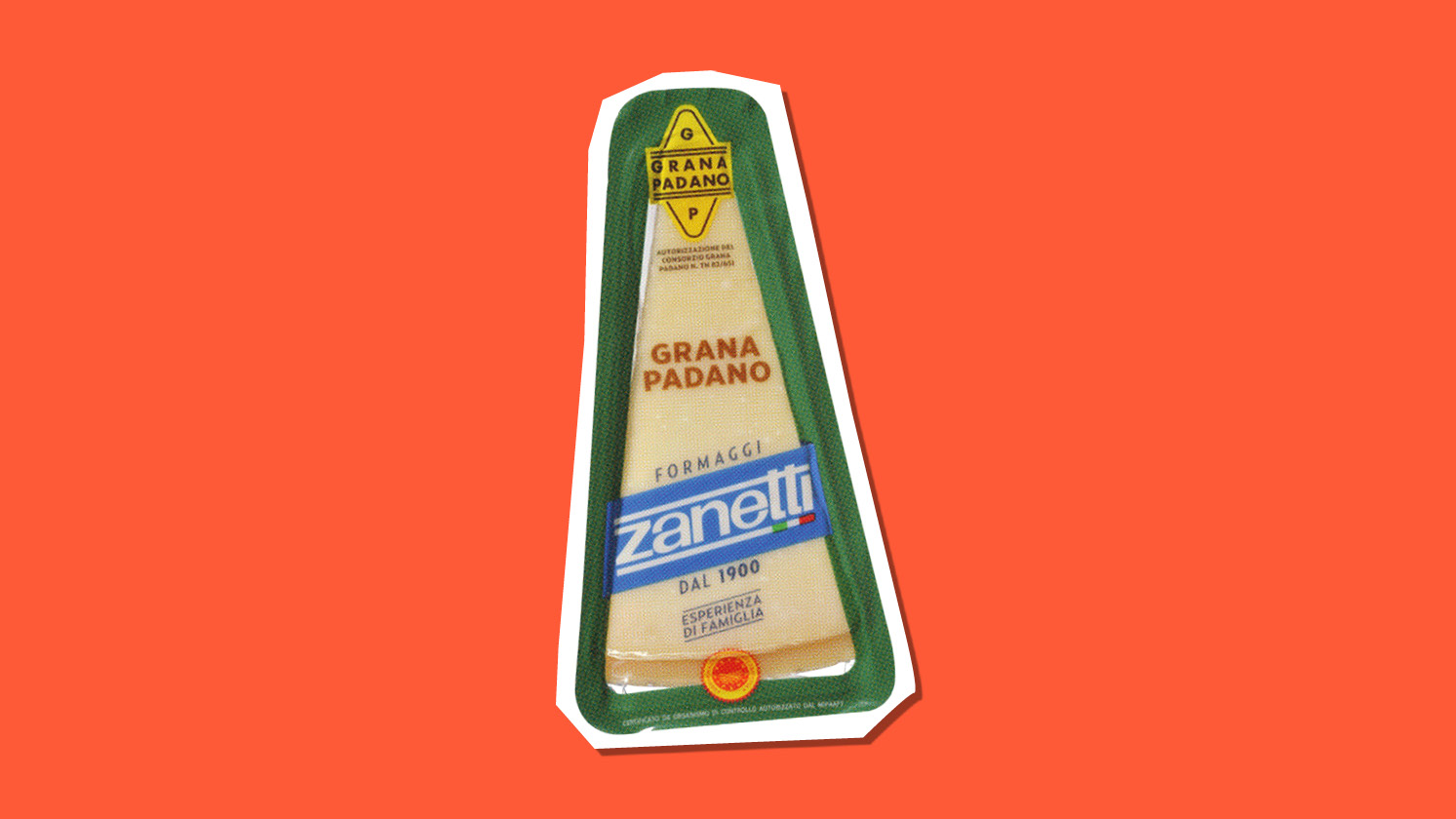
Sample price: $10.99 (200g) from Italianos Fresh
Ingredients: Unpasteurised cow’s milk, salt, animal rennet, preservative: lysozyme from egg
Product of Italy
Appearance: Clearly identifiable Grana Padano rind, dark and well developed around the edge, contrasting with a warm yellow-straw paste. The interior looks smooth, dense and even. Some tyrosine crystals.
Aroma: Butter, sweet milk, fresh nuts, light savoury notes.
Texture: Classic grana-style texture: chalky, crumbly and finely granular rather than breaking into large nuggets or clean shards. Some tyrosine crystals are present, adding an occasional crunch. In the mouth, the cheese becomes noticeably powdery.
Flavour: Pleasant and approachable, with a noticeable bite upfront followed by a tangy, kefir-like finish. Salty and fairly direct, with some vegetal-broth character. The flavour is sharper than it is layered, making it easy to enjoy without being especially complex.
Adds a sweet, milky character and gentle savoury richness without overtaking the dish. The flavour integrates quietly into the broth, softening and rounding it rather than pushing forward with a strong cheesy or umami punch. Pleasant and approachable, but quite salty. Best suited to dishes such as risotto, pasta, gratins or vegetables. More an everyday cooking cheese than the star of a cheese board.
Score: 3/5
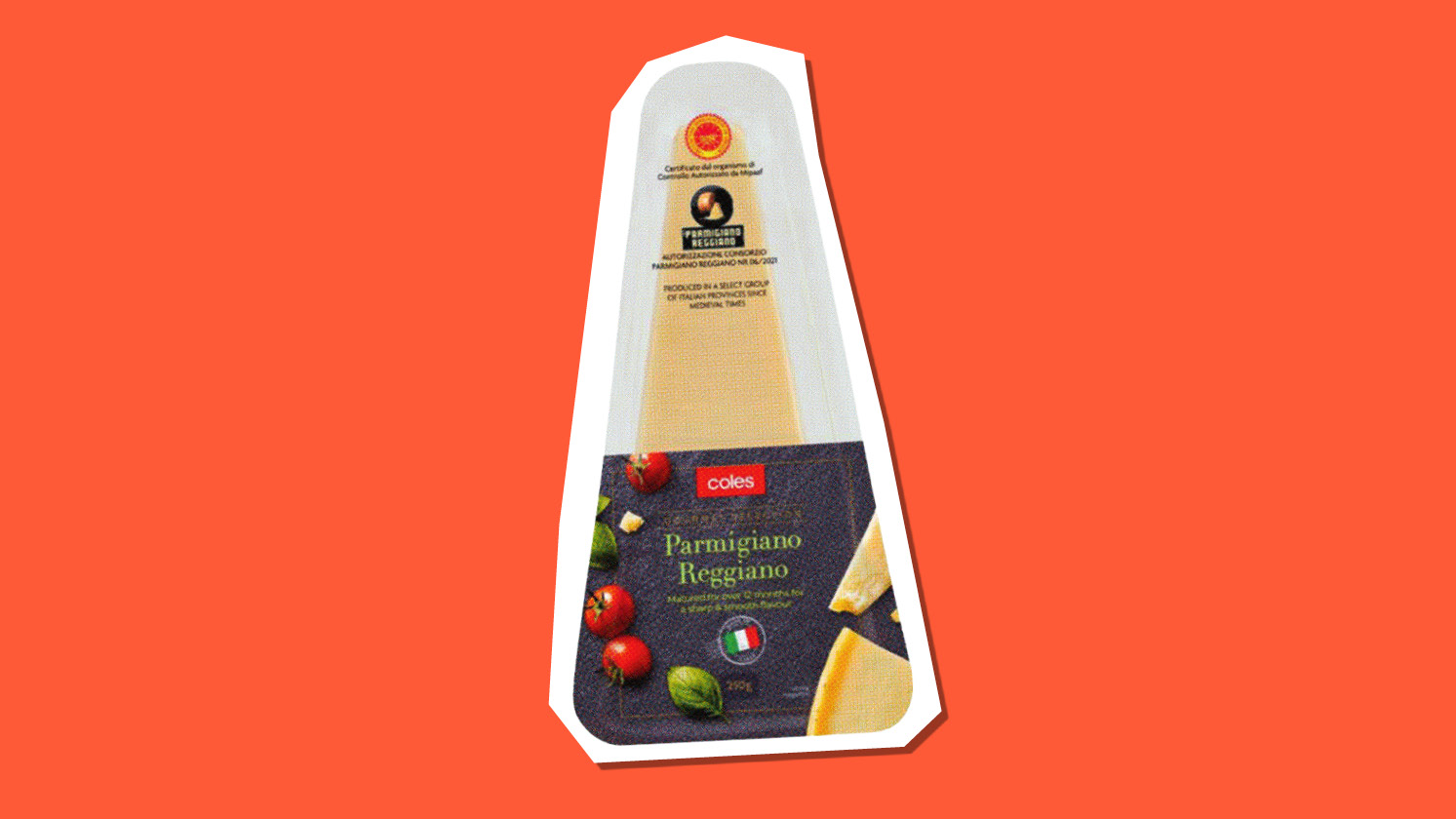
Sample price: $13 (250g) from Coles
Ingredients: Unpasteurised milk, salt, enzyme (rennet)
Product of Italy
Appearance: Hard dark straw-coloured rind with a slightly oiled sheen and the characteristic dotted Parmigiano-Reggiano markings. Colour is in ivory-to-light-straw range. No obvious tyrosine crystals visible.
Aroma: Milky, buttery and lactic with fresh hay.
Texture: Smooth and finely granular. The paste feels compact and even, with a gentle crumble rather than a brittle fracture. A few small crystals give an occasional crunch, but the crystalline character is still quite restrained.
Flavour: Lingering mouthfeel and some smackability, but younger age means less complexity. Some depth at start that quickly fades – an overall short cheese journey.
Good savoury impact up front, but not much evolution afterwards. Didn’t add much complexity to the dish. Overall, it’s a straightforward, fairly predictable parmesan experience rather than one with much depth or development. Not worth the price.
Score: 2.5/5
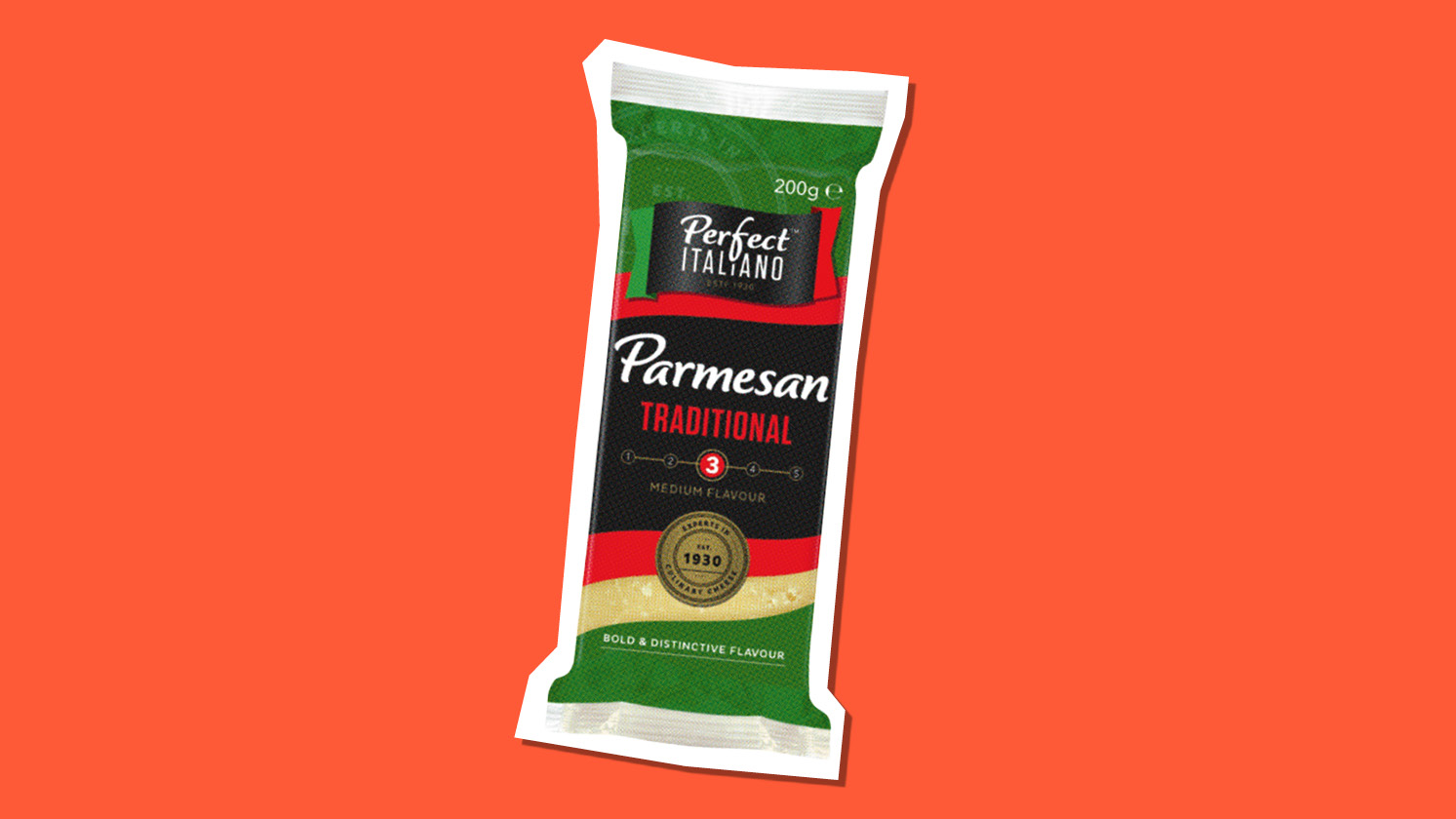
Sample price: $8 (200g) from IGA
Ingredients: Milk, salt, cultures (milk), enzyme
Product of Australia
Appearance: Neat rectangular block with slightly rippled edges on the outside. Rich golden straw yellow/champagne colour. Surface is waxy/plasticky with a slight sheen.
Aroma: Mild and unremarkable, without much depth or complexity. There’s a cellar note, alongside a processed cheesy aroma. Subtle green notes as well, somewhere between raw leek and freshly cut grass.
Texture: Dense and compact, although the curd structure looks looser and more pronounced than traditional Parmigiano. It breaks into large, irregular, jagged chunks rather than fine shards.
Flavour: One-dimensional, with a salty, creamy, bechamel-like flavour that veers towards mac-and-cheese powder. The texture coats the roof of the mouth rather than filling the whole palate, and the finish is short. Overall, it delivers a generic “cheesy” flavour rather than unfolding in stages.
Melts into the broth reasonably well, although some distinct grated strands remain visible. More of a bold supermarket-cheddar-meets-parmesan than true Parmigiano-Reggiano territory: buttery, salty and dependably cheesy, but short on nuttiness, umami and complexity. I’d use it where you want an easy, familiar cheesy hit, such as mac and cheese, cauliflower cheese, pasta bakes or gratins. One positive is the simple ingredient list, with no anti-caking agents.
Score: 2/5
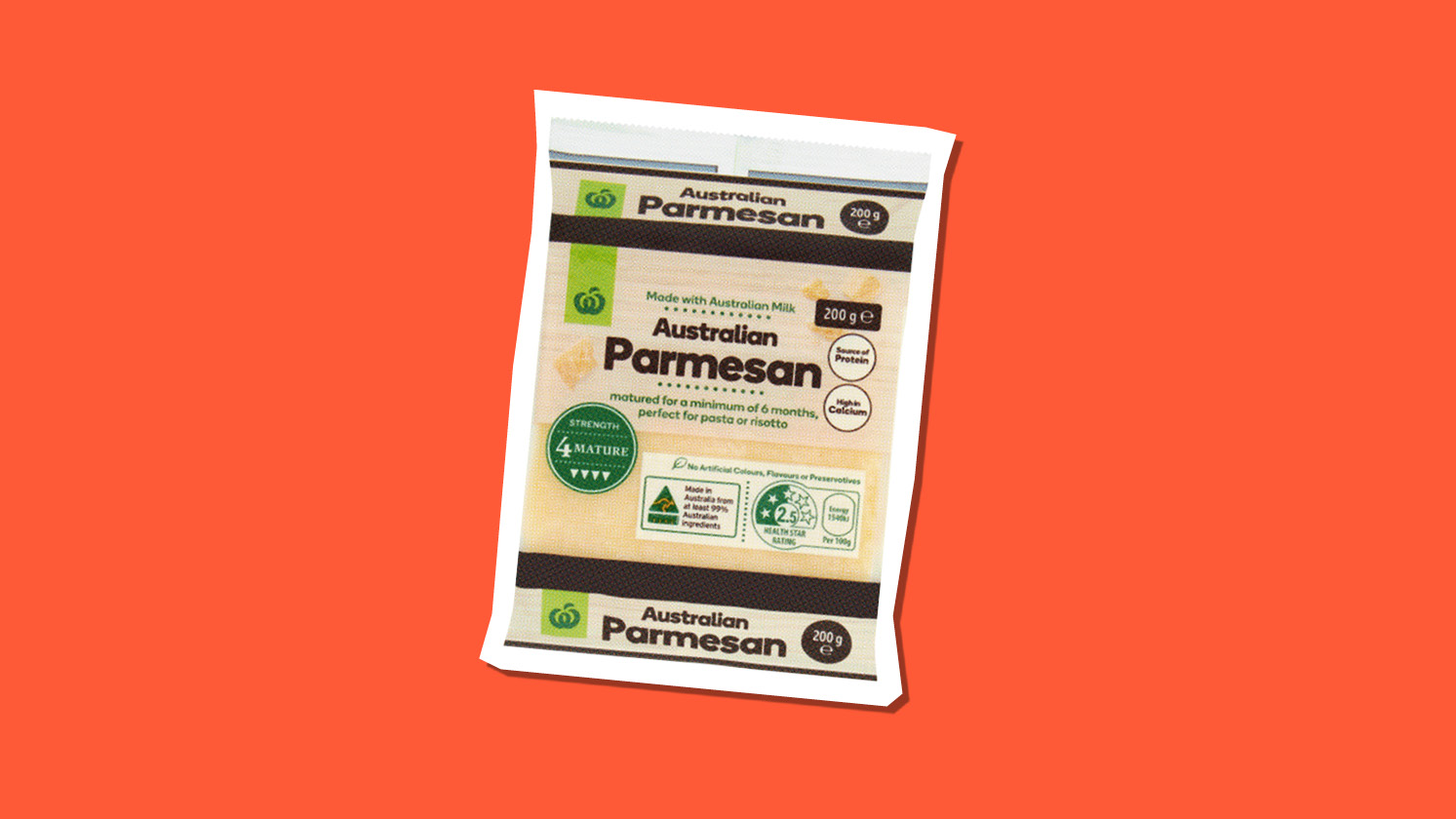
Sample price: $6.90 (200g) from Woolworths
Ingredients: Milk, starter culture (milk), salt, enzymes (microbial rennet, microbial lipase)
Product of Australia
Appearance: No rind. Formed into a neat square block. Uniformly warm butter-yellow to golden-straw in colour. Fine white powder is visible across parts of the surface (possibly calcium lactate).
Aroma: Muted and slightly baggy, with latex-glove notes alongside a faint damp cellar character. There’s very little distinctive cheese aroma. None of the nuttiness, butteriness or savoury depth you’d expect from a more characterful parmesan.
Texture: Rubbery and slightly plastic-like at first, with a matte, chalky-looking paste. Visually, the curd structure appears quite loose for such a dense cheese, both before and after cutting.
Flavour: Salty! Tastes plasticky. Cheddar flavour with yoghurt/off-yoghurt tang. Short cheese journey and one-dimensional. Mild. No umami, no nutty, no fruity.
Adds virtually no depth beyond salt, which is all I could taste. Once grated into the dish, it melts but becomes oily and slightly clumpy rather than integrating smoothly. The texture and behaviour are closer to a supermarket cheddar than Parmigiano-Reggiano. If you are after parm flavour, this is not it!
Score: 1/5
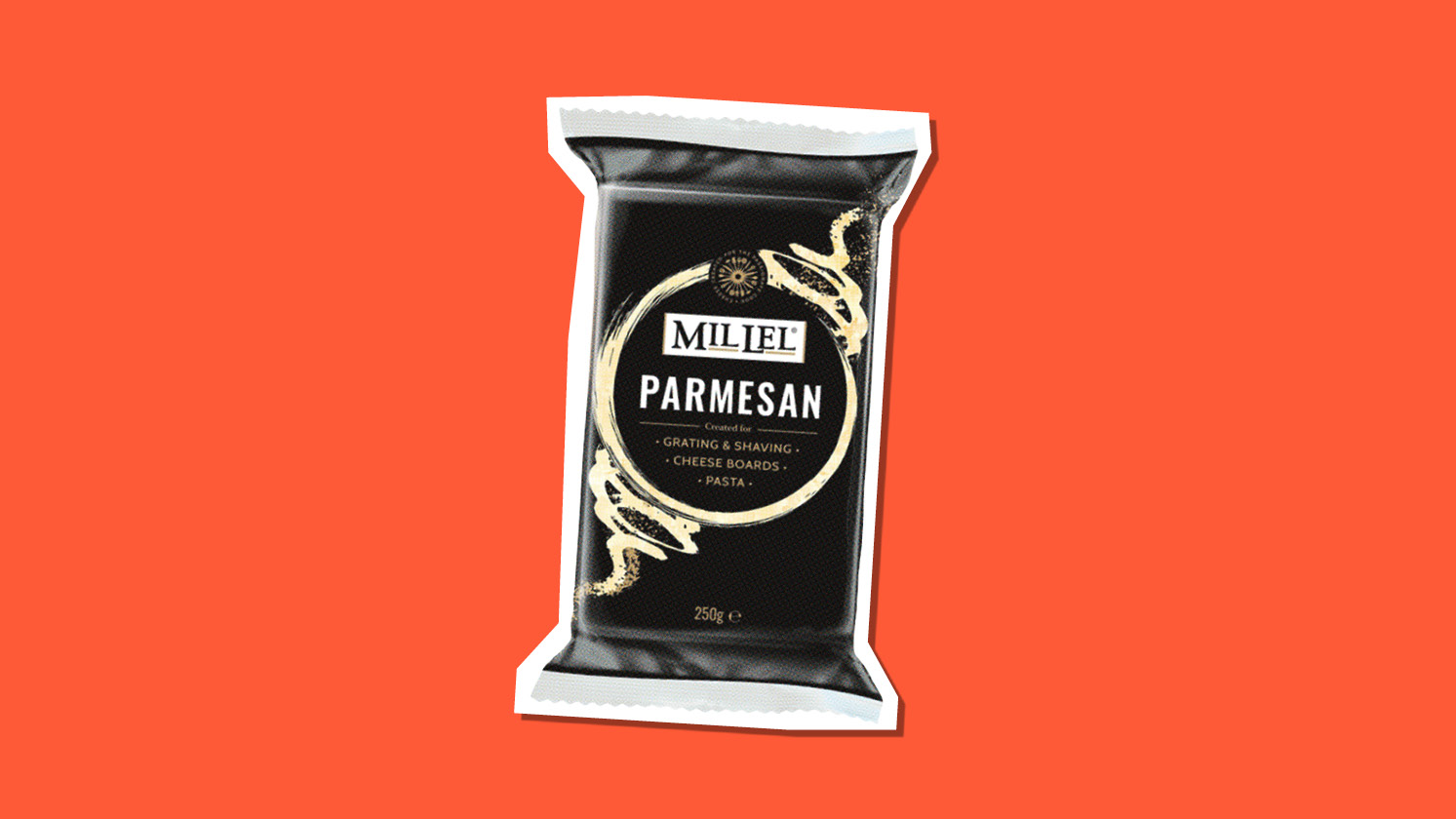
Sample price: $8.50 (250g) from IGA
Ingredients: Pasteurised milk, salt, mineral salt (509), starter cultures, enzymes (animal lipase), preservatives (1105, 235) (contains egg protein)
Product of Australia
Appearance: Rectangular block, no rind. Warm golden-straw in colour, with a dense paste that looks moist and slightly waxy. The surface is uneven and mottled, with a few small holes through the paste. A fine white calcium-lactate bloom is visible across parts of the exterior and blooming on the edges.
Aroma: Malty and fermented, with notes of soaked oats, damp suede and a faint barnyard funk. There’s also a slightly baggy, enclosed quality to the aroma. Overall, it smells more earthy and fermented than nutty or buttery – a distinctly unconventional profile for a parmesan-style cheese.
Texture: Moist and loosely bonded, crumbling into large, irregular waxy clump pieces rather than clean shards. More cheddar-like than grana-style.
Flavour: Robust. Full-flavoured but overwhelmingly salty. The salt hits hard and lingers, almost like licking your skin after swimming in the ocean. Beneath that are darker savoury notes of beef broth and leather, with a slightly animal, over-mature character.
Salt remains the dominant impression – it makes the dish feel heavier and more aggressive. Noticeable pale mass of grated cheese remained clumped against the tortellini rather than dispersing evenly through the broth. The flavour is robust, but not especially balanced or refined. With so many better alternatives available, it’s not something I’d reach for again.
Score: 1/5
Don’t be seduced by age alone. A 36-month cheese isn’t necessarily better than one matured for 24. Personally, I love Parmigiano-Reggiano around 18 to 24 months, when sweetness, savouriness and succulence find a beautiful balance.
Where possible, buy a wedge freshly cracked from a whole wheel or from a retailer with good turnover. If buying vacuum-packed, scrape away a thin surface layer after opening to remove any stale, plastic-like flavour.
Please, grate it fresh. I love using a rotary cheese grater for parm. Avoid pre-grated cheese where possible, both for flavour and because some products contain anti-caking agents.
A cheese that doesn’t melt smoothly isn’t necessarily inferior. Hard-aged cheeses often retain protein particles when heated in broth. The question is whether those particles feel pleasantly delicate or noticeably gritty, and what flavour they contribute.
Serves 2
Preparation time: 20 minutes
Cooking time: 4–5 hours
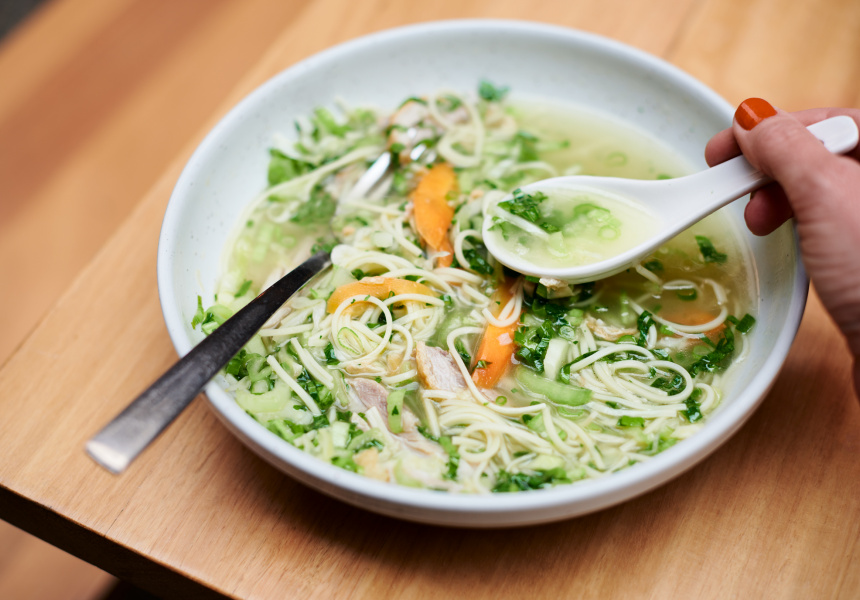
Tender veal tortellini served in a golden, gently roasted chicken broth, finished with freshly grated Parmigiano-Reggiano or Grana Padano.
335-370g fresh veal tortellini
Freshly grated Parmigiano-Reggiano PDO or Grana Padano PDO, to serve
Chicken broth
1kg chicken carcasses, preferably with some meat attached
800g chicken wings
1 large brown onion, quartered, skin off
2 carrots, peeled and halved
2 celery stalks, halved
1/2 head garlic, skin on
6–8 whole black peppercorns
3 thyme sprigs
1 piece Parmigiano-Reggiano rind, approximately 40–50g (optional)
Sea salt, to taste
Preheat the oven to 190°C (170°C fan-forced). Arrange the chicken carcasses and wings in a single layer across two roasting trays. Roast for 15 minutes, then add the peeled onion quarters, cut-side down. Continue roasting for a further 20–25 minutes, turning the chicken once, until lightly golden and the onion is softened and caramelised around the edges.
Transfer the roasted chicken and onion to a large, heavy-based saucepan. Pour off excess fat from the roasting trays, then add a splash of hot water to loosen the caramelised juices. Scrape these into the saucepan, avoiding any burnt bits.
Add the onion, carrots, celery, garlic, peppercorns and thyme. Pour over 3 litres of cold water and add the Parmigiano-Reggiano rind, if using.
Slowly bring to a gentle simmer, skimming away any foam or impurities that rise to the surface. Reduce the heat to low and cook, partially covered, for 3–4 hours. The surface should barely ripple. Avoid boiling vigorously, which can cloud the broth.
Strain the broth through a fine sieve into a clean saucepan, without pressing on the solids. Skim off most of the fat, leaving a little on the surface for a delicate golden sheen and a silky mouthfeel. Adjust the concentration with a little water or gentle reduction to yield approximately 2 litres.
Taste before seasoning, adding salt sparingly. The finished broth should be golden, aromatic and deeply savoury, with a gentle roasted-chicken character.
To serve
Bring 1 litre of chicken broth to a gentle boil in a medium saucepan. Add the veal tortellini and cook according to packet instructions, usually 3–5 minutes for fresh pasta, or until tender and the filling is cooked through.
Divide the tortellini between two warmed bowls and ladle over the hot broth. Finish generously with freshly grated parmesan.
NB: The recipe yields approximately 2 litres of broth, so you'll have around 1 litre left over. Refrigerate and use within 3–4 days, or freeze for up to 3 months.
Want more chef-approved supermarket staples? Check out Broadsheet’s Chef’s Kiss series featuring Danielle Alvarez, Brendan Pang, Julia Busuttil Nishimura and more.
About the author
Ellie Studd is a certified cheese professional and author based in Melbourne.


More from Broadsheet
Videos
More Guides
Recipes




-6e9e4d4cb1.webp)
-c121bced4e.webp)