A Guide to Understanding Spirits Through Flavour Pairings


-0776289438.webp)

Words by Kit Kriewaldt · Published on 11 Sep 2026
The simplest drink pairings are the most memorable: gin and tonic, whisky and soda, rum and Coke. You can get them in any bar and anyone can mix them at home, which makes them great standbys. But they’re also grooves you can easily get stuck in – and with so many possibilities beyond the classic spirit-and-mixer combo, decision paralysis often takes over.
So we consulted expert bartender Kalisha Glover, the creative lead at Sydney’s Sakura House, to get pointers on ideal pairings for some of the most popular spirits. For Glover, understanding the flavour profiles of the spirits you’re using is the key to making better drinks. “It’s definitely the place to start if you’re looking to make your own cocktails at home,” she says.
Mixing with gin
Different countries and regions have slightly different definitions of what constitutes gin, but they all agree on the basics: it’s a spirit predominantly flavoured with juniper. Typically, juniper is supplemented with botanicals like citrus peel, coriander and angelica root, making for a drink that’s dry, tart and refreshing.
Gin’s durable double act with tonic began in the 19th century, when British military officers in India made their mandatory ration of antimalarial tonic water more palatable by topping it up with gin.
Suntory’s Roku gin takes the English spirit further east, adding six distinctly Japanese botanicals to the mix: cherry blossom; cherry leaf; yuzu peel; sansho pepper; and sencha and gyokuro, two different kinds of green tea.
Gin cocktail flavour pairings
Glover says one of the best ways to showcase those flavours is in a Roku Gin Fizz. The mix of gin, lime juice and sugar syrup shaken together, then topped off with soda water, is easy to put together at home. The lime plays well with the yuzu, the syrup softens the sharpness of the citrus and sansho, while the soda water draws out some of the more delicate flavours from the cherry blossoms and tea. “It really captures the essence of Roku, but in a very approachable and understandable way,” Glover says.
If you’re looking for something more advanced, Roku is a good gin to experiment with. “The flavour of Roku holds up with whatever you pair it with. No matter what drink you put it in, you can taste it.” It mixes especially well with other citrus fruits like mandarin, floral or herbal flavours such as hibiscus and mint, and even teas like chamomile.
Mixing with vodka
Distilled from potatoes, grain or other fruit and vegetables, vodka is often mistakenly thought to have no distinctive aroma, taste or character. While the US government did define vodka in those terms for decades, in 2020, it finally acknowledged what bartenders already knew – if it’s possible to tell different vodkas apart in a blind taste test, they must have subtly different characteristics.
Standard vodka doesn’t have any added botanicals (flavoured vodka – the sugary sweet bottles that taste like vanilla, citrus or birthday cake – are a different story), so a vodka’s character is largely down to its base ingredient. Glover says Suntory Haku vodka is “very unique and identifiable” because it’s distilled from Japanese white rice and filtered through bamboo charcoal. The rice base gives Haku a silkier, creamier finish than other vodkas.
Vodka cocktail flavour pairings
While simple vodka drinks like vodka, lime and soda or a Moscow Mule are really a chance for the spirit to disappear into the mix, Glover says Haku is more than capable of holding the spotlight. She points to Sakura House’s Mazda Zoom Zoom, which pairs Haku with pressed honeydew melon, coconut water and a house-made creaming soda. “It’s playful, it’s bubbly and it’s really fun,” she says. “And it maintains that creamier mouthfeel that you want from a Haku cocktail.”
Beyond coconut and melon, Haku pairs well with lighter fruit flavours like lychee and white peach and citrus like lime and yuzu. Its richer texture also makes for a more indulgent Espresso Martini.
Mixing with Whisky
Whisky is a spirit distilled from grains and aged in wooden barrels. The traditional whisky-producing regions – Scotland, Ireland, Canada and the US – each have their own rules about what kinds of grains, barrels and distilling techniques can be used, leading to vastly different drinks.
For example, Laphroaig, which comes from Islay, off the west coast of Scotland, is famous for its bold, smoky flavour. Purists will tell you to drink it neat, or maybe with a grudging splash of soda water, but there are so many possibilities beyond that.
Whisky cocktail flavour pairings
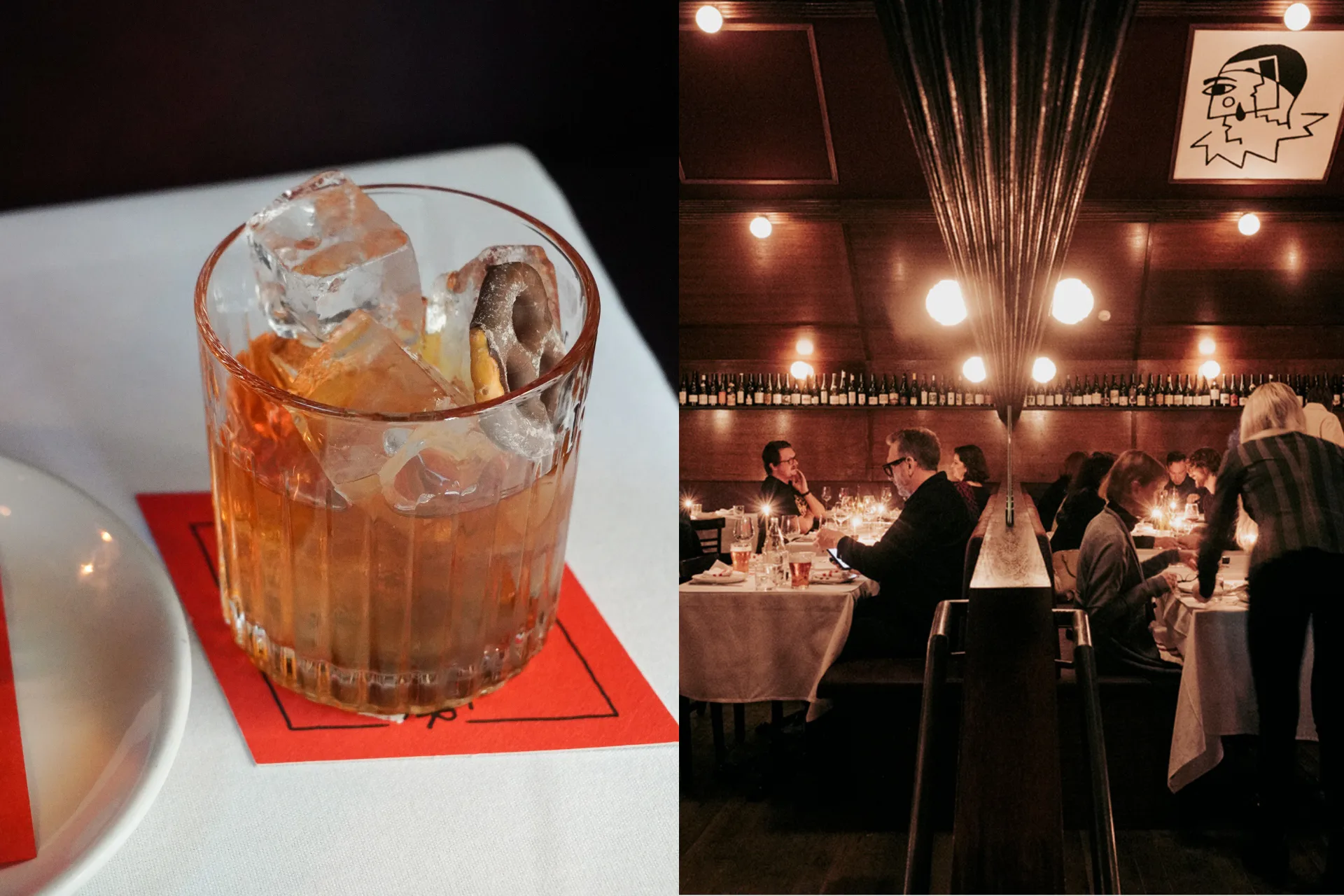
“Laphroaig has this kind of medicinal quality to it,” says Glover. “So we look for flavours that can complement that, but also mellow out some of the smokiness in a way that makes it more approachable.” She says chocolate and coffee are ideal pairings with the smoky whisky. “The sweetness and oiliness of chocolate kind of perfectly complements that smokiness.” At Sakura House, the Tate Eboshi cocktail mixes Laphroaig with coffee liqueur and chocolate bitters, rounding those rich flavours out with vanilla and vermouth.
Toki is a blended Japanese whisky that holds true in style and taste – honouring the country’s whisky craftsmanship. Its flavour profile combines grapefruit, green grapes, peppermint and thyme, with a touches of vanilla oak, white pepper and ginger in its finish. The Toki highball is one of Sakura House’s signature cocktails. “Reminiscent of the traditional highball found in Izakayas around Japan, [it’s] treated with the same intention and care as the most complex drinks on our menu,” Glover says. A simple serve of whisky is mixed with citrus and yamazaki soda – which is imported from Japan – and is garnished with grapefruit zest. “It’s a perfect demonstration of the balance and versatility of Toki whisky,” she says.
In contrast, Maker’s Mark is a bourbon whisky with a mellower, caramel flavour courtesy of its mix of distilled corn, malted barley and winter wheat. Naturally, it holds up well in a highball or a traditional Whisky Sour. But Glover recommends trying it in another classic, the Gold Rush – a simple mix of Maker’s Mark, lemon juice and honey syrup. “The caramel notes, which are really highlighted by the honey, mellow out the tartness of the lemon juice, making it a very approachable serve,” she says – even for people who don’t normally drink whisky.
For a more refreshing, late-afternoon drink, pair it with citrus and peach or apricot juice. Stone fruits in particular suit the vanilla notes the bourbon gets from its oak barrel aging, giving it “a more nostalgic flavour profile”.
At the end of the day, Glover says the best way to hone your intuition about what flavours go well together is experimentation. “A lot of it comes with experience and just trying many, many, many different things.”
This article is produced by Broadsheet in partnership with Suntory.
 (3) (1)-cbeaefbc20.webp)
Produced by Broadsheet in partnership with Suntory
Learn more about partner content on Broadsheet.
About the author
Kit Kriewaldt is a Broadsheet subeditor based in Brisbane.
-8e7567febd.webp)
MORE FROM BROADSHEET





-cc7203651b.webp)