Aussie Skincare Brand Papermoon’s Natural Deodorants Rethink Plastic-Free Packaging
Words by Gitika Garg · Updated on 11 Aug 2026 · Published on 29 Jul 2026
After years working in fashion and then becoming a mother of two, Louisa Hunt became increasingly aware of the amount of waste in her household. “When you have more humans, you realise how much waste you produce,” she says.
It also made her question the products we put on our skin and their impact on the environment. When swimming in the bay she’s aware of not leaving anything behind. She then transposed the question, asking what our chemicals are doing to marine life. “All of that is washing down the drain.”
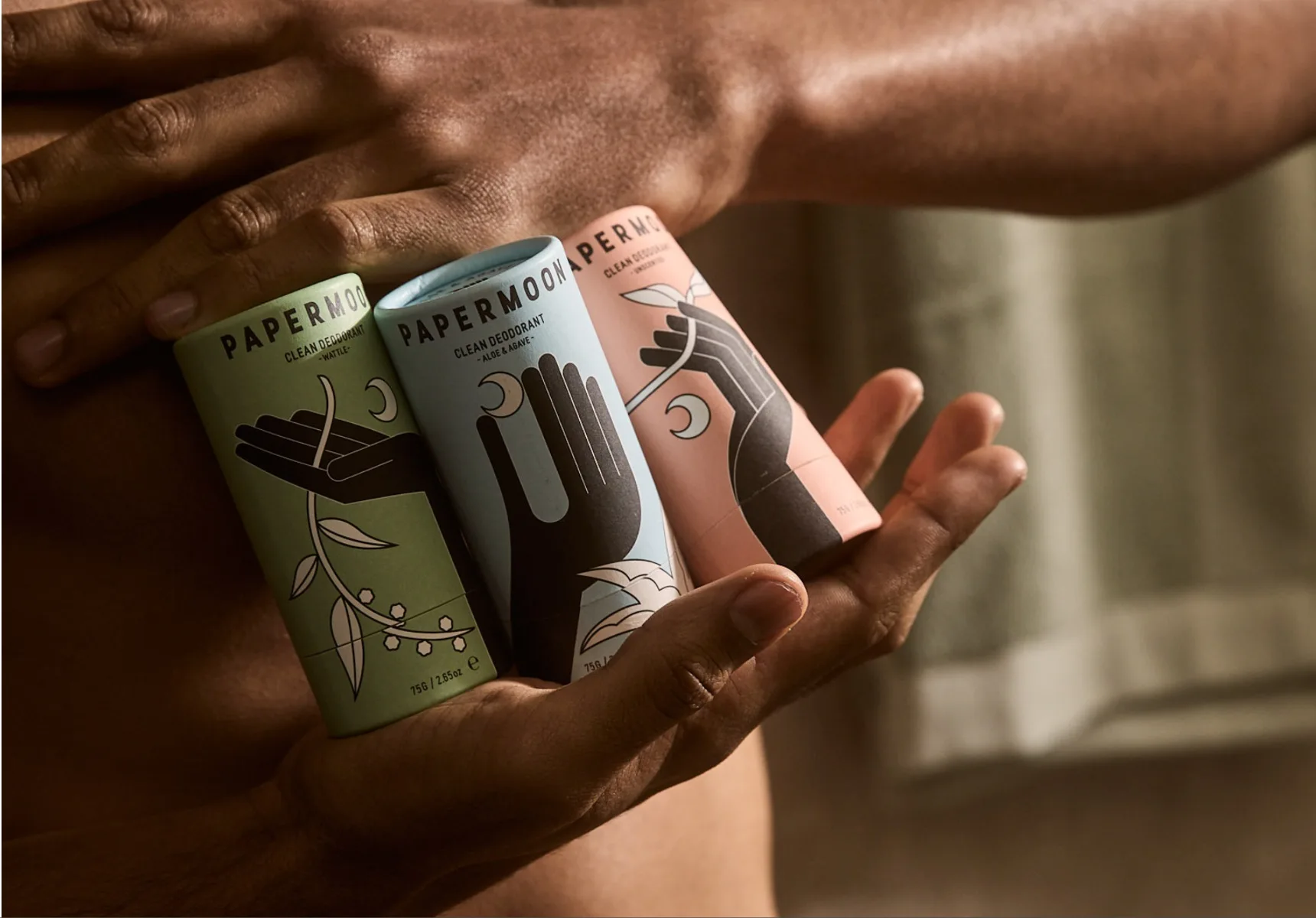
She addressed the problem with Papermoon, a Melbourne-based skincare label she co-founded with her husband Jeremy Hunt in 2023. Built around clean ingredients and innovative compostable packaging that’s entirely plastic-free, the brand bridges the gap between performance and Louisa’s sustainability standards.
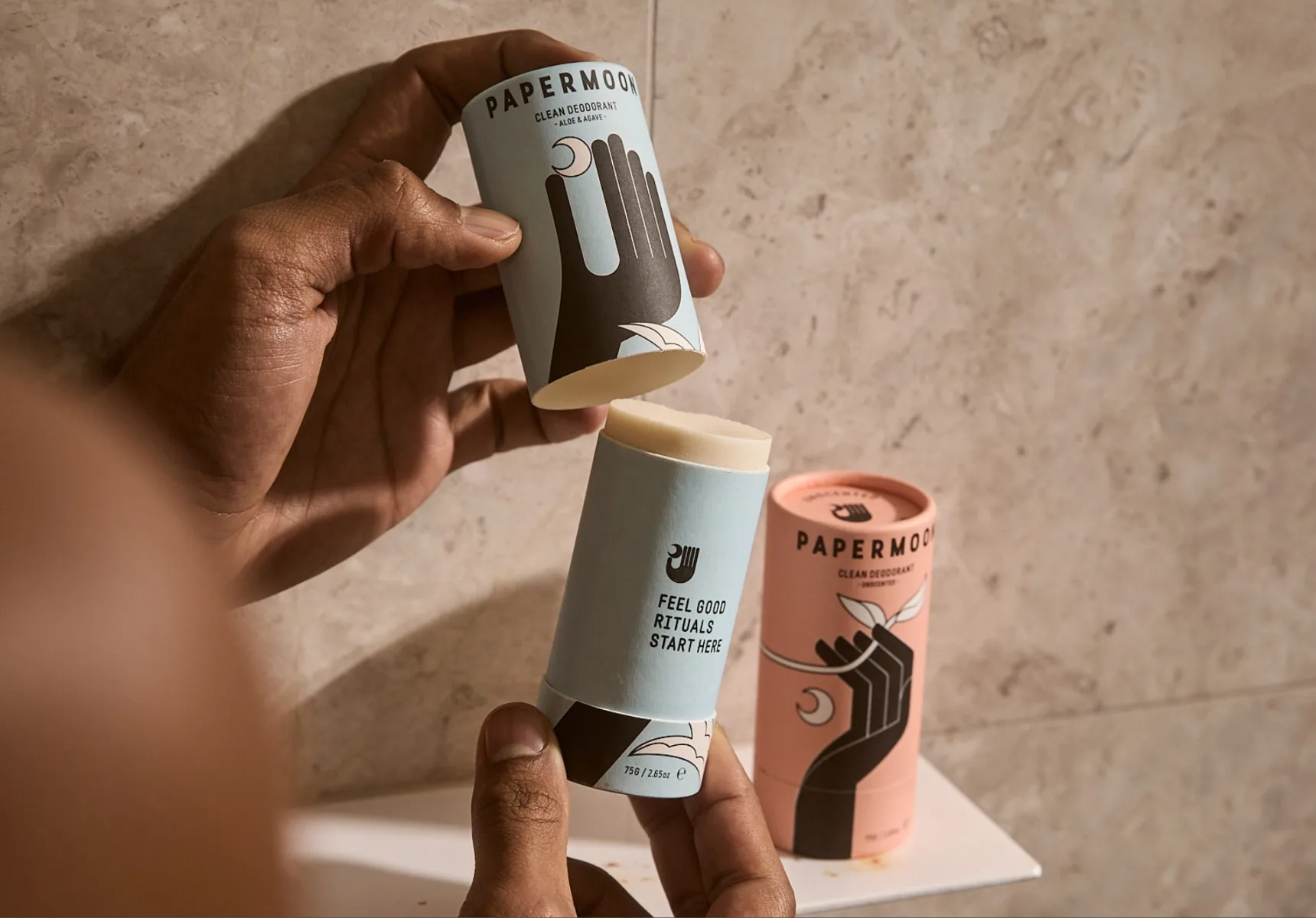
The pair launched with small-batch natural deodorants free from aluminium, baking soda and synthetic fragrance. Developing the formula took two years, but convincing a lab to package the products in paper proved the biggest challenge, according to Louisa.
“To have someone come in that hasn’t [studied this] and start saying, ‘I reckon we could do this,’ meant we got a lot of pushback. People would say ‘You don’t know what you’re doing. It’s easier in plastic. It’s going to be better in plastic because of these reasons.’ And [I was] like, ‘I’m sure we can.’”
It took 10 to 12 iterations to get there. The result is the brand’s signature push-up paper packaging, produced without a biodegradable plastic lining and made in China. The product itself is made with a local lab in Melbourne to a special formulation.
There is a difference between antiperspirant, deodorant and natural deodorant: antiperspirants use aluminium, a scientifically proven active ingredient that prevents sweat, while deodorants neutralise odour-causing bacteria and absorb moisture rather than blocking sweat.
“It’s basically just masking,” she says of conventional deodorants. “There’s no endgame to it because you’re just constantly masking. Our bodies react differently at different times of the month or stages of our lives. If you’re constantly masking something, then you’re never going to be able to see that at certain times you don’t smell.”
Louisa says Papermoon’s deodorants are designed to work with the body rather than mask it. The formula combines caprylic acid (derived from coconut oil), tapioca starch, coconut oil, shea butter and magnesium hydroxide. The latter is a gentle antimicrobial that neutralises odour without stopping sweat, allowing the body to cool itself naturally.
There are four types to choose from: aloe and agave; wattle; coconut and vanilla; and unscented.
“The unscented is for the purists,” Louisa says. Despite Papermoon only using botanicals and essential oils, fragrance ingredients must still be listed under the catch-all term “parfum”, she explains.
“It’s a dirty word, but when you interrogate what’s in it, we’ve left out all of those nasties. But unfortunately, because of IP [laws] in Australia, you just put it under parfum.”
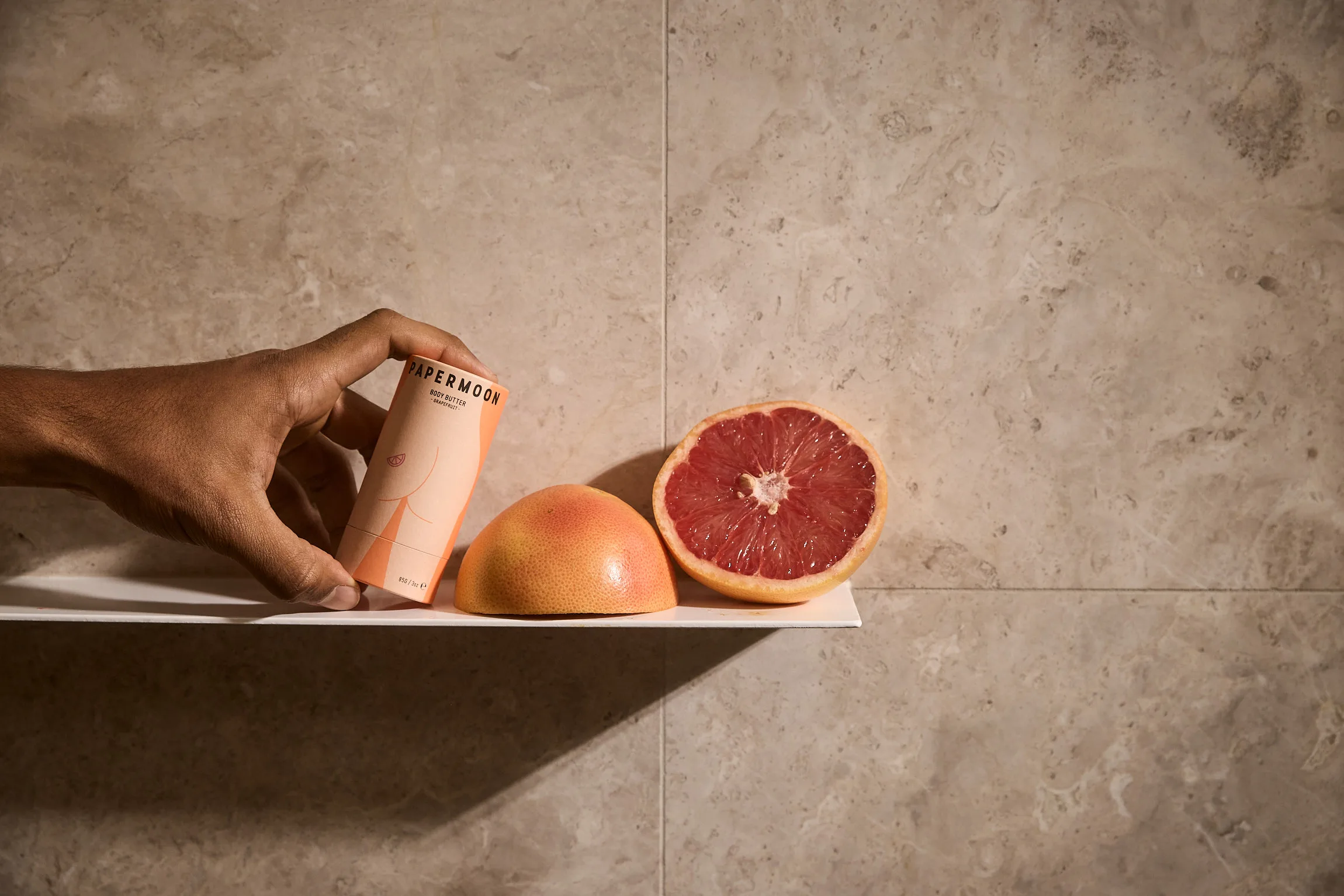
The brand also makes natural body butters and oils in the same clever paper packaging. Infused with vitamin E, they’re formulated as waterless, concentrated balms that glide directly onto the skin without getting your hands dirty. Because they’re solid, they won’t spill, making them ideal for applying in the car or while travelling.
“I use it in the gym now, if I’ve got my legs exposed,” Louisa says. “Then if I’m touching weights or bars my hands aren’t greasy.” Despite being packaged in paper, you’ll find the product won’t leak or seep through.
Next, the pair are working on an unscented version of the body oil, plus a hyaluronic acid facial balm, set to launch later this year.
“We wanted to take the responsibility out of the consumer’s hands. When we’re travelling and I run out of my products, it’s so nice to not think that I’m not going to Italy and chucking a piece of plastic in their bin,” Louisa says. “Even if someone doesn’t really care about the environment, if they love our product, they are naturally going to be disposing of it and it’s going to disappear. It’s a beautiful experience from start to finish, and you don't have to worry about it.”
We hope you like the products and services we recommend on Broadsheet. Our editors select each one independently. Broadsheet may receive an affiliate commission when you follow some links.
About the author
Gitika Garg is Broadsheet’s assistant editor – art, design and style.

MORE FROM BROADSHEET

-37d8510e61.webp)