Five Minutes With: Rising Star Comedian Anisa Nandaula
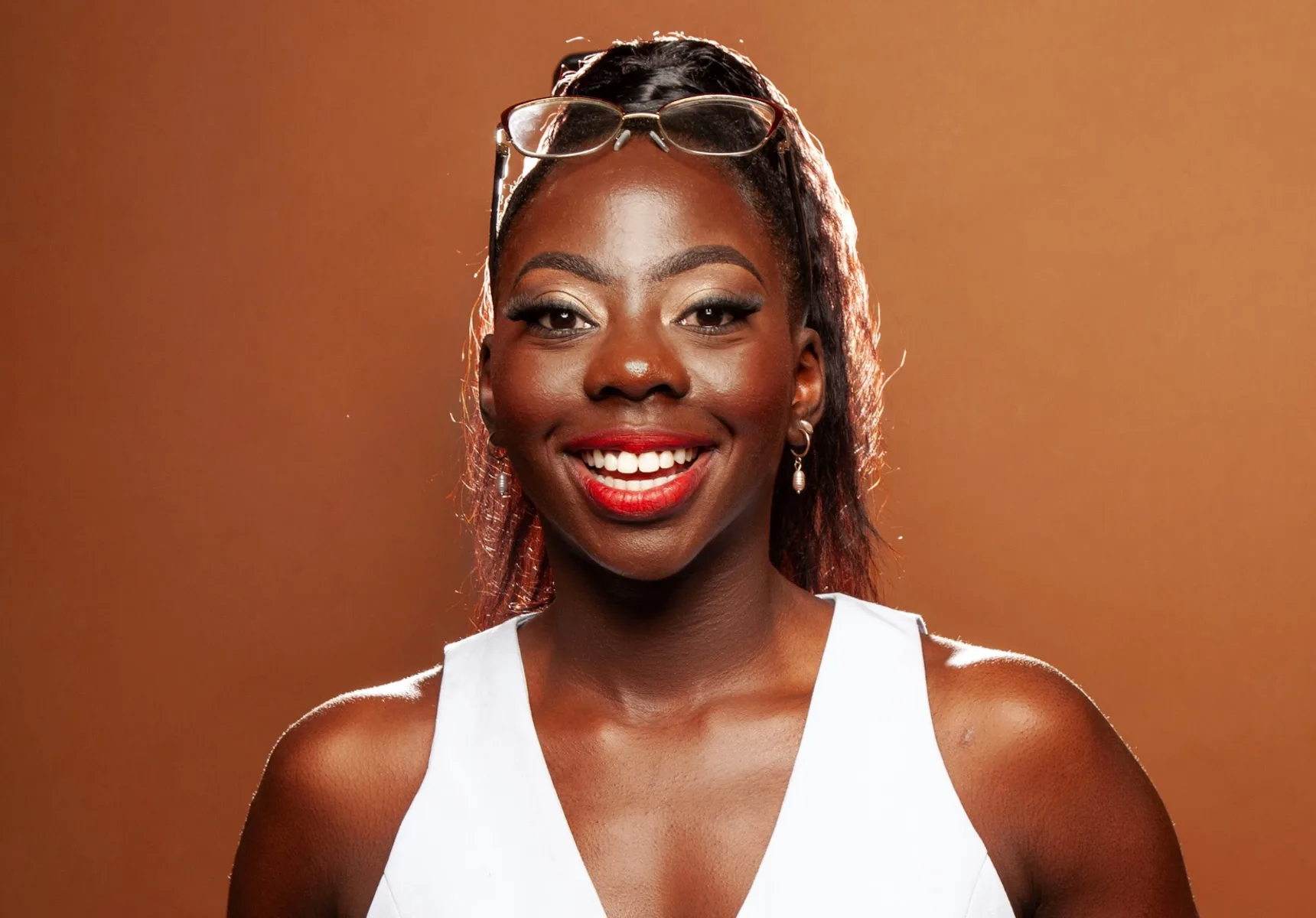
Words by Nick Connellan · Published on 06 Aug 2026
Tons of comedians say they became funny in school so other kids would accept them. Do you identify with that narrative?
Yeah, 100 per cent. I’d say I started a bit earlier, when I was younger, just wanting to cheer my mum up, just trying to make her laugh, always trying to make her smile. But then the next time was in school.
Do you think your generation’s sense of humour is different from previous generations’?
Yeah. I think we make fun of very serious topics almost immediately, you know? Wars, conflicts. As soon as it happens, you go on Tiktok and someone’s already making a skit about it. We’re very politically aware and aware of how messed up everything is and how hopeless it can feel. Humour is the only outlet. And I think we’re the only generation who has access to that humour instantaneously.
What role has social media played in your career?
It’s been vital. If I hadn’t made social media work, I probably would have quit stand-up, honestly, because there’s just no path forward. When I started, I wasn’t getting any industry recognition. I wasn’t hitting any of those career milestones you’re meant to. I was like, “I just can’t see a way for me to turn this into a career.” But when things started popping off for me on social media, I was like, “Okay, I’m objectively funny. If a million people all agree this joke is funny, I can write another one like this.” Whereas before that, I was like, “I’m insane. I stopped studying at law school for this.”
You do a lot of videos sending up inept politicians from Africa and other places, including clips of them talking shit. How much time do you spend finding those?
Oh, hours, hours. I’m always on Youtube and reading articles, but I studied politics, so all of this stuff is fun for me. When I read about these politicians, just their stories make me laugh. One article about Angola’s old president, José Eduardo dos Santos, said something like, “He was globally known as being the shyest politician. The only thing he did outwardly was corruption.” That’s not funny. They weren’t trying to be funny, but I just found that so hilarious. And if I don’t find something funny, then I learn something.
Do you approach stand-up differently to other comedians, given your background in poetry?
I think my poetry heavily informs my stand-up in the sense of the writing practice, because coming from poetry and theatre, you have to write every day. If you have a contract for, you know, a theatre show, you have to submit, I don’t know, 100 pages by this date. So that’s how I approach stand-up. I write hundreds and hundreds of pages of jokes.
What does the anatomy of a good joke look like to you?
The punchline has to punch. When you hear it, you have to be like, “Whoa!” It’s got to be a punch, and it’s got to reflect me. No one else can say that joke the way I’ve said it. If you said that joke, it wouldn’t be the same.
A lot of contemporary stand-up hinges on that – jokes being unique to a comedian’s identity. How has being a Ugandan-born Muslim shaped your career?
It’s fantastic! Absolutely fantastic. Comedians work their whole lives for a point of view. I feel like I have a unique point of view. My point of difference is my power, and I’ve embraced it. Cos you know, when I started comedy, I felt like that was my weakness. I was like, “Oh no, I’m Black and no one understands my story,” cos you’re performing to predominantly Anglo crowds.
You like to poke fun at white people, something we also see with comedians like Nazeem Hussain, Neel Kolhatkar and, my favourite, Khaled Khalafalla. It’s accepted because it feels like punching up. Do you foresee a time when those jokes will become passé or frowned upon?
I think those jokes are already not okay if you’re bad at it. I know because when I started comedy, I was very bad at it. Very bad. People would moan, groan and tell me to get off stage. Everything is bad if you’re not a good comedian. But then, if you’re funny, you can say whatever you want. Comedy’s really good in that the feedback is instant. If they don’t laugh at that joke, I’m like, “Okay, well why did they not laugh?” Well, they didn’t laugh because you’re poking fun at them, you’re being mean, you’re being nasty. They don’t know you. They don’t know that you’re kidding. So okay, maybe I need to say it with a big smile on my face. So it’s about figuring out what made them upset and not doing that again.
I saw your show No Small Talk at Melbourne International Comedy Festival. Parts of it were absolutely filthy. Are there any topics that feel off-limits to you?
They’re only off-limits in that I don’t have the skill set. Cos again, you can talk about anything if you’re good enough. There are some topics and jokes I’ve been writing, but I just can’t make them funny yet. Like, I don’t know, cannibalism? I don’t think I’m funny enough yet to do that.
You’ve started moving into TV with Thank God You’re Here, Taskmaster and Urzila. Is that something you’re keen to do more of? What’s next?
Yeah, I’d love to do more TV, anything where I can be funny and work with funny people. I’d love to be on SNL, which is obviously every comedian’s dream. But I think, for me, I love stand-up. I love, love stand-up. It’s my bread and butter. You write for – I don’t know, five hours a day. Write, write, write, write, write. You’re on stage – test, test, test, test, test. I don’t know about other comedians, but that’s all I care about. All this other stuff is adjacent, really.
About the author
Nick Connellan is Broadsheet’s Australia editor and oversees all stories produced across the country. He’s been with the company since 2015.


MORE FROM BROADSHEET