Art & DesignThe NGV Takes a Closer Look at Margaret Preston’s Work and Legacy
-56843738e6.webp)
Words by Lily Davidson · Updated on 27 Oct 2026 · Published on 27 Oct 2026
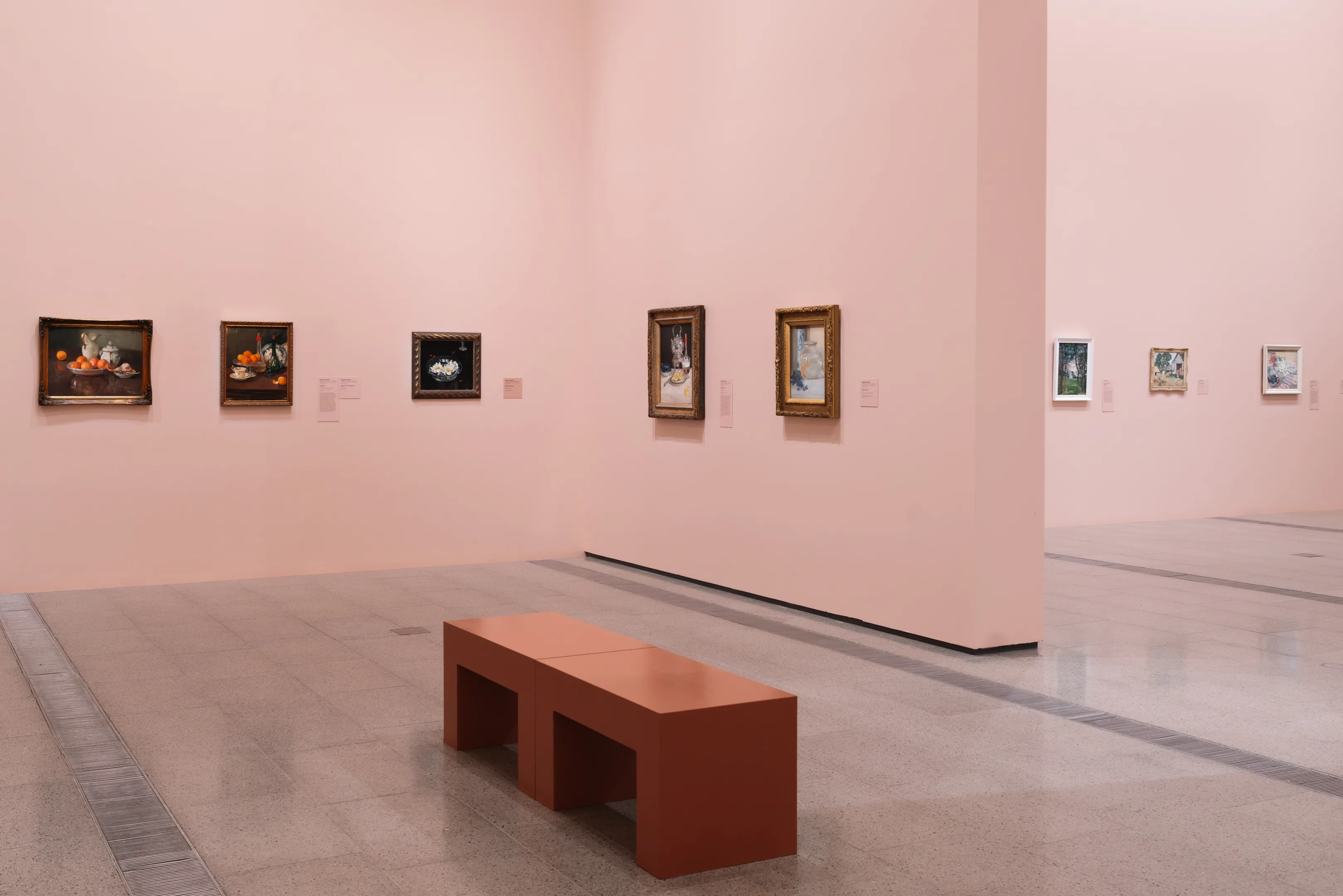
Margaret Preston is best known for her floral still lifes, woodblock prints, and helping kickstart the development of modernism in Australia. Now, the first new retrospective of Preston’s life and art in more than 20 years is showing at the Ian Potter Centre: NGV Australia in Fed Square. It’s mammoth – featuring over 200 of Preston’s paintings, prints and ceramics – and doesn’t shy away from the complicated side of her legacy.
Margaret Preston analyses the artist’s place in the Australian national identity with a discerning eye. It resists chronology and definitive conclusions, placing her work in dialogue with 20 contemporary and First Nations artists whose responses range from critical to compassionate. “There is nothing monolithic about this show, which you would expect from a survey of the greatest Australian modernist we may have,” says Michael Gentle, who curated the show alongside Beckett Rozentals.
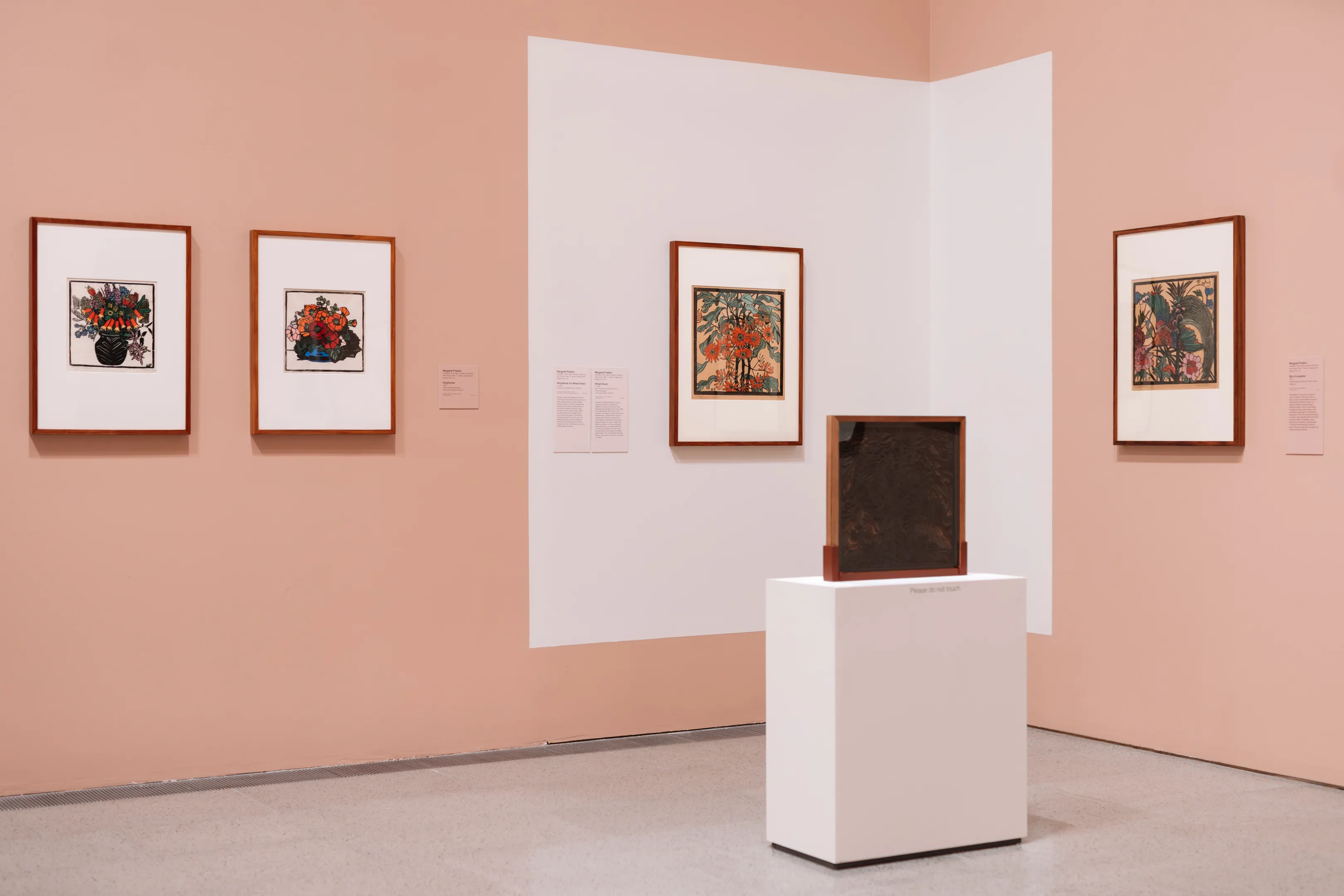
Accordingly, the exhibition does not begin with Preston’s earliest work. First, you meet a trio of her famous native Australian floral still lifes, along with a print depicting a scarred tree in Central New South Wales – a First Nations funerary tradition. “She’s taken something sacred and ceremonial and transposed it into an aesthetic object. It’s an interesting metaphor for how Australia operates as a nation,” says Gentle.
Then, you travel back in time to 1904, when Preston spent a stint in Europe with Bessie Davidson, her partner of a decade. A rare Preston portrait of Davidson sits alongside her early still lifes, which reveal themes of breakage and spillage. Already, the artist incorporates international influences, including the Japanese ukiyo-e woodblock prints she saw in Paris and post-impressionist work by Cezanne.
About the author
Lily Davidson is a freelance writer based in New South Wales.

Preston relocated to London during the First World War, and the paintings produced in this period contain unusual formats, such as objects that are only half in frame. “She produced unique compositions, often cropping objects in unexpected ways,” says Rozentals. “Hinting at the world that extends beyond the canvas.”
Preston also dabbled in colour, music theory (“Essentially, you could play the works,” says Rozentals) and ceramics – though the latter were made in the UK, they show the artist as homesick for Australian iconography. In this section, you also see Davidson’s portrait of Preston, identified by her fiery red hair, and Preston’s Flannel Flowers from 1922, her earliest depiction of local flora in oils – this subject would become a constant in her work. “It’s really special to have it in this exhibition, given that it wasn’t in the previous [retrospective] 20 years ago,” says Rozentals.
But while there’s repetition in Preston’s art, she “simultaneously makes massive diversions in her practice,” says Gentle. Rozentals points out two interesting “portrait absentia”, depicting the pottery of Gladys Raynell and Thea Proctor’s tea party. “These are two of my favourite pieces,” says Rozentals. “She captures these two important women in her life through objects.”
On reaching the mid-1920s, you meet Preston’s first figurative woodblock depiction of Australian Indigenous people, titled The Third Generation. “Having studied the medium overseas, Preston was seen as somewhat of a local authority in woodblock printing when she returned to Australia,” says Rozentals, and it serves as a medium of modernity. A hand-carved stamp is displayed beside famous prints of Australian flowers, birds and Sydney views. Next, there’s a large-scale display of contemporary artist Gordon Bennett’s responses to Preston’s work. “One could expect a show like this to be chronological and linear, and place all the responses at the end,” says Rozentals. “But these are where Bennett’s responses fit.”
Moving into the early 1940s, there’s a selection of Preston’s cityscape woodblocks, showing a “beautiful depiction of modernity in Sydney” according to Rozentals. Then, nine striking large-scale still lifes from her international exhibitions in New York and San Francisco. Some are vivid and bold, while others harbour darkness – banksias fall, rotting, from their vases. This time period contains a highlight for the curators – Preston’s NSW Everlasting Flowers, a 1929 painting that features a shellwork box collected from the Le Perouse Mission in New South Wales. NGV worked with the late Marilyn Russell, a descendant of shellwork maker Queen Emma Timbery, to acquire three boxes, which are displayed alongside Russell’s sensitive and compassionate dedication.
Also in the 1940s, Preston embarked on a trek across Australia, and this extensive travel spurred a shift in her art, from still lifes to landscapes. One space is filled with artwork drawing direct influence from First Nations motifs and styles, including her monotype re-creation of an Indigenous artist’s ground, drawing recorded by an anthropologist – highlighting the long chain of appropriation in Australian art. Simultaneously, “there are murmurings of an interesting political message”, says Gentle, in Preston’s works depicting Indigenous peoples as oppressed, such as The Expulsion.
A commissioned snake sculpture by First Nations artist Jimmy Frank Jupurrurla sits in the centre of the room, highlighting a return to or reclamation of First Nations autonomy and resilience. “Condemnation [of Preston] isn’t the final step,” the curator adds.
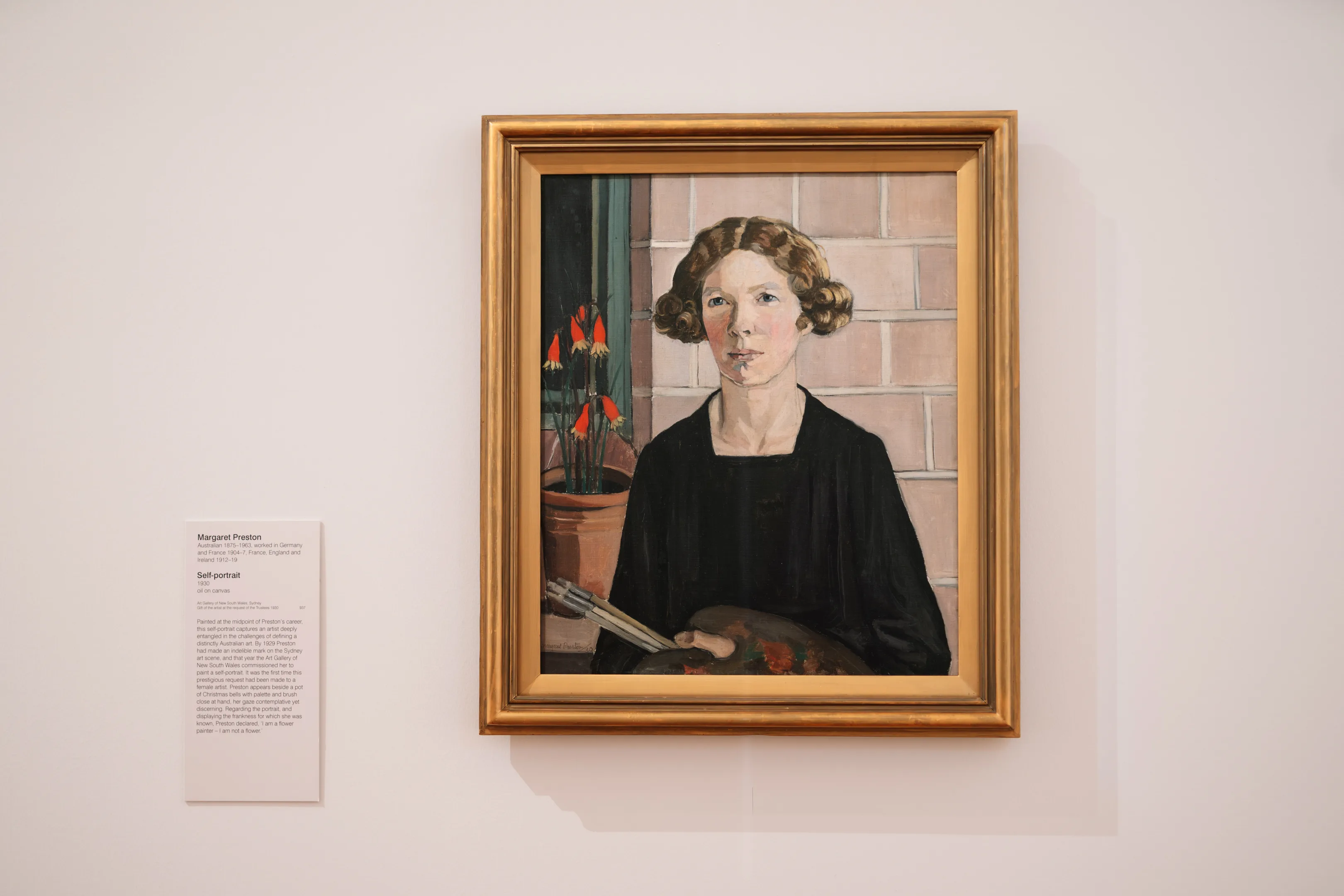
The exhibition finishes with the only self-portrait Preston made, leaving you, under her stern gaze, to draw your own conclusions.
Margaret Preston is now showing on level 3 of The Ian Potter Centre: NGV Australia until January 31, 2027. Sessions are ticketed.
Broadsheet is a proud media partner of the National Gallery of Victoria.

More from Broadsheet
Videos
More Guides
Recipes


-6648d15b95.webp)


-6e9e4d4cb1.webp)
-c121bced4e.webp)