-95019e1118.webp)

-d554db68e3.webp)

-b4aea0941a.webp)
-775410dbc9.webp)


There’s a delicate balance that needs to be struck when picking out the right pair of glasses. With so many options to choose from and the high-stakes pressure of buying frames that will be with you for the long-haul, it can be a difficult and nerve-racking decision.
A second opinion on which ones to pick can be helpful – especially when it’s from an optical expert. Moscot chief design officer Zack Moscot, who’s the fifth generation to work in the family business and runs the heritage brand alongside his father, says buying the perfect pair of frames is a deeply personal decision that will vary based on the individual.
“There are clear technical aspects to a right-fitting pair of glasses, but sometimes, if you want what you want and it looks good on your face, then you have to go for it,” Zack says.
He shared his step-by-step advice on how to discern which frames suit your face shape so you can pick the right glasses for you.
According to Zack, the first step when buying glasses is trying out different frame shapes until you find a pair that complements your facial features.

Because everyone has differently shaped faces – oval, square, round and heart, to name a few – buying the right frames becomes a very personal decision. You want to approach your eyewear from the perspectives of both aesthetics and comfort.
“When it comes to fit … we’ll try to complement the facial features with an opposing frame shape [for] balance,” he says. “If you feel like your face is oblong or ovular, it would be nice to round it out with something that’s a little more angular.”
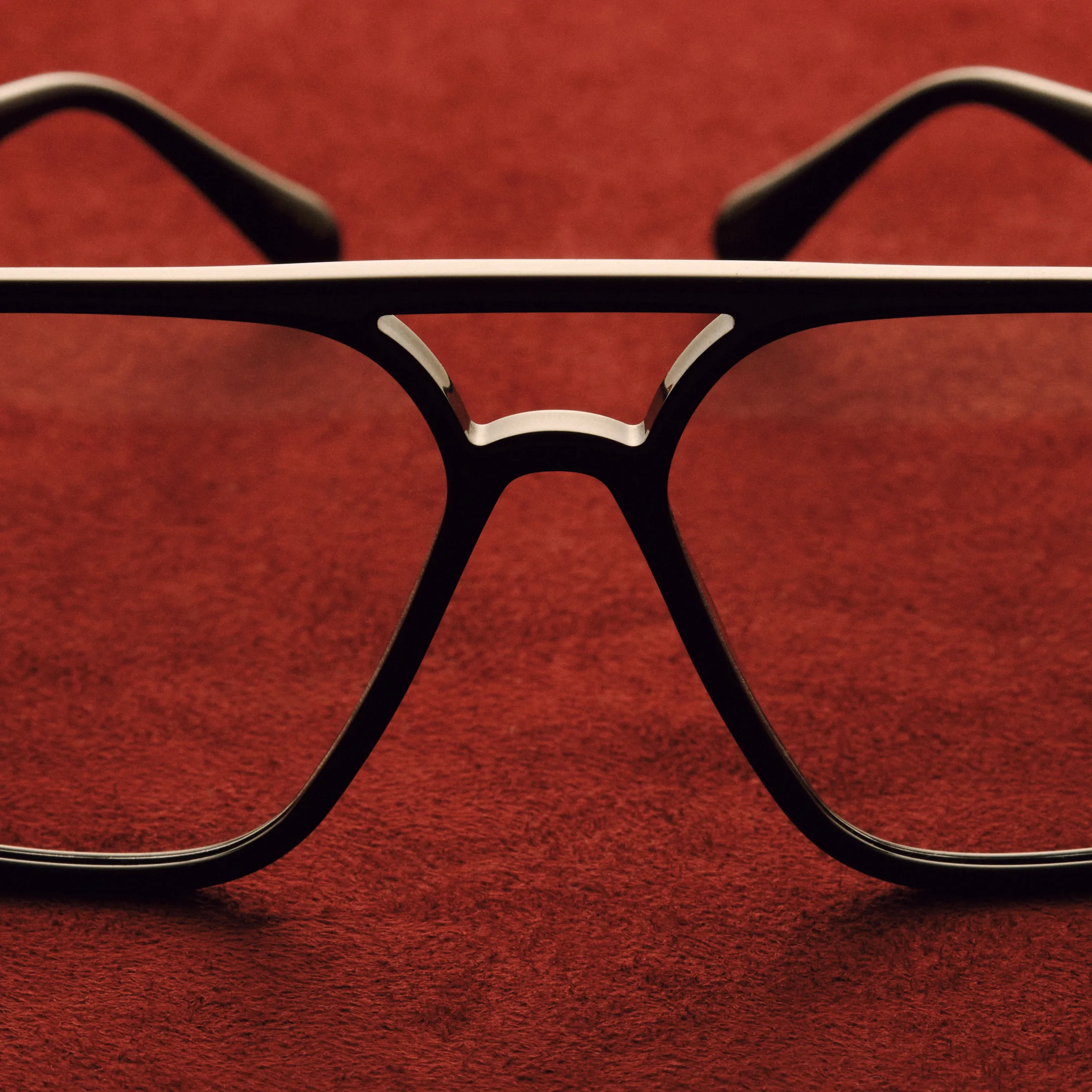
The width of your face is another important consideration. Put simply, there tend to be “narrow and wide faces, on average,” according to Zack. For example, people who have a wider face with larger cheekbones may consider a wider frame – like an aviator – where “the edges on each side complement the width of the face”. For individuals with narrow or longer faces, a smaller square frame may balance out the facial shape better.
Sometimes, you also need to factor in the practical considerations, too. “If you have higher cheekbones, you might want to try different frames to find the right fit so that when you smile, the frame is not hitting your face … and the bridge fit [for the nose] is correct so you can adjust how the frame sits,” he says.
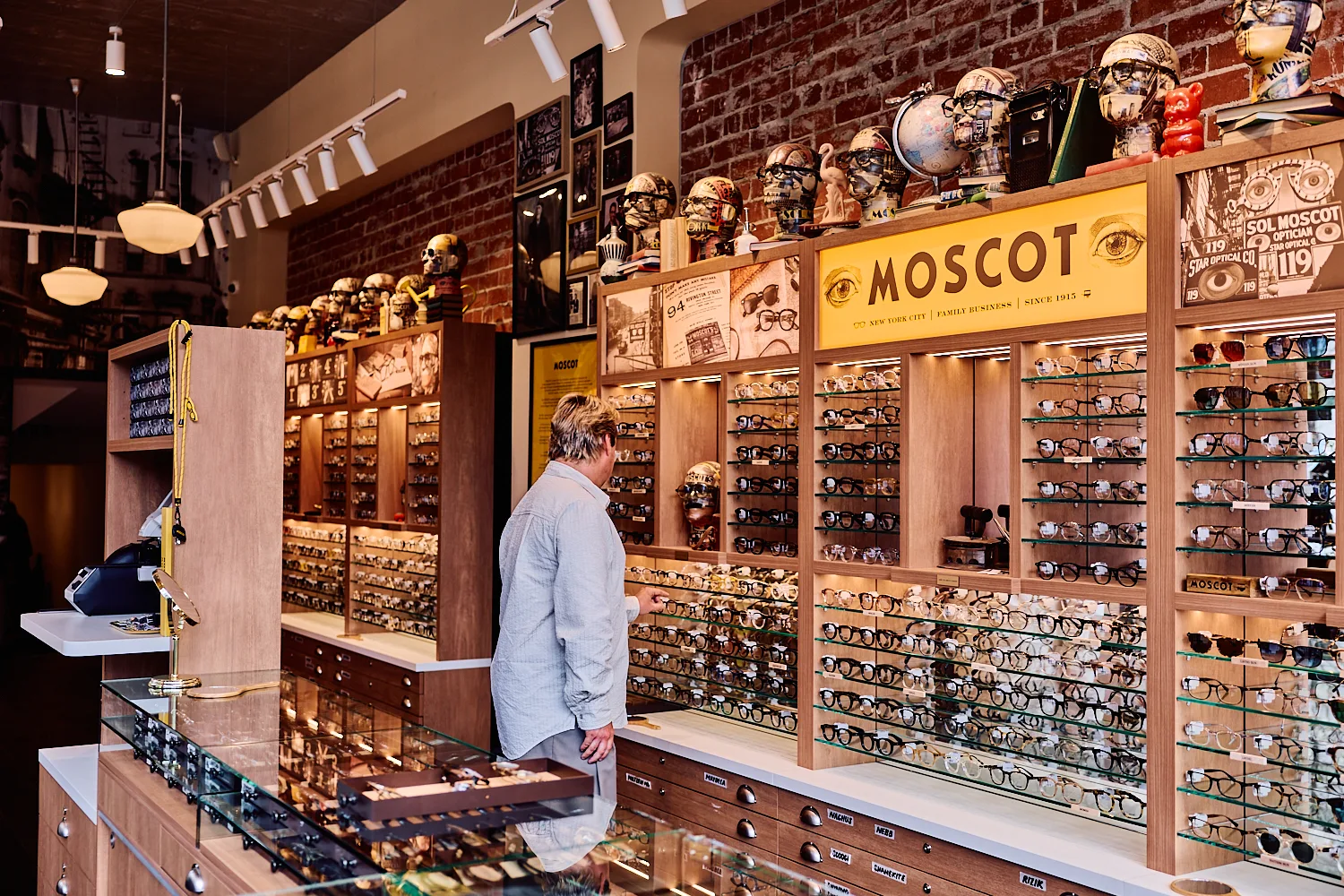
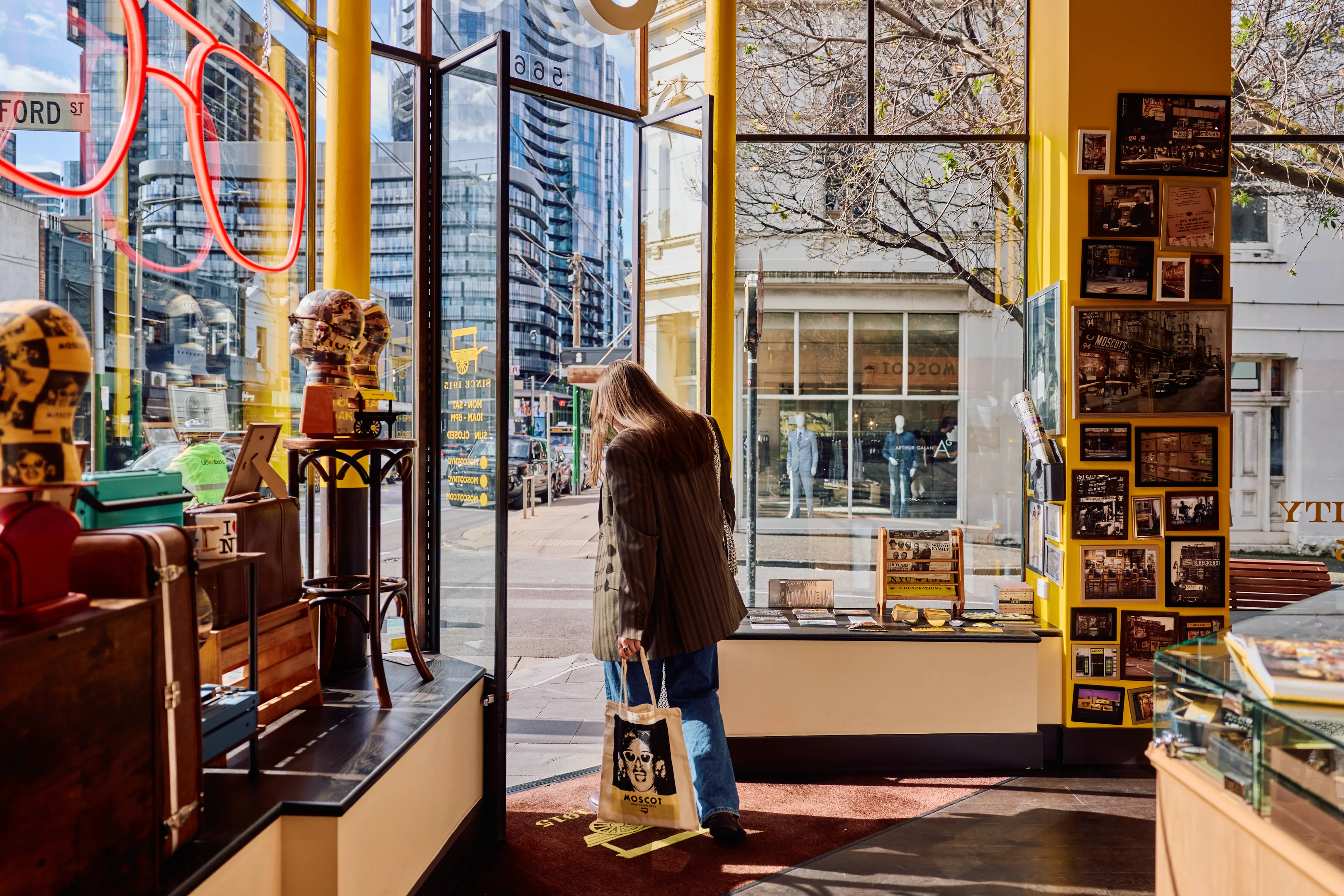
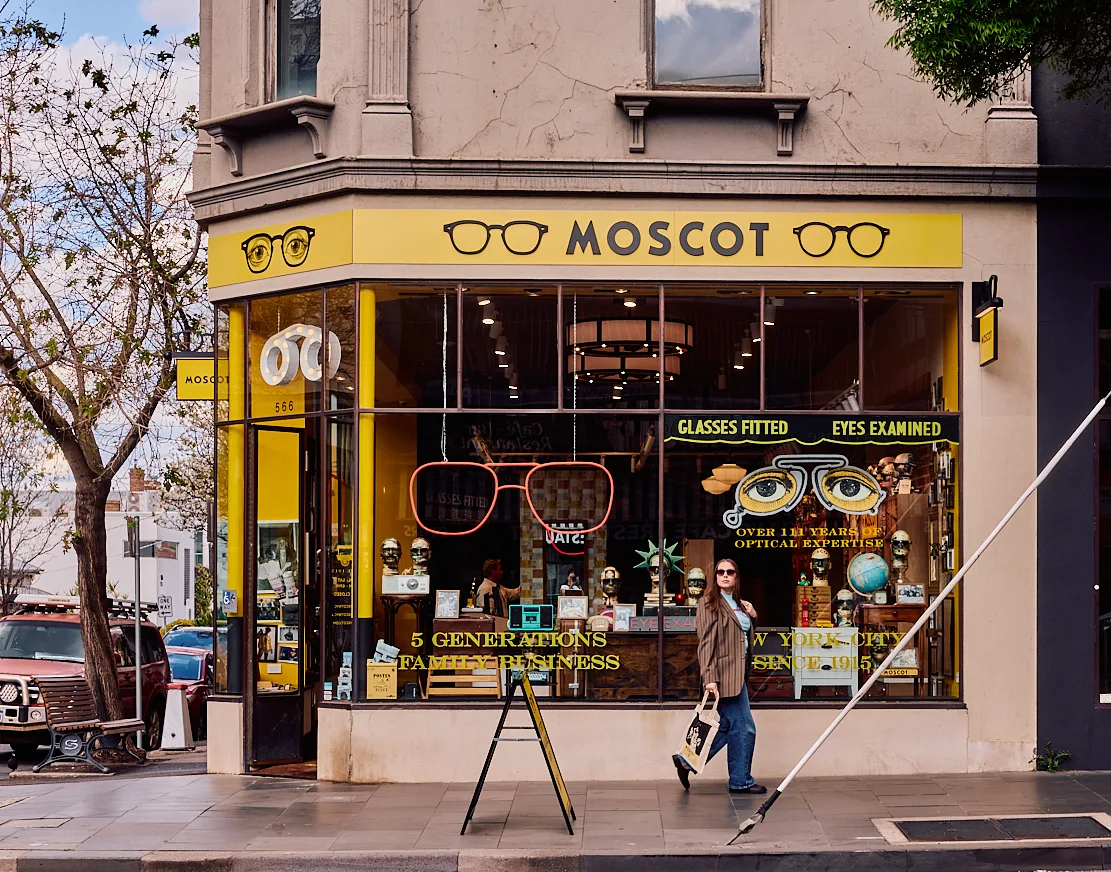
Then, start to think about how the frames you choose sit on your face and in relation to your eye. Your eyes should be at the centre of the frame. This comes down to the size, or width, of the frame, which is often customisable by the eyewear store. The Moscot store in Melbourne, for instance, offers appointments and fittings with licensed opticians.
“From an optical expert’s point of view, you want to think about the fit being focused on where the eye sits in the lens,” he says, “Because it’s all about vision, wearing the eyeglasses all day and seeing through the right part of the lens.”
However, you shouldn’t have to compromise style for the right practical fit. As Zack says, “You wear the frame, you don’t let the frame wear you”. While some customers prioritise the visual clarity of glasses, the brand is supportive of those “who are all about style and attitude”. For those of us who want frames that will elevate an outfit, choose a pair that will become a statement piece like any other accessory.
Zack is seeing a trend of “very perfectly round frames” quickly becoming a favourite among glasses-wearers. “No matter the face shape, these sorts of frames have a futuristic, cool, street look,” he says. “Take a style like [Moscot’s] Dibbik, it’s a bold round frame which mixes metal and acetate … you could even wear those as sunglasses if you go with some really cool custom-made tints.”
He notes, though, that some prescriptions may constrain the type of frames you end up with. “If you’ve got a stronger prescription, it means you may have a thicker lens. So, you may not fit into a thin, metal wire aviator frame. Instead, we’ll recommend an acetate aviator to that person if they’re really interested in that style,” he says.
Buying the right pair of frames is not a decision that can be rushed, either. Zack recommends trying varied styles of glasses in different sizes, particularly if it’s your first pair.
“We want to make sure everyone gets the right look for their lifestyle … We like to build a relationship with the customer so they’re comfortable and they do buy the right pair.”
This article is produced by Broadsheet in partnership with Moscot.

Produced by Broadsheet in partnership with MOSCOT
Learn more about partner content on Broadsheet.

More from Broadsheet
Videos
More Guides
Recipes






-6e9e4d4cb1.webp)