First Look: Inside Heide’s New Sidney Nolan Exhibition, the Largest Nolan Show in Australia in 15 Years
Words by Elizabeth Flux · Updated on 27 Sep 2022 · Published on 18 Feb 2022
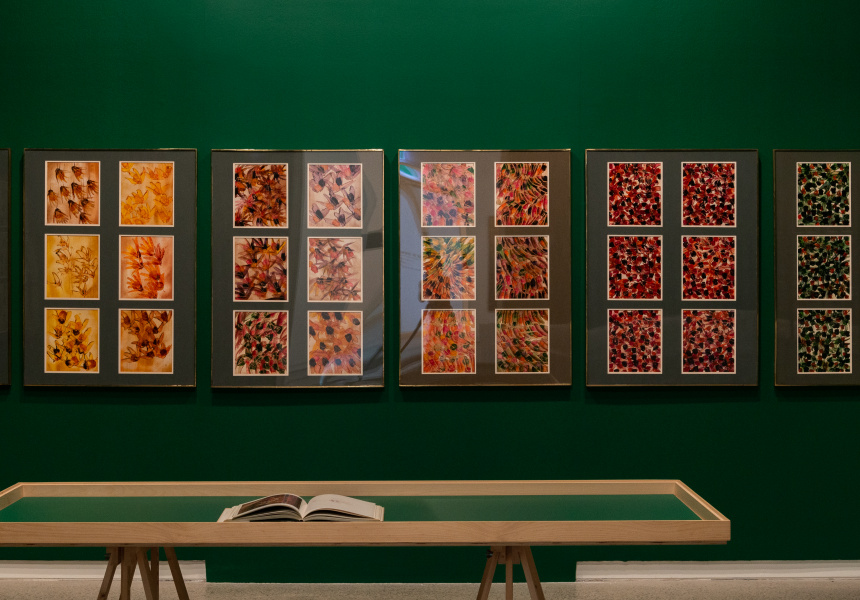
The story of Eden began and ended with a tree, so it’s fitting that the last part of Heide’s new exhibition, Search for Paradise , leads visitors into a garden of sorts.
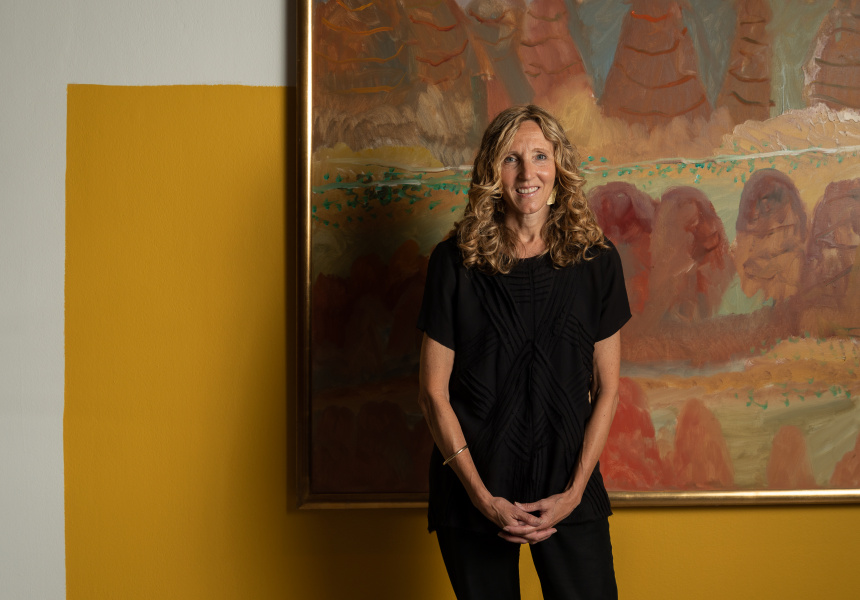
Consisting of 18 panels, each made up of six works, this is a slice of modernist artist Sidney Nolan’s expansive Paradise Garden mural. He produced it in the 1970s “in tandem with some very brutal poems that effectively were a cruel expose of his life at Heide,” explains head curator Kendrah Morgan.
His story might now be written on the walls of the gallery, but the artist’s connection to Heide traces back further than the 40 years that the museum has been open. “Sidney Nolan is one of the central figures in the originating story of Heide and its founders John and Sunday Reed,” says Morgan.
After meeting the couple in 1938 the three quickly became intimately involved. Sunday and Nolan became lovers, and in 1941, Nolan moved to Heide “and was involved with the Reeds in a complex ménage à trois that lasted until 1947”. When Nolan did, finally, leave, he became estranged from the couple – you can see the fallout from this fracture emerge in his art time and time again.
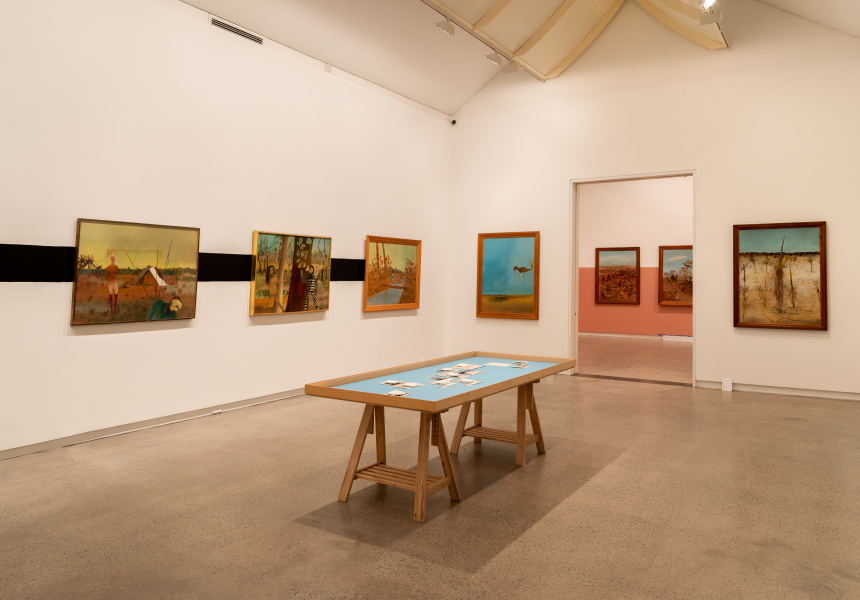
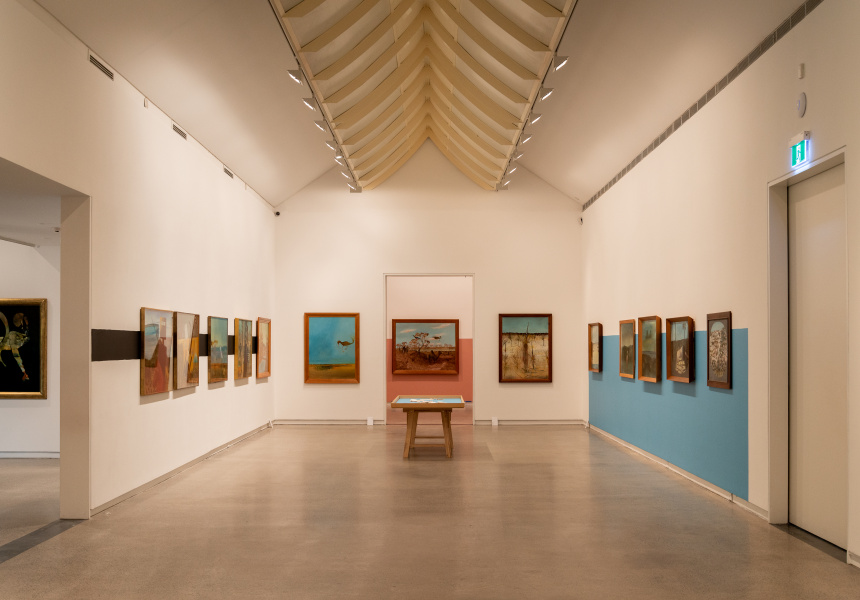
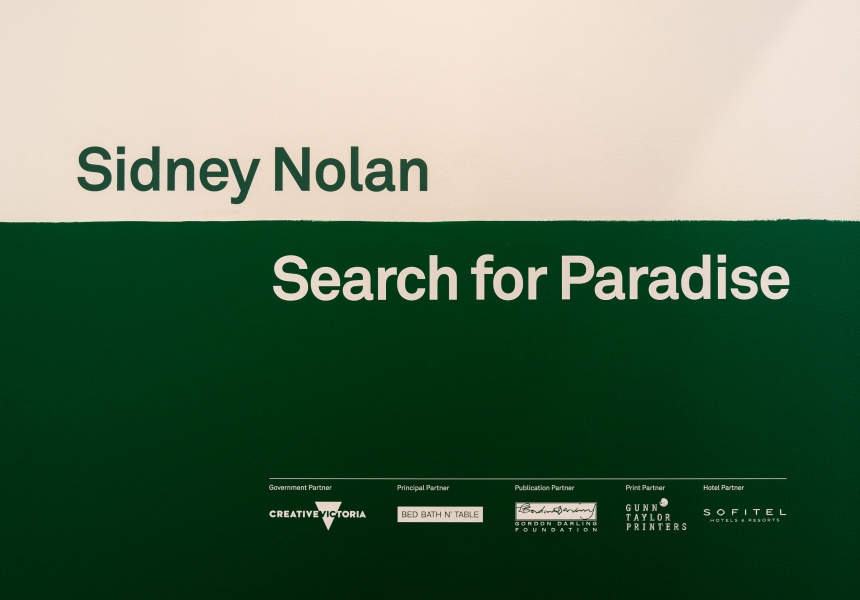
Sidney Nolan: Search for Paradise takes visitors on a themed, semi-chronological journey through the artist’s life, tracking his childhood through to his time at Heide, his later travels and his search for self identity. There are 57 paintings, as well as the mixed media Paradise Garden panels, photographs and other archival material. Some will be immediately familiar, while others tell his story while flying more under the radar.
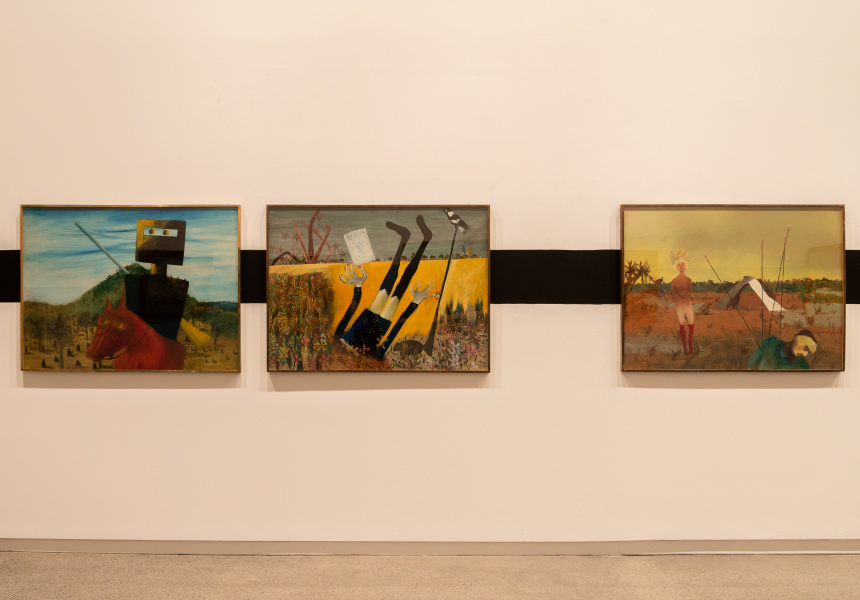
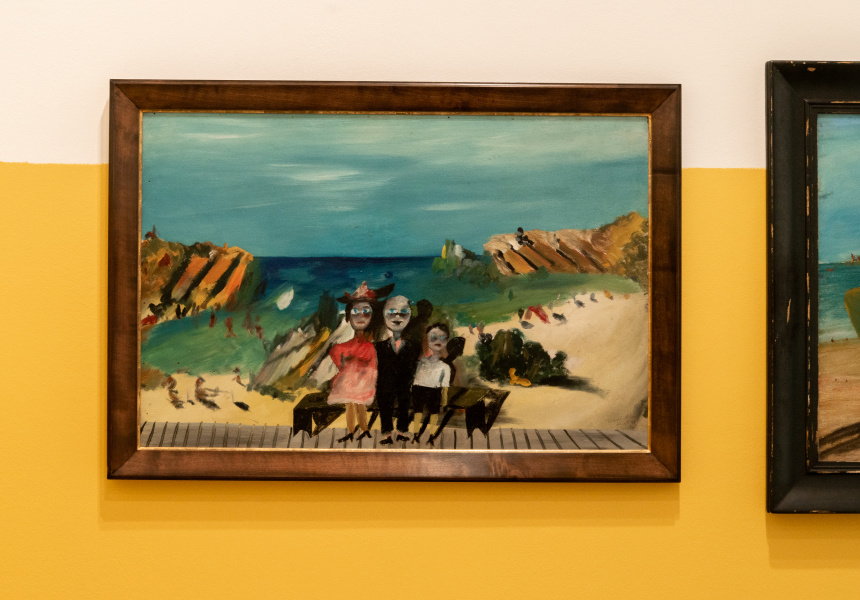
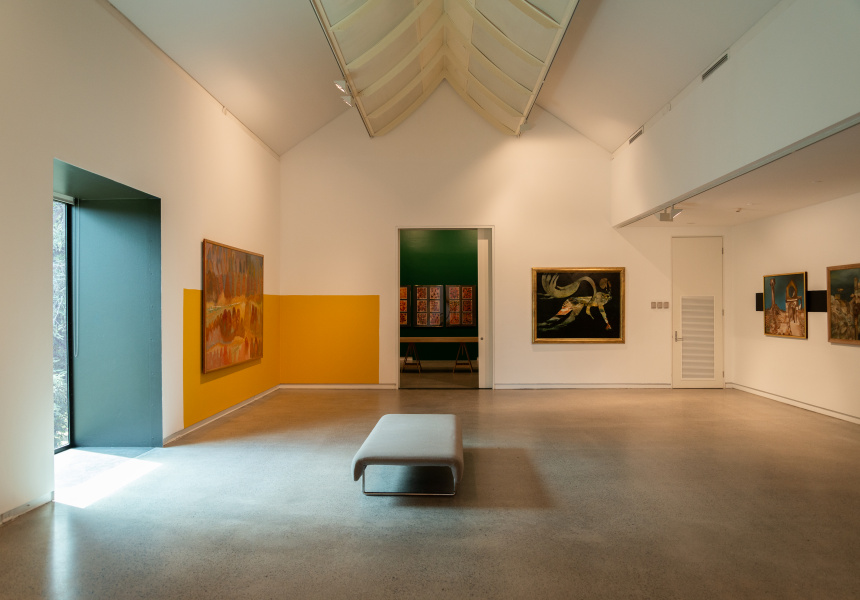
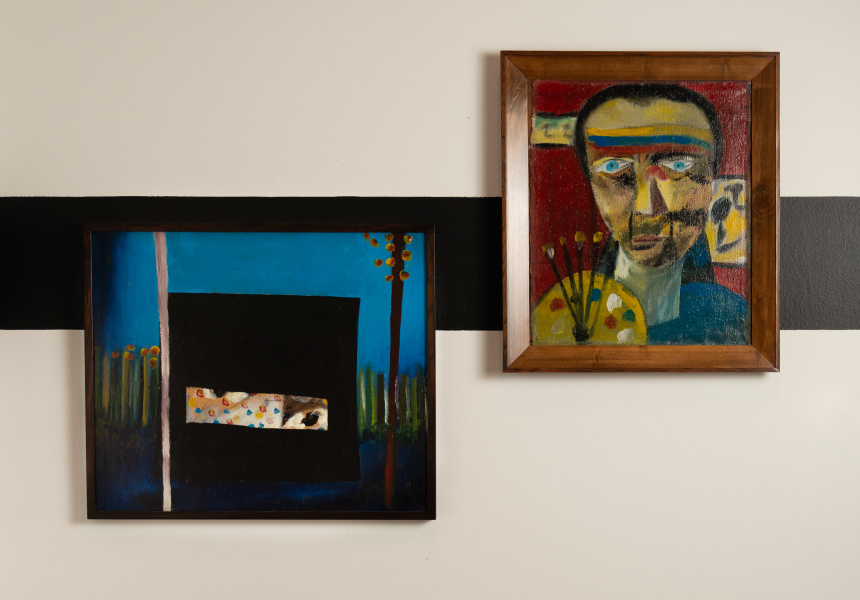
The exhibition starts with a focus on his childhood in St Kilda, and Morgan points to two smaller works in this section painted while Nolan was in the army in the early ’40s, infused with wistfulness and nostalgia. “They're pretty special,” Morgan reflects. “Even though they're not necessarily of a large scale, and not as imposing [or] immediately striking, they reward you if you look closely at them.” In some ways the exhibition is like stepping into his mind, or into one of his paintings as it’s being created. The colours on the walls are drawn from Nolan’s palette, and his iconic Ned Kelly series is given a nod via an apertured black stripe that appears from time to time as well.
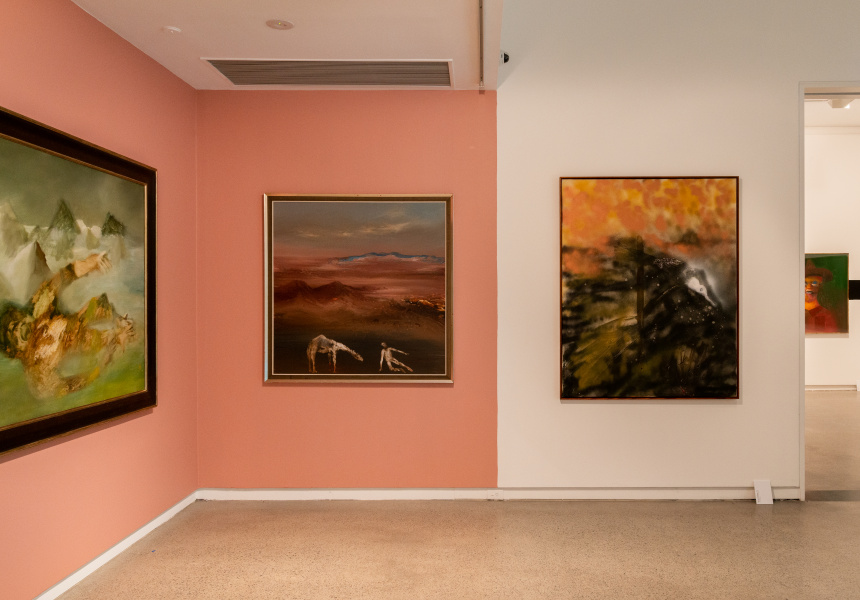
Early on in Search for Paradise , there’s a deceptively simple painting made up of shades of grey, pink and blue. It shows a feminine figure standing next to a tree overflowing with apples. Right beneath it is a red and white striped snake. It’s somehow ominous and idyllic at the same time. This is Woman and Tree (Garden of Eden) , painted in 1941 – and it inspired the theme for the entire exhibition. “I began to think about how it's clear that Nolan as a young artist regarded Heide as a form of Eden – he had the support of the Reeds, he was Sunday's lover, and she was his muse. It was very idyllic and Arcadian,” reflects Morgan. “But he also began to see it as place where he lost his innocence.”As you make your way through, you follow Nolan’s journey away from Heide, across the Australian outback and into his travels across the world – to Italy, to Africa, to Antarctica.
One painting, from 1948 – soon after he left the Reeds behind and struck out on his own – is Desert Bird. In it a gentle pink and blue sky stretches out over an orange and yellow land, made surreal by the presence of a bird somehow in the air despite its wings being tucked neatly away. “It's got this lovely combination that you get in Nolan where it's quite poetic, but also a little bit awkward,” Morgan explains. She points to the fact that the titular bird looks almost like it has been placed against the desert sky background. “So the bird’s not even in believable flight – but it's just a really enchanting combination of those two elements”.
One of the most striking sections is dedicated to Nolan’s “search for self”. In a side room, near the end of the exhibition, there are paintings of figures that both are and aren’t Nolan – self-portraits alongside alter egos. There’s the fictional Ern Malley. Ned Kelly. A famous 1943 self-portrait “where he's branded himself an artist warrior with stripes of paint across his forehead”. In this room you can also see the shift in his depiction of Ned Kelly as a way of “Nolan exploring the rise and fall of being human”. The final room of the exhibition is the immersive paradise garden, where the 18 panels surround visitors, engulfing them in a way that makes you feel like you’re in a tropical jungle. It shows the end of a journey, of a story, of an artist who sought perfection and an ideal world across his life. “It's like he constructed his own Eden, because he couldn't necessarily find one that was satisfactory.”
“I think [Nolan] still captures the public imagination,” Morgan says. “His best work is still absolutely top quality and quite riveting – but I think the story of his life makes him very fascinating. And for us at Heide, the connection with the Reeds, and the universal theme of that love story, and then the estrangement make his biography very resonant and adds another layer to his painting.”
Find out more on the Sidney Nolan Exhibition at Heide Museum of Modern Art here
Broadsheet is a proud media partner of Heide Museum of Modern Art.
Broadsheet is a proud media partner of Heide Museum of Modern Art.
Learn more about partner content on Broadsheet.


-9618b5d451.webp)