Atong Atem Has Released Her Debut Photobook As Part of Photo 2022
Words by Elizabeth Flux · Updated on 10 Jun 2022 · Published on 31 May 2022
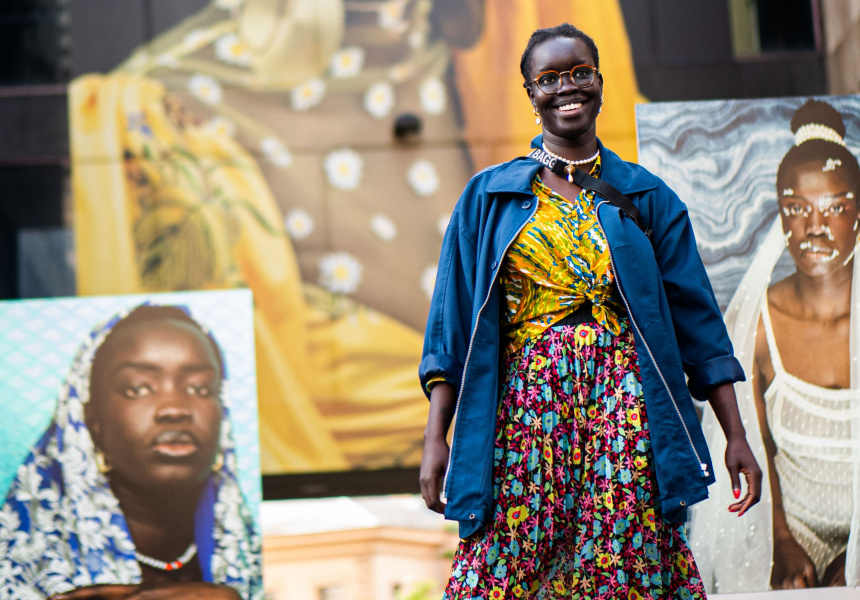
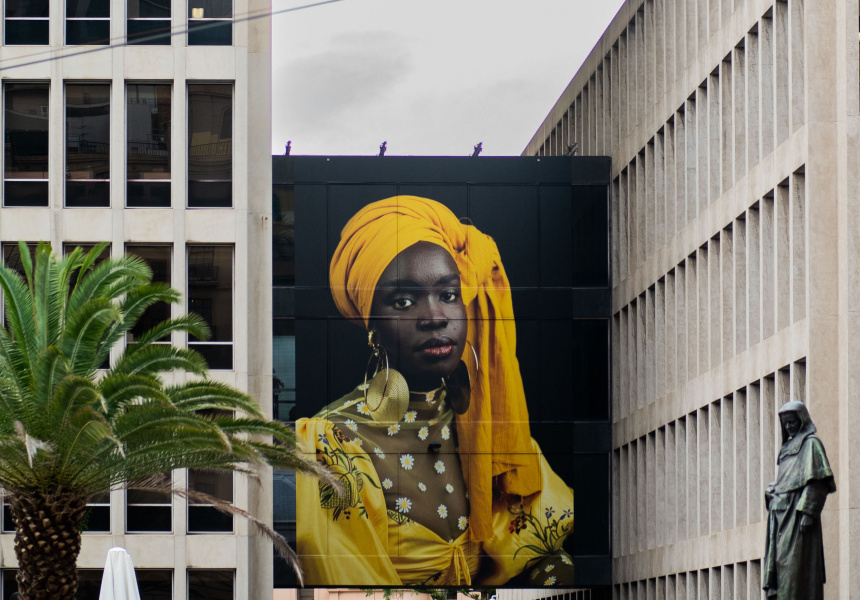
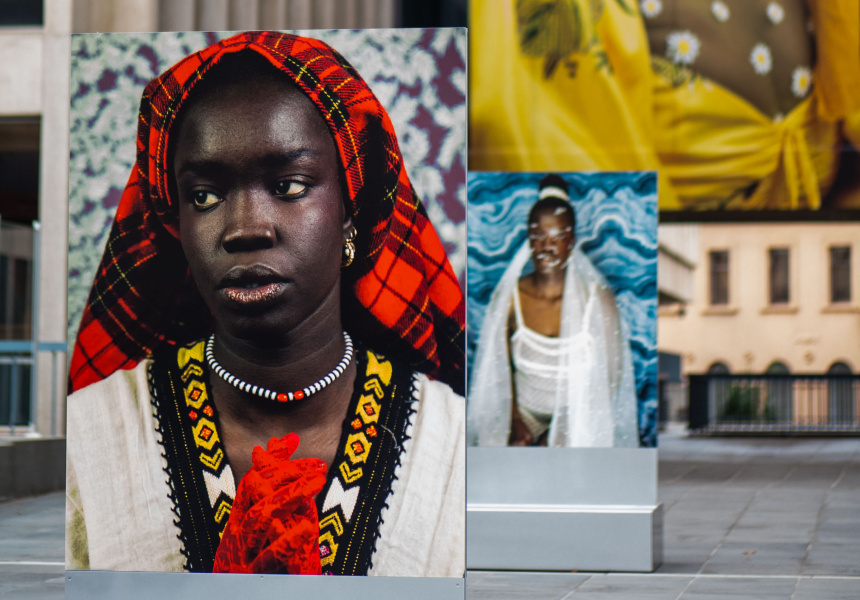
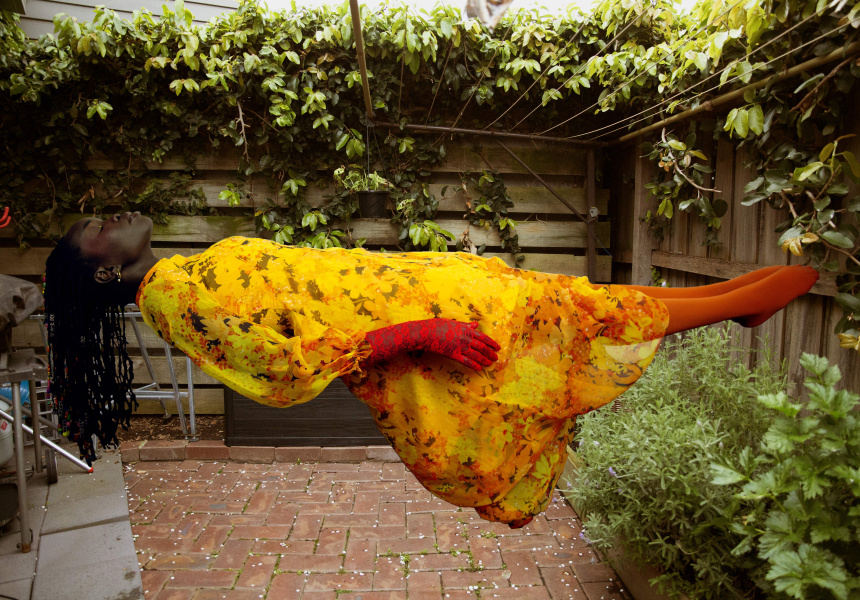
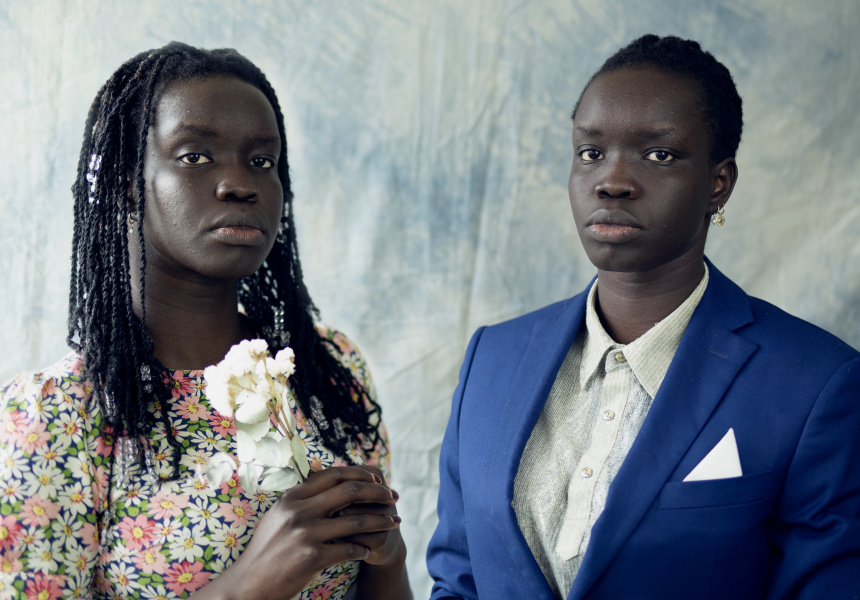
If you’ve been to Melbourne recently, chances are you’ve seen artist Atong Atem’s work. There’s her striking mural on Hanover House, a permanent work that changes from bright patterns to LED flowers as the sun sets. Then there are her vibrant self-portraits in the CBD that have been part of Photo 2022 – a festival dedicated to the art and ideas that underscore photography.
The South-Sudanese born, Melbourne-based Atem came to photography after initially studying painting at university. The transition sparked her interest in art history from a colonial-historical perspective.
“That introduced me to ethnographic photographs,” she says, “and from there I was like, oh, this is extremely profound – to see the first recorded images of African people with these very, very problematic ethnographic photos. And what can I do with that?”
Her first response was to start creating hand-painted artworks out of archival photographs, but during her research she discovered there was already a history of African photographers making their own works in response to these images.
“That just inspired me,” Atem says. “I felt like, fuck, I’ve spent all of this time trying to be part of an industry that doesn’t naturally include me when I could have been part of this other art history that has so much space for me. And that’s where I just decided to start taking photographs.
“Portraiture is just such a profound way to talk about history and to talk about traditions and all the things that I’m interested in because you are presenting a person or representing a person. There’s just so much power with the camera and its ability to either uplift or not … it’s a tool and we often say tools are quite neutral. But it’s absolutely not neutral because it’s informed by the person that’s using it – their own history, their own ideas about the world and the people in it.”
Atem is self-taught. When creating a particular portrait, the process is usually longer than the actual photographing. She goes in with a concept but for the execution “I let it be playful because I still enjoy taking photographs and I would hate to be at a point where I don’t like it anymore.” So she puts on some music or a podcast, and after a few hours will have selected the fabrics and clothes and items that form the backdrop and have a solid look in place.
“It really takes, at most, half an hour to capture, which is why I often talk about the photographs being like documentation of the performance – that’s what it is for me.”
Atem isn’t the first photographer in her family – her father Atem Yaak Atem worked as a photojournalist. She says his relationship to photography is similar to hers, despite its different purpose. This is part of why she asked him to write an essay to feature in her first photobook, Surat , commissioned as part of Photo 2022 International Festival of Photography and published by Photo Editions (a collaboration between Photo Australia and Perimeter Editions).
“I was always really interested family histories as a big part of my practice, so I decided to pay homage to that,” she says. “[ Surat ] is actually about going back to what inspired me to do photography in the first place, and creating a body of work that honoured that.”
The book starts and ends with a collection of family photographs. In between, Atem has created a collection of surreal, colourful and captivating images and portraits in response.
“It’s a reference or point of view,” she says, “rather than trying to directly imitate those photos – which allowed for me to go into that sort of surreal end of the spectrum.”
Atem’s father’s essay explores his own experience and relationship to portraiture and photography, which works to both enrich the images and ground them.
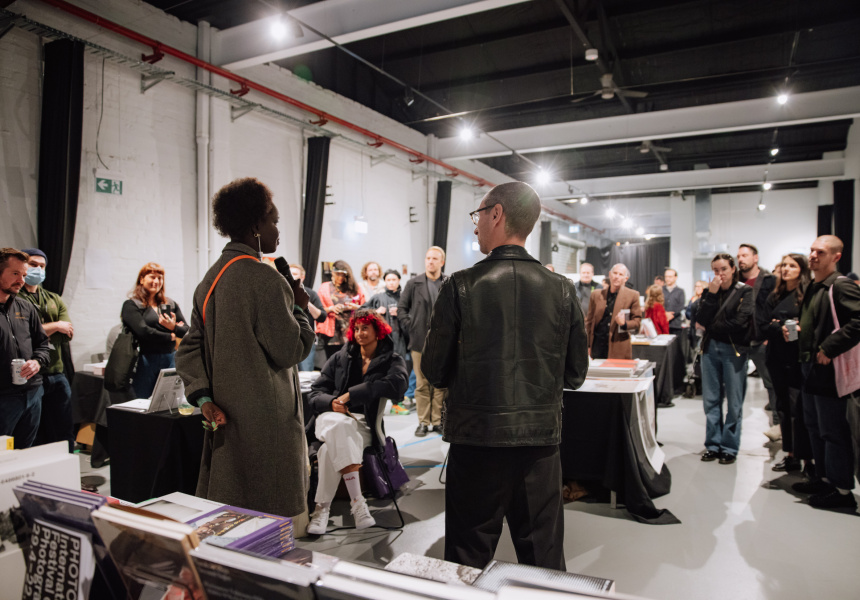
Surat launched in May at Photo 2022's Photobook Weekend. Despite looking forward to her own event, Atem said she would be taking an empty tote bag to fill up with books from the other artists she had met across the festival, and was keen to attend as many talks as possible.
“It’s such a rare opportunity to be with an artist talking about their work, and it really changes your relationship to their work,” she says.
Last time Atem spoke to Broadsheet , she highlighted how important it is that her art be accessible, to put it “outside the white cube, outside contexts that are historically elitist.” Photo 2022 taps into this ethos for her.
“My favourite has so far been the public-art stuff,” she says. “Because it’s along my tram line, most of it, going into the city has been really, really, really fun, seeing all these works by these artists I’m either working with or have just met through the festival.”
Surat is available for purchase through Perimeter and Atong Atem's large-scale installation of Surat will be available to view on the outside of the Old Treasury Building until 29 July
Broadsheet is a proud media partner of Photo 2022 International Festival of Photography.

Produced by Broadsheet in partnership with International Festival of Photography.
Learn more about partner content on Broadsheet.


-9618b5d451.webp)