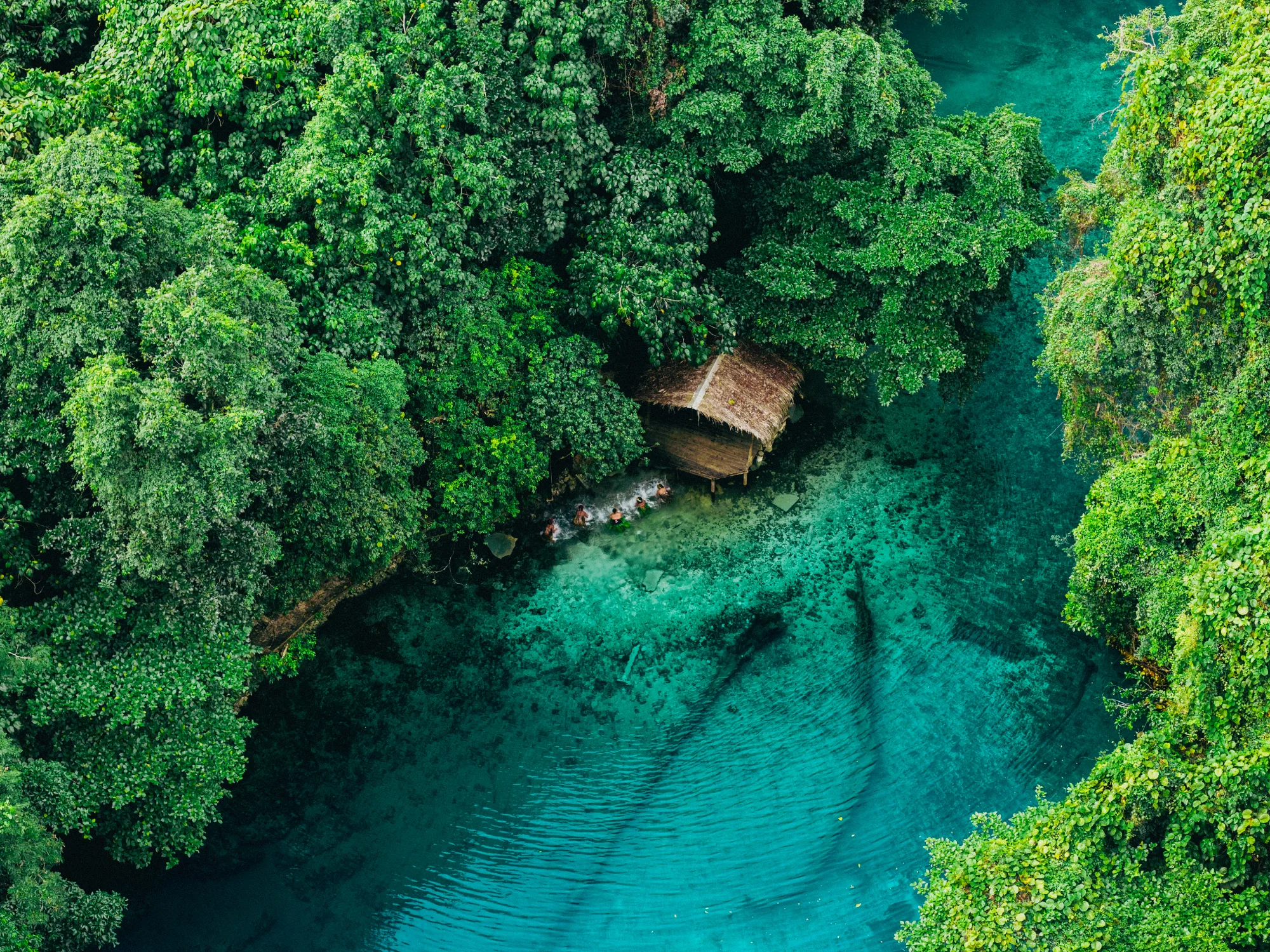
Words by James Williams · Published on 28 Oct 2026
Some people travel for food, others for parties – but lately, I’ve travelled for water. Diving into a shimmering blue body of water is medicine, as far as I’m concerned. While Instagram may try to steer you to the busy beaches of Greece or cenotes of Mexico, you can find both kinds of blue much closer to home in Vanuatu.
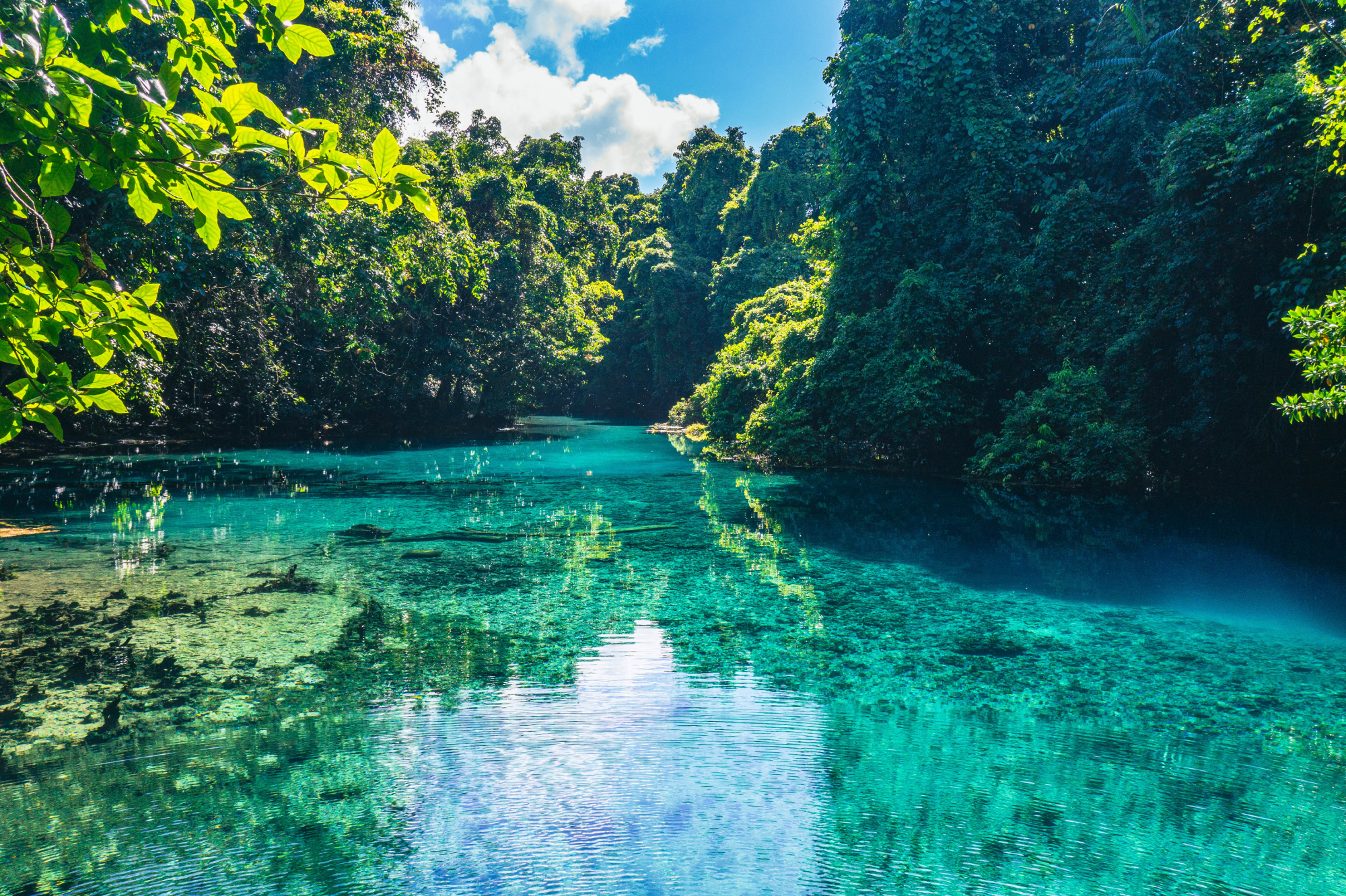
Across its archipelago, Vanuatu is home to unspoiled coral reefs where you can swim with colourful fish, sea turtles, and with some luck, dugongs, while its blue holes are so clear you can see right to the bottom.
The best bit? Getting to the islands takes less time than some domestic Aussie flights, with Brisbane to Port Vila taking under three hours. Here’s where to dive into the blue.
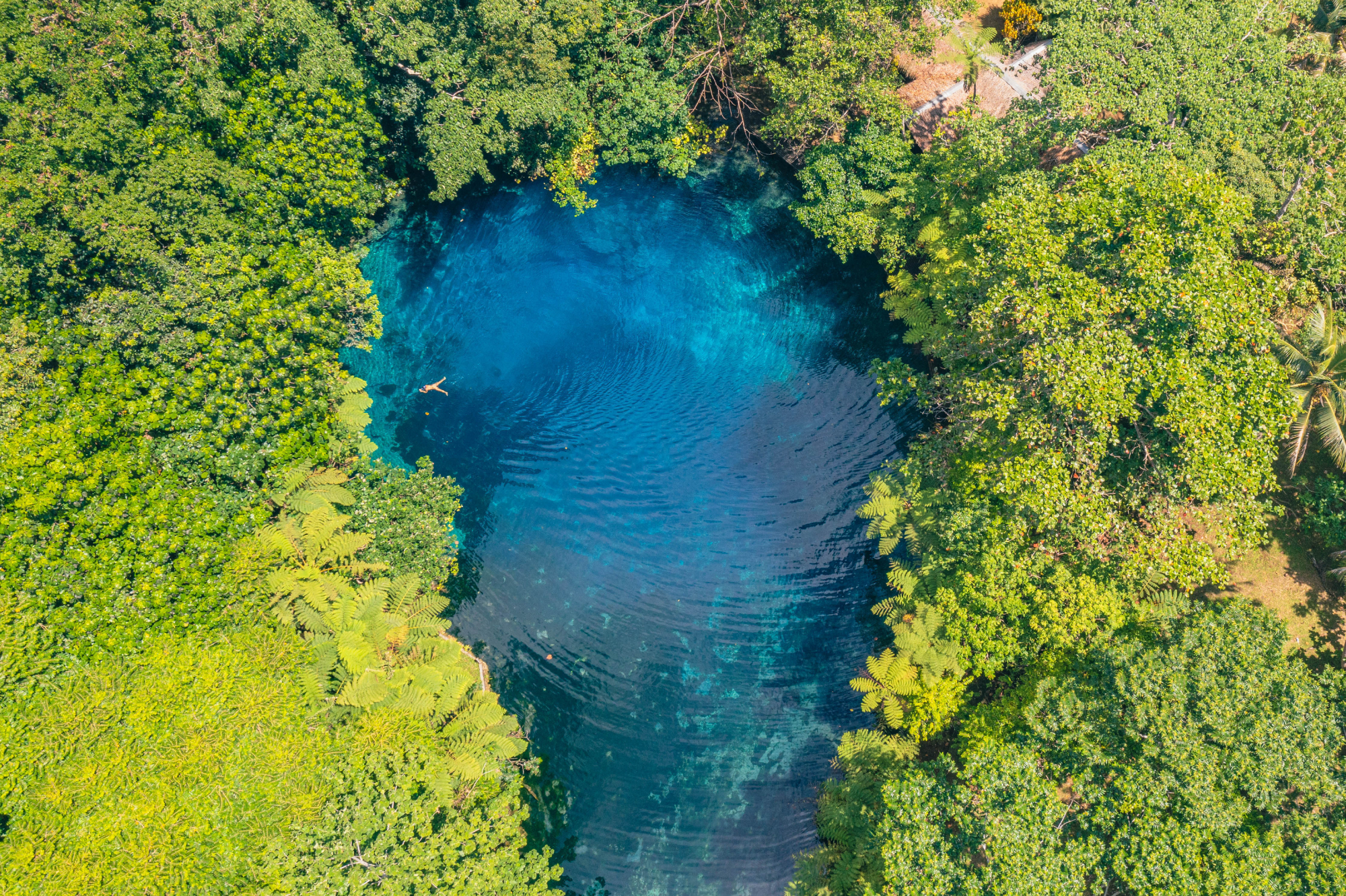
Formed by partially collapsed limestone cave, blue holes are inland pools fed by springs bubbling up through limestone. The water is filtered clear, and its depth absorbs the red end of the light spectrum, leaving only blue. When you float in them, it feels like being suspended between two skies.

Riri Blue Hole, Vanuatu · Photo: Courtesy of Vanuatu Tourism Office
Most of Vanuatu’s blue holes are on Espiritu Santo, Vanuatu’s largest island, a 45-minute flight north of Port Vila. Arguably the prettiest is Riri Blue Hole. It’s a short canoe ride down a mangrove-lined river with crystal-clear water, towards a deep turquoise freshwater swimming pool. Surrounded by dense jungle canopy, it looks like a storybook illustration that makes you fond of the simple bare necessities. The rope swing is about as idyllic as it gets.
A little further north of Riri, Nanda Blue Hole (also known as Jackie’s) is ringed by a low dock that sits just a few centimetres above the water. The dock makes climbing out easy, and it’s a perfect vantage point to view the clouds of fish hanging in water. When you’re done, there’s a small on-site cafe to dry off at.

Nanda Blue Hole, Vanuatu · Photo: Courtesy of Vanuatu Tourism Office
The largest of Espiritu Santo’s blue holes is Matevulu, accessible by car or – for a more scenic option – by kayak. A rope swing hangs from a towering banyan tree, and a waterslide pipes in from the edge. Pop your goggles on to watch fish dart through shafts of sunlight, and keep an eye out for a rare freshwater hermit crab.
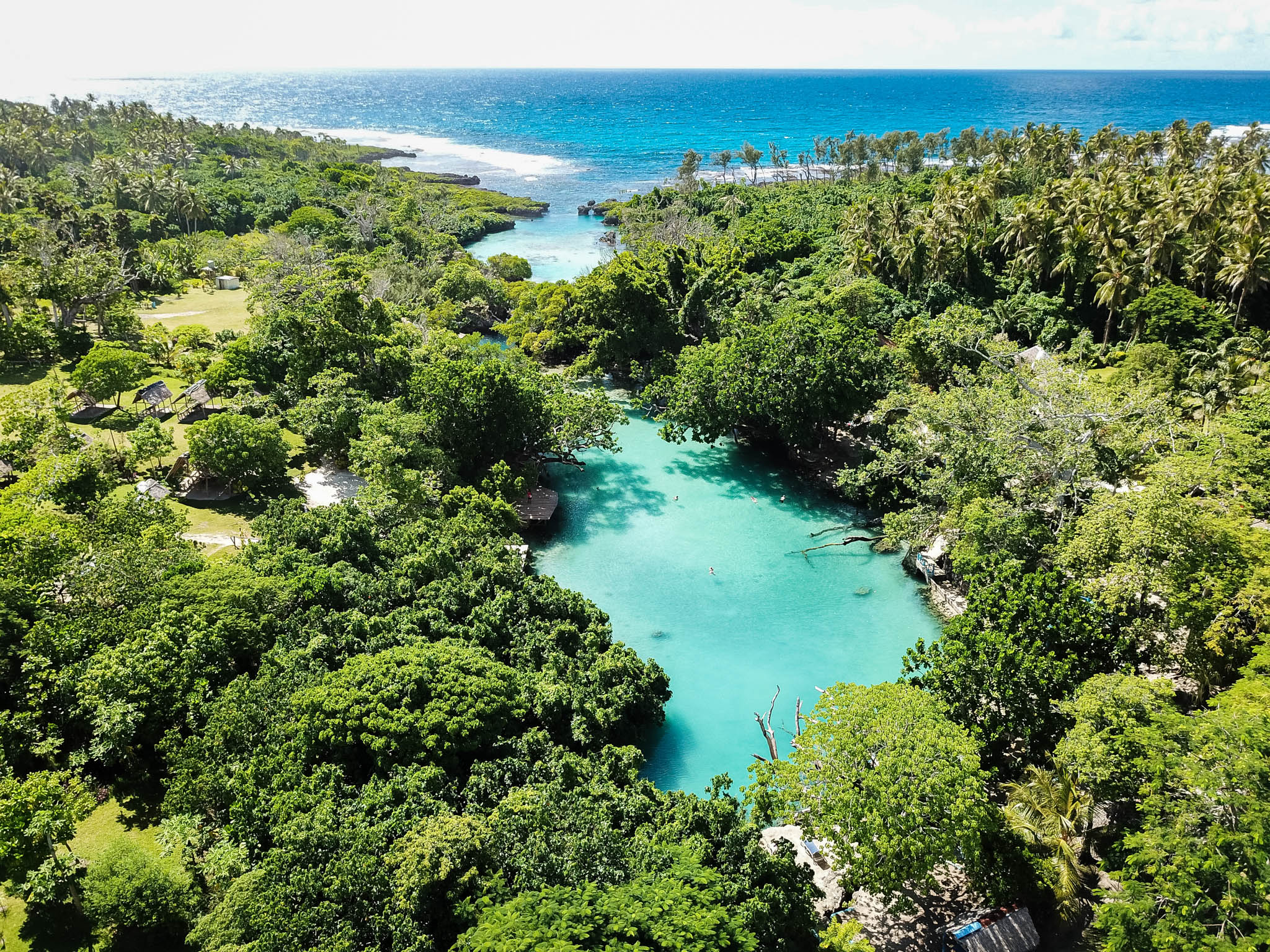
Blue Lagoon is like a theme park of platforms and rope swings on Efate’s east coast, about half an hour from Port Vila, where limestone springs mix with the tide to make the water slightly salty and impossibly blue. Supervised platforms are built around trees offering jump-off points at varying heights (I tested them all, and they’re all worth a jump). Like many of the swimming spots on this list, Blue Lagoon is locally maintained and thus has entry fees – from Vt500 (around AU$6) for adults, Vt300 (around AU$3.60) for kids, paid to the landowners.

Blue Lagoon, Vanuatu · Photo: Courtesy of Vanuatu Tourism Office
For a short riverside walk where you’ll see a bit more birdlife, visit Rarru Cascades on the Rentapao River, Efate, about 25 minutes from Port Vila. A boardwalk climbs alongside a staircase of rock pools to a swimming hole beneath a low waterfall. Launch in off the rope swing or stay dry and spot the wildlife hiding in the shallower, more serene pools below.
Champagne Beach on Santo’s north-east coast is well-documented as one of the best in the world, and it’s probably one of the least busy on those lists (unless a cruise ship is anchored in the bay – it’s a regular port of call). There’s a jetty where you can swan dive into Alize-blue seawater, right next to colourful reefs in a vibrancy competition with the fish. It’s named after the sparkling wine because volcanic gas escapes through the seabed in streams of tiny bubbles. The effect is strongest at low tide, when gentle waves fizz as they lap the shore. There’s a bar if you want to add the fizz of a local Tusker lager, and a hut selling lava-lava (a local version of a sarong) and souvenirs.
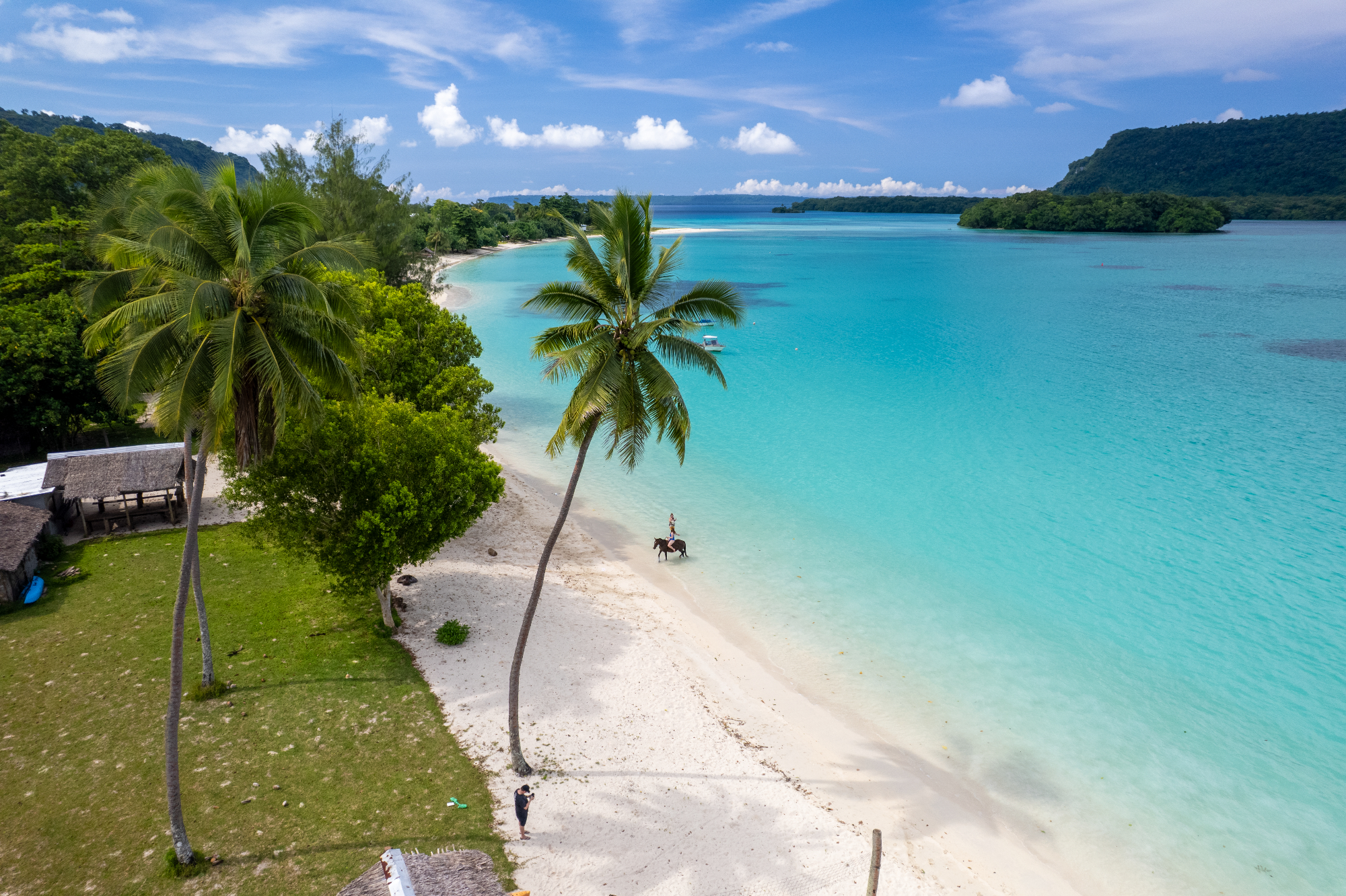
The French-speaking village of Port Olry looks out over turquoise water to a scatter of small islands. On the exposed back beach, the waves turn a deeper, brighter blue. Take a dip out front of local restaurant Chez Louis, then settle in for lunch: poulet fish (snapper), flame-grilled lobster or coconut crab. If you can’t bring yourself to leave, its beachside bungalows offer some measured seclusion.

Port Olry Beach, Vanuatu · Photo: Courtesy of Vanuatu Tourism Office
Million Dollar Point, just outside Luganville, is a historic beach where the US army dumped World War II equipment, purely to spite the French who hoped to get it for free once the Americans left. Pieces of bulldozers, jeeps and tractors are scattered from the seabed to the shore. The wreckage has been transformed by soft and hard coral into an artificial reef, making it an interesting shallow dive and snorkelling site (reef shoes are recommended here).
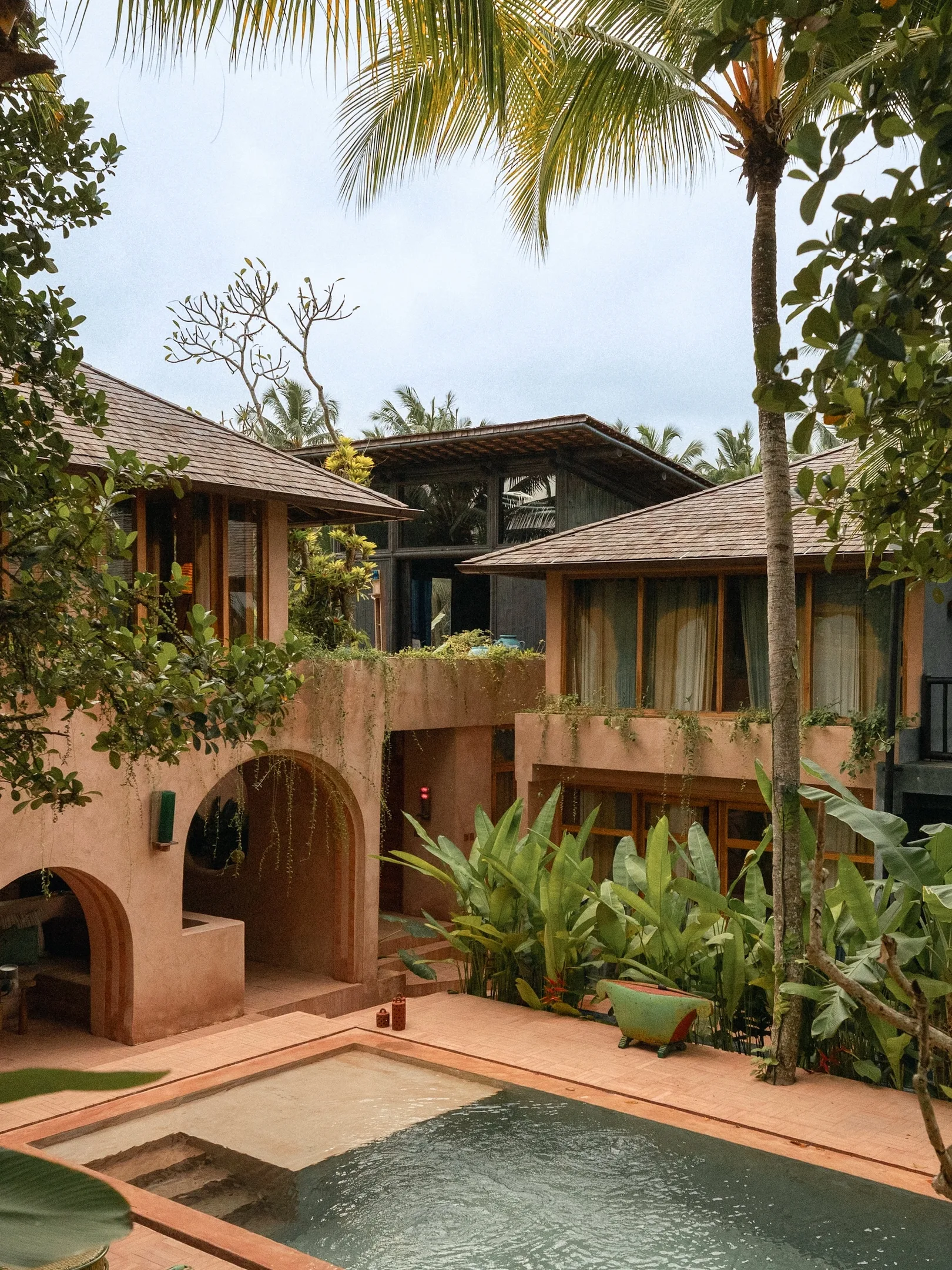
Back on Efate, Moso Island sits off the north-west coast, with no roads and no cars. From The Moso, an adults-only resort, it’s about a 30-minute walk across the island to Embas Beach on the far side, where the wave line is a ribbon of countless hermit crabs rustling around. Moso guests can order a packed lunch and call it a day.
Virgin Australia operates up to 12 return services per week in summer school holidays from Brisbane to Vanuatu. Explore Vanuatu accommodation and holiday packages through Virgin Australia Holidays.
The writer travelled as a guest of Vanuatu Tourism Office and Virgin Australia.
About the author
James Williams is a freelance writer for Broadsheet.
Related Content