
All photos Casey Horsfield
Into the Wild at Three Hummock Island
Words by Emma Do · Published on 02 Oct 2024
I’m standing on a white sand beach, watching two orange-bellied flame robins swoop past in perfect unison. A soft breeze ripples the tall grass behind me. To my left, imposing granite boulders stand guard over azure waters and glimmering rock pools. I breathe in the stillness, trying to impress the image into my long-term memory.
If this beach were anywhere else, it would be crawling with revellers, but my peace is not punctuated by revving jetskis or shrieking children. In the quiet of Three Hummock Island, it’s just me. Well, me, my travel buddies, and the island’s two genial caretakers/on-call tour guides, Melaynie and Casey Spinks, who are currently roving elsewhere. Between us, we have unfettered access to 23,000 hectares of pristine nature reserve. This is as wild as it gets.

Our group of city slickers are in self-imposed exile here to disconnect and touch grass. With no permanent residents, shops or powerlines, Three Hummock Island – located off the north-west tip of Tasmania – is a secluded, off-grid escape with only one eco accommodation.
In most national parks, you’d expect to camp. Here you stay in a private homestead, built in 1910 and conveniently located in walking distance of multiple beaches. It’s cosy and light-filled, comfortably sleeping up to eight on king-size beds. There’s a fully equipped kitchen, barbeque, firepit and – the jewel in the crown – an outdoor hot tub overlooking the beach. At $750 a night, it makes sense for a family or group of mates seeking a unique getaway. There’s also surprisingly good wi-fi (even Netflix), but we happily eschew digital entertainment for card games by the fire.
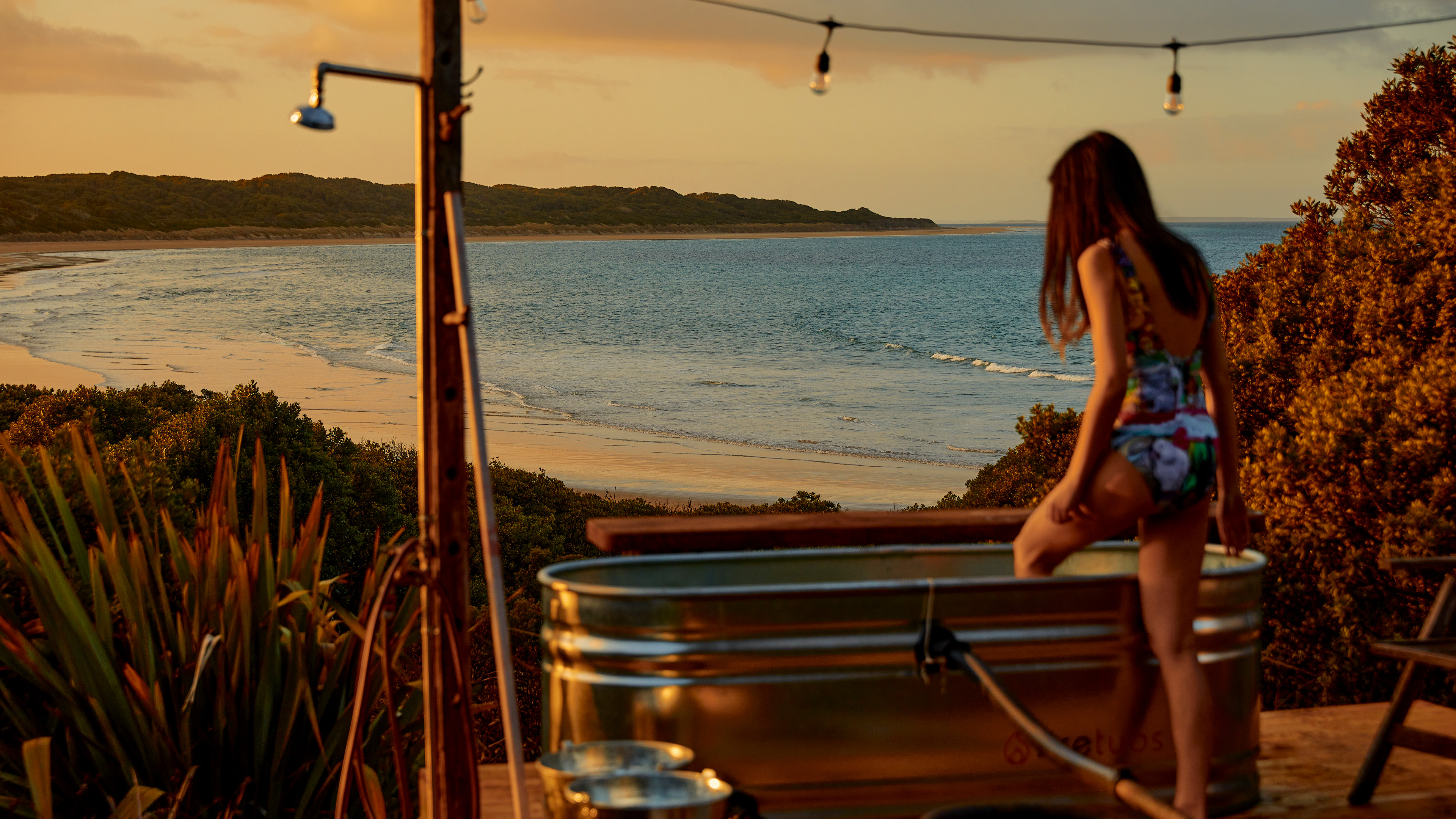
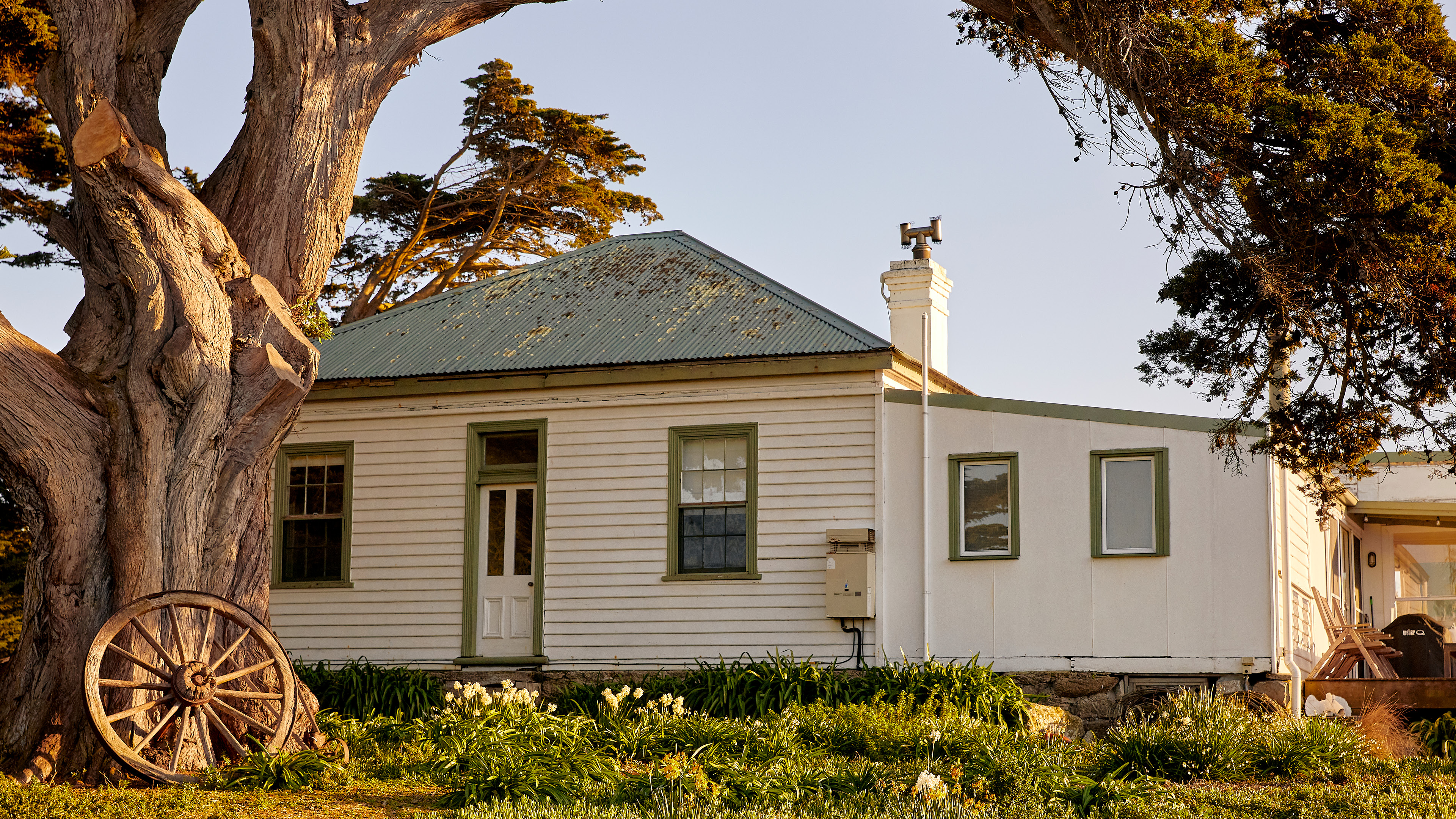
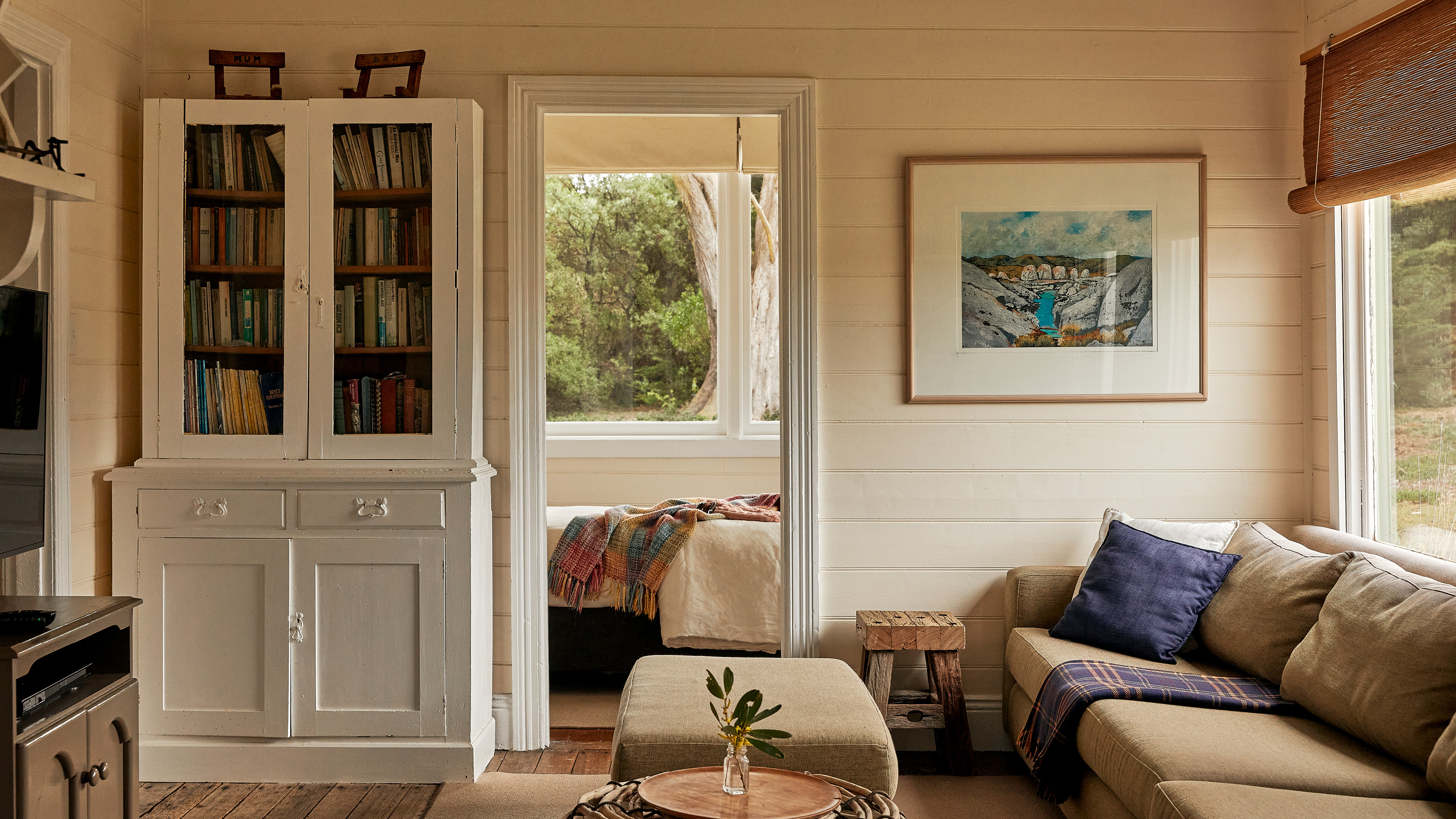
The untouched wilderness is Three Hummock’s greatest calling card. From the hill past the caretakers’ cottage, I take in sweeping views of the sea. I am shocked, as a self-confessed “indoor person”, that I can happily spend entire days outside here, getting lost in nature. “Do you ever get lonely on the island?” I ask Casey. “Not really,” he answers, “you meet a lot of interesting people.” And if you ever get sick of your significant other? “Well, there’s a lot of space.”
Summer on the island reaches the mid-twenties, making it comfortable for seaside picnicking and outdoor activities. Even though my primary joy is lolling about on undisturbed beaches, our group also goes snorkelling, swimming, fishing and bushwalking. Curiosity is well rewarded – ride the e-bikes through shaded tracks and you might discover a secret cove of fine sand and turquoise waters. Like hiking? Get up to South Hummock, where you can survey the island’s dense green interior from up high. It’s one way to feel small.

Sturdy shoes and an adventurous spirit are a must, though Eleanor Alliston, a Mills and Boon author who lived on the island for over 50 years, famously got about barefoot. Alliston documented much of the lore surrounding Three Hummock, so named for its trio of hills, in her memoir Escape to an Island. (There is a plaque dedicated to her and her husband overlooking the ocean, a lovely place to watch the sun set).
Another surreal historical note: Giuseppe Garibaldi, the unifier of Italy, visited in 1852 and was supposedly captured by the island’s beauty.
Out on West Telegraph Beach is an Aboriginal petroglyph on a granite slab facing the ocean. You can just make out the circular carving, but most of it is shrouded in rust-coloured lichen. When we visit, the sky is streaked with an otherworldly pink.
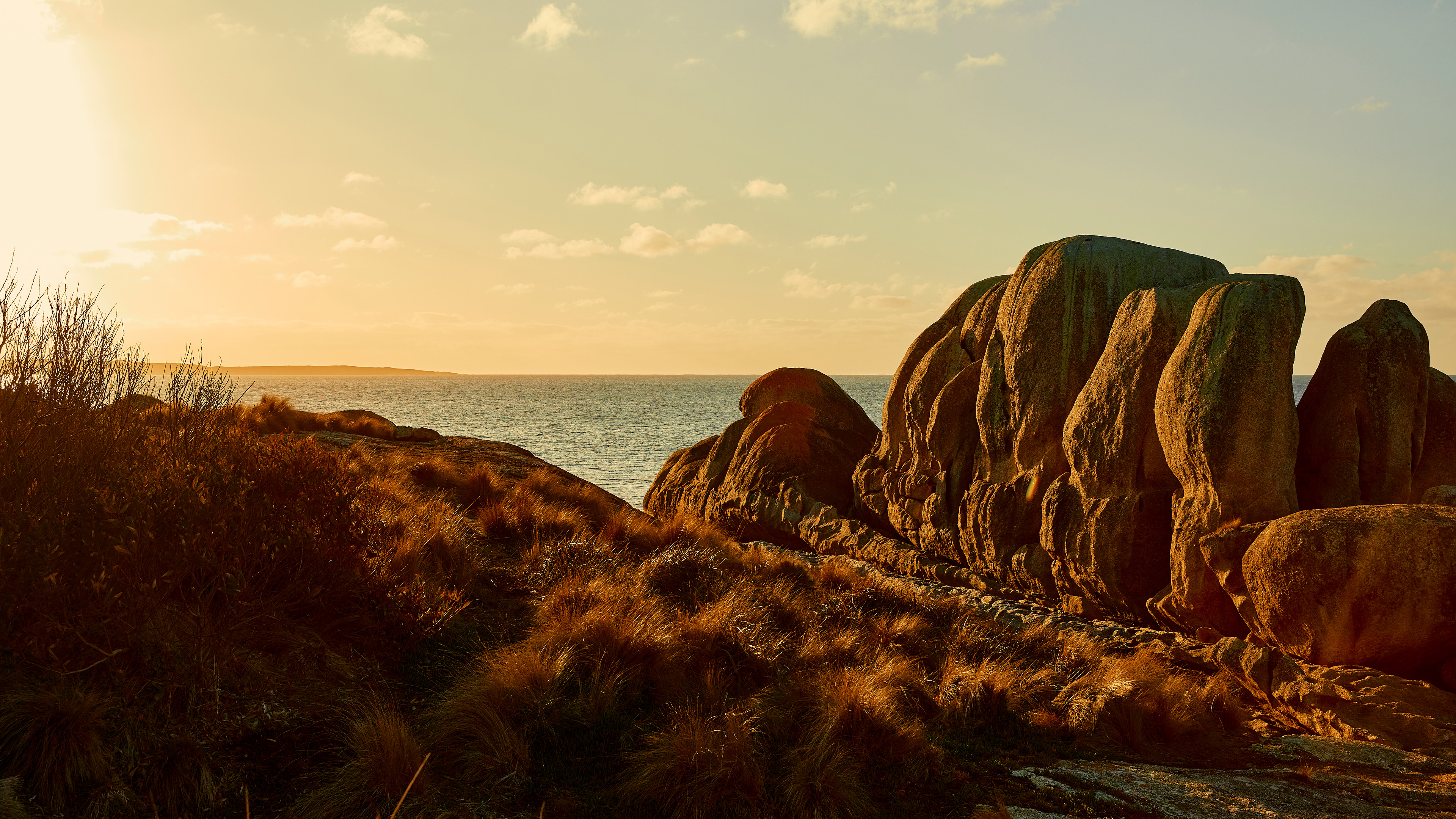
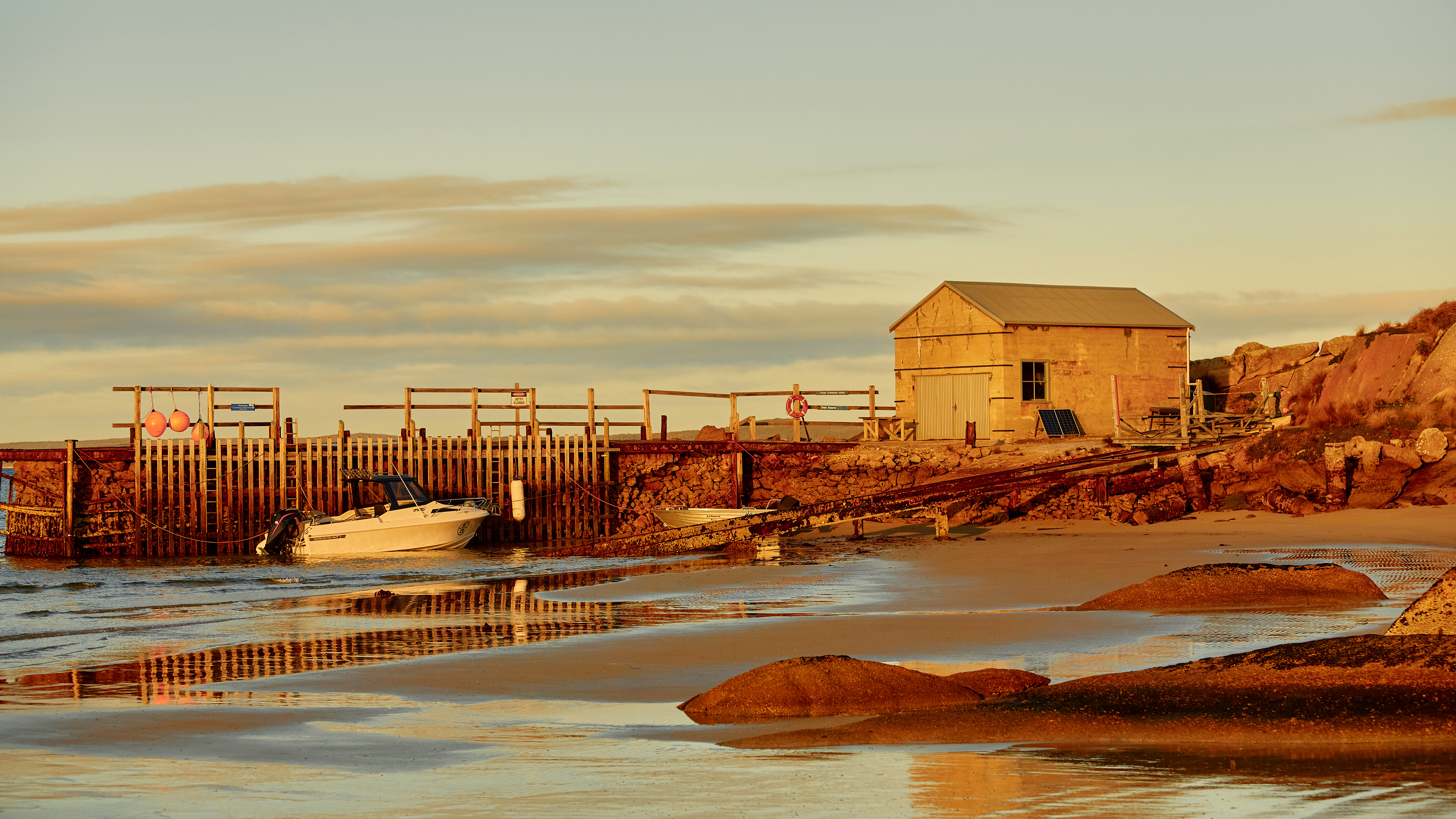
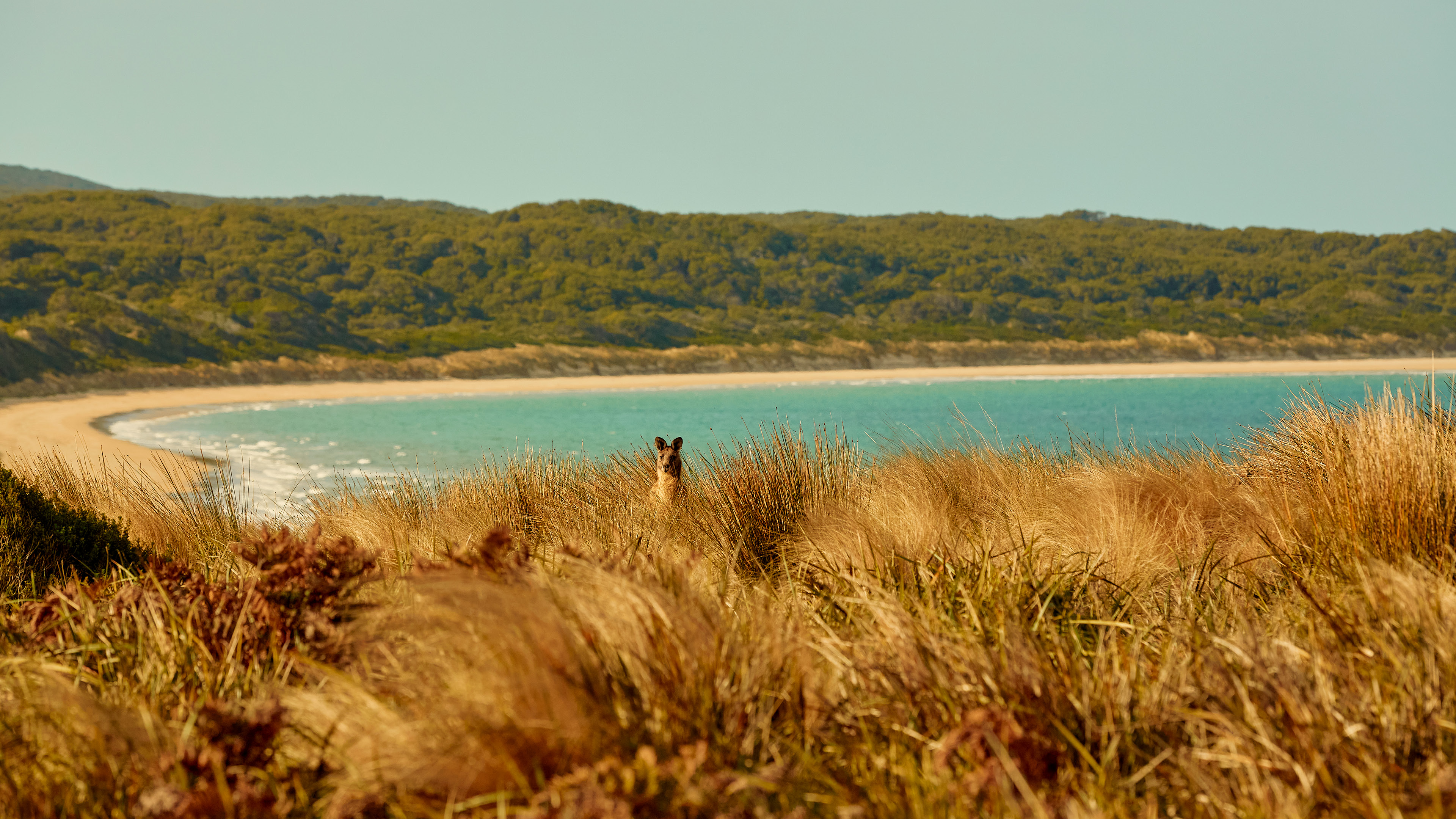
In the mid-20th century, much of the island was pasture for sheep and cattle; the forest has since regenerated, providing a sanctuary for the native creatures we frequently encounter over our three-day stay. Watching wildlife becomes our version of celebrity spotting: there’s the nocturnal pademelon, a friendly mob of eastern grey kangaroos and their joeys, green rosellas and yellow-tailed black cockatoos (with over 90 recorded bird species, the island is a twitcher’s dream). On hikes, we befriend adorable Cape Barren geese, which trundle about in pairs. There are little penguins somewhere, but they decide not to grace us with their presence.
We’re told the winds can be brutal here – many a ship has been wrecked on the coastline – but during our stay, the breeze barely whispers. Legend has it that buried treasure from a shipwreck in the 1870s lurks at Spiers Bay, a 20-minute walk from the homestead. “A lot of people have been over in the past looking for that,” Melaynie tells me. But why bother digging when riches are so clear to see in the island’s crystalline waters?
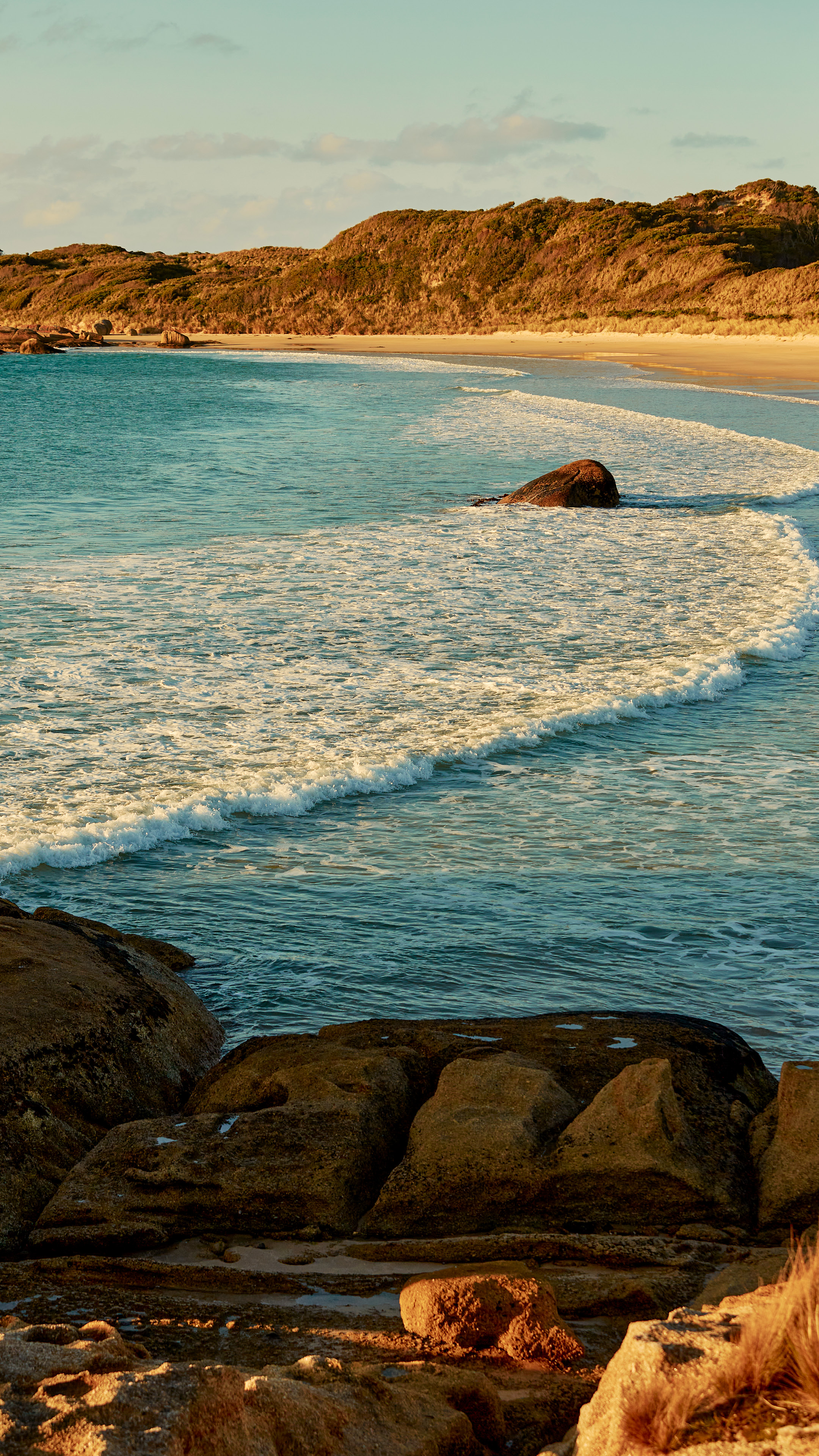

Casey frequently plucks abalone from the rocks during low tide and sets crayfish pots beyond (guests can try their hand at both). The waters are too choppy to go boating during our stay, so he gifts us a cray he’s caught earlier. It’s juicy and sweet, made all the better by a crisp vino, sipped while overlooking Home Beach from our patio. Our group unwinds from the day’s activities by stargazing from the woodfired hot tub. In the morning, I can’t shut up about how peaceful my sleep was.

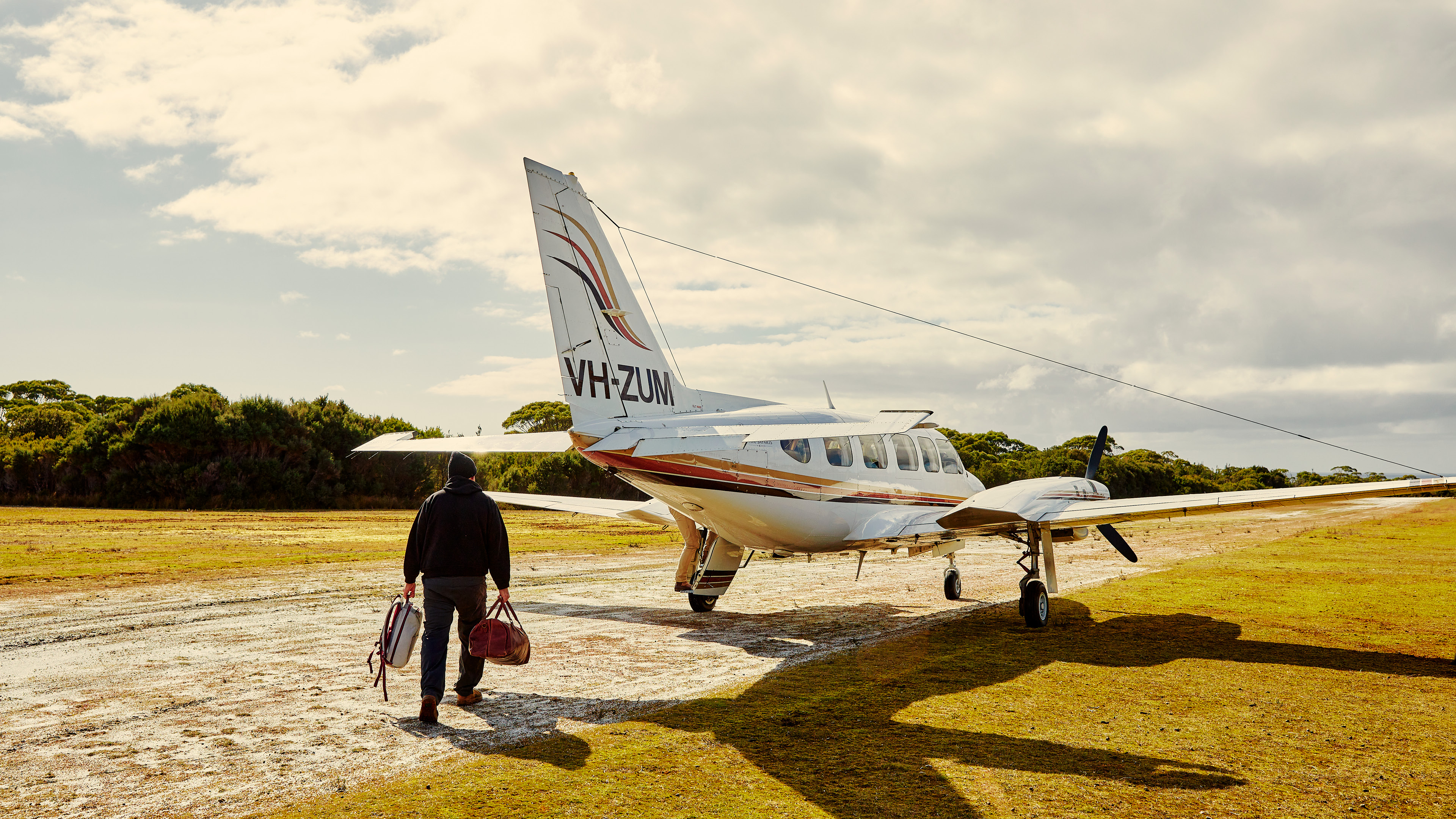
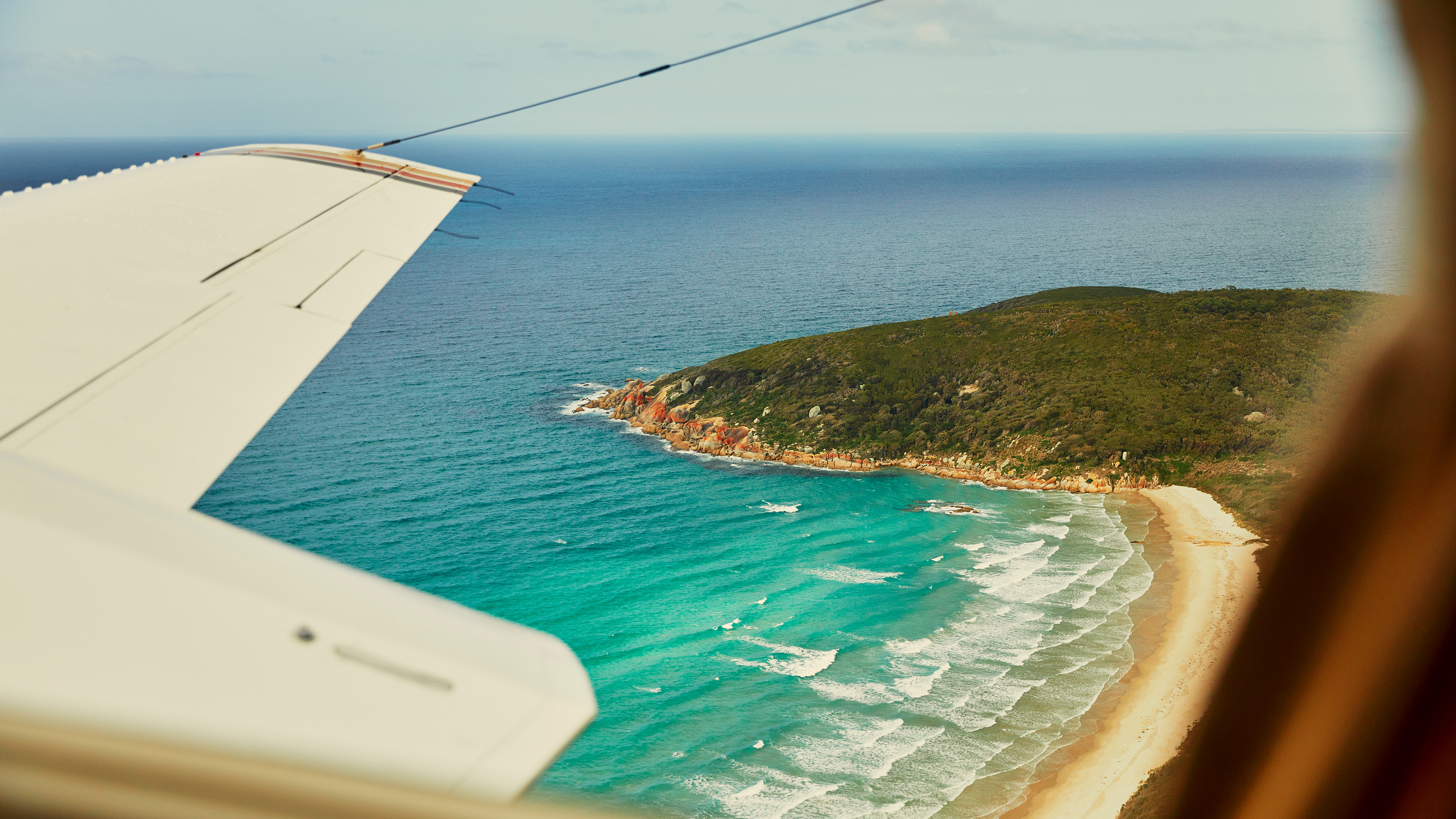
Being on the island feels like an accessible luxury. Our hearty meals are gourmet take-home packs by Blakeaway, but holidaymakers can splash out on a private chef (going full DIY or ordering a La Manna & Sons grocery pack are also options). Travel to the island is by charter plane from Melbourne or Hobart (this is guaranteed to make you feel like an A-lister), or by boat from north-west Tasmania. While transport can be dear, prices aren’t more than an international holiday.
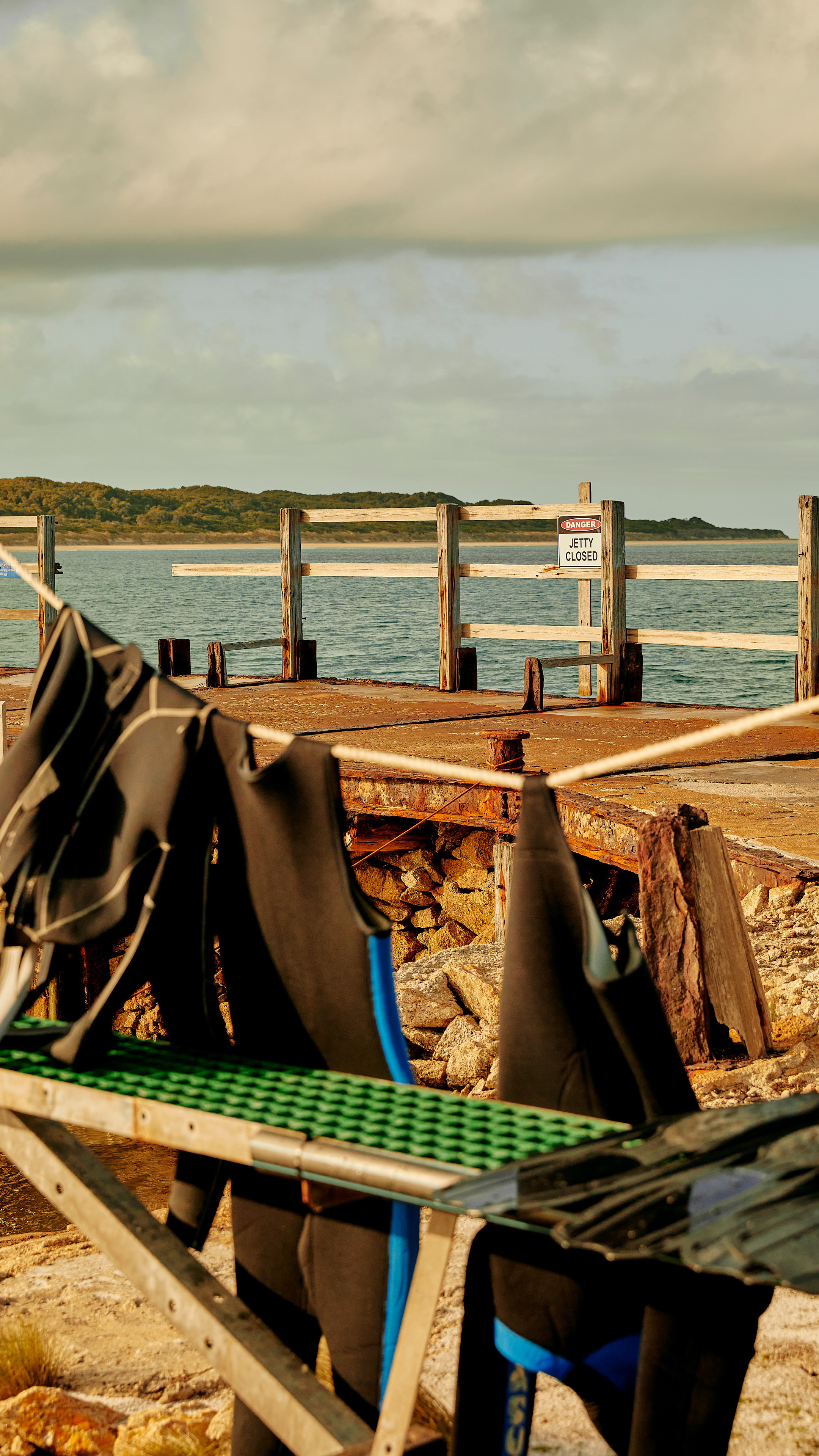
As Casey puts it, “it’s the freedom of the lifestyle here” that wins people over. By the end of the trip, we are all high on the great outdoors. When we catch a fish down by the jetty one morning, we grin like Rex Hunt. We cosplay as lumberjacks, taking turns to chop firewood (purely for kicks – there is a plentiful supply already). Could we live out our self-sufficient, rugged island fantasy? The pipedream ends when we borrow Casey’s 4WD and get bogged on the beach. Humiliated, our photographer eventually realises his error: he hasn’t shifted the car into four-wheel drive.
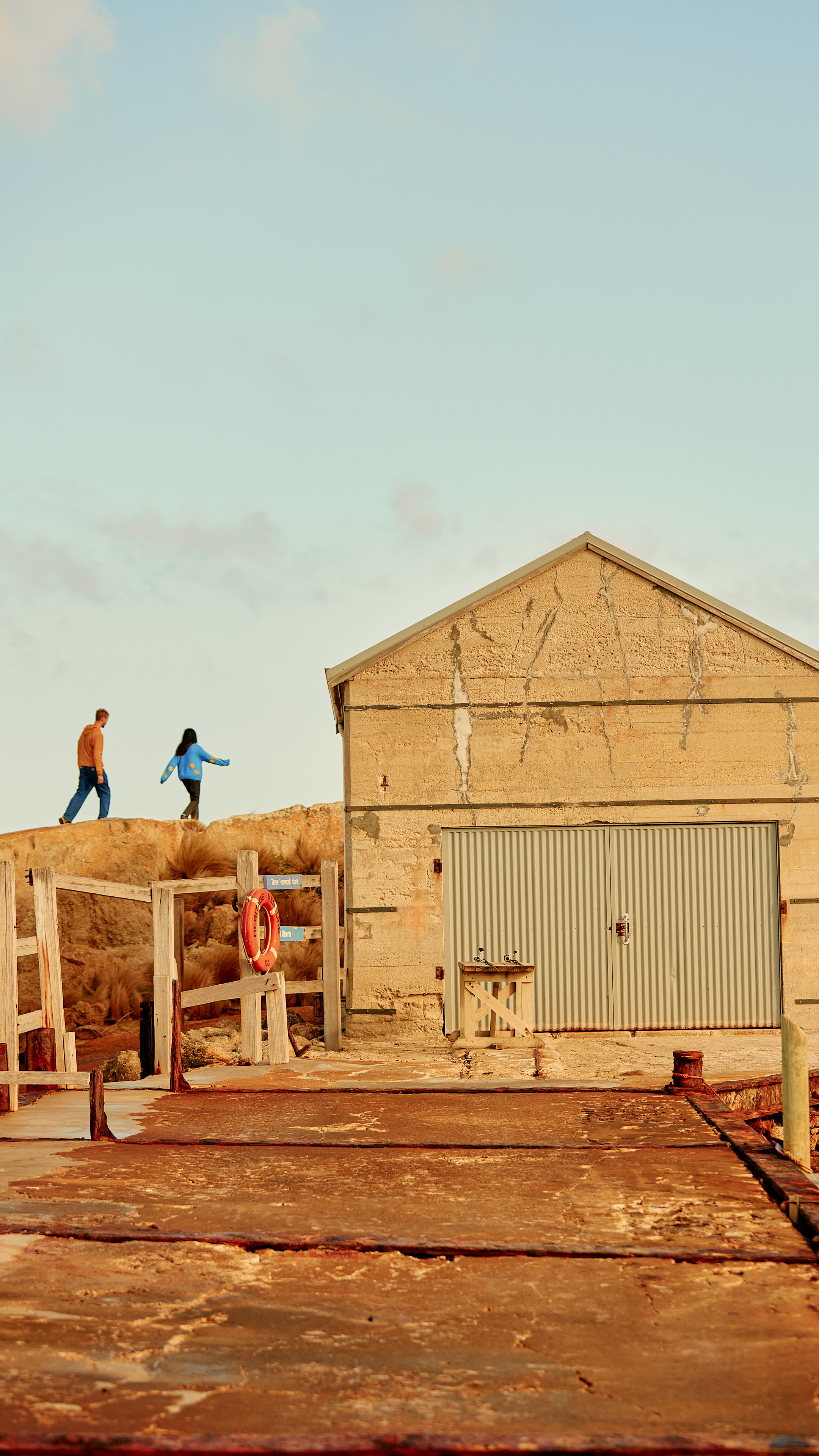

On our final afternoon, our gang goes for a dip at Tilly’s Cove, a sheltered spot accessed by a steep downwards climb. It’s not officially on the visitor map, but Casey reckons it’s “too good not to share”. It’s gorgeous here – almost Mediterranean, if only the water temperature was a few degrees higher. Perched on a granite slope, gazing across the water to neighbouring Hunter Island, I can understand why the Allistons stayed for half a century. It’s a spectacular place to be marooned, even if it’s just for a long weekend.
The Details
Getting there : Charter flights can be arranged from Melbourne or Burnie. There’s also a charter boat available from Smithton or Montagu for guests travelling from Hobart or flying into Burnie from mainland Australia.
Accommodation : To hire the entire island exclusively (including the Homestead), current rates are $750 per night (up to four people with a minimum two-night stay) plus $150 for each additional guest (up to a maximum of eight).
Dining : Choose a private chef for your stay, order catering from Blakeaway or groceries from La Manna & Sons or you can DIY.
Activities : Depending on the weather, activities can include fishing, diving, snorkelling, kayaking, 4WD tours, bushwalking, birdwatching, sunset bonfires and soaking in the outdoor woodfired tub.
Broadsheet contributors travelled as guests of Three Hummock Island.
This story is part of Broadsheet’s special Aussie Travel Issue , presented by Up, exploring uncommon escapes and remarkable stays close to home.
Related Content

-063f6a0dd3.gif)