-063f6a0dd3.gif)
Courtesy of Hardie Grant / David Loftus
10 Years of Saint Peter
How an Australian Fish Eatery Hooked the World
Until recently, when I travelled the world to eat as part of my job, I would always bring a copy of one of Josh Niland’s books as a gift to thank chefs, friends or colleagues who were kind enough to host me. They were always gracious, of course. But over time I began to notice a curious, almost apologetic half-smile when they unwrapped the package. I eventually realised why: everyone already owned a copy.
The global influence the chef and restaurateur has had on the way people think about fish cannot be overstated. His books have sold more than 235,000 copies globally and have been translated into 11 languages. At the age of 30, he was the first Australian to receive the James Beard Book Of The Year award for his debut title The Whole Fish Cookbook, and is the only Australian to sit on the board of the Basque Culinary Center in Spain. He’s even lectured at the Culinary Institute of America, dissecting a 45-kilogram yellowfin tuna to illustrate the intricacies and economics of whole fish cooking.
But before the accolades and global renown there was Saint Peter, the tiny restaurant Josh and wife Julie Niland opened on Oxford Street in Paddington, Sydney, 10 years ago this month. It’s the place where Josh developed his bedrock principles: using every part of the animal from bones to eyeballs, his dry-aging techniques and his ultimate mantra of never letting a fish touch water once it’s caught. Today, his and Saint Peter’s “scale-to-tail” philosophy inspires something like reverence in chefs around the world.
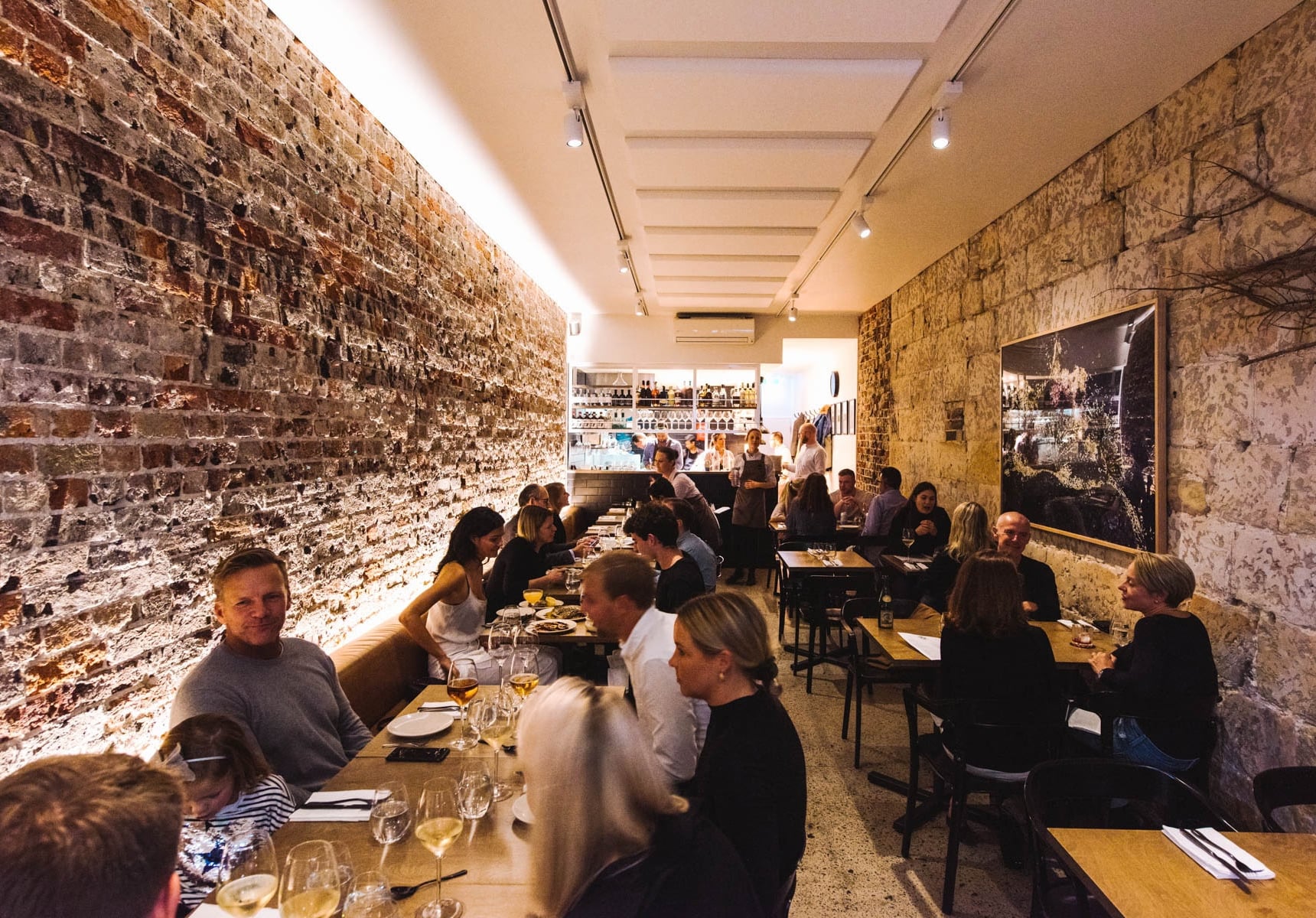
Saint Peter’s original restaurant on Oxford Street, 2016. Photo: Jiwon Kim
“I have a profound sense of guilt about the way I mishandled fish 20 years ago,” said influential New York chef Wylie Dufresne after working alongside Niland for the restaurant’s 10-year anniversary celebrations this year. Discovering Josh’s principles, he told me, was “like being told the sky is actually orange. At the time I had believed what I was doing was right, such as washing fish in water. I now can see that Josh’s way is clearly the right path, without question.”
But you don’t need to be a chef to fall in love with Saint Peter, nor is it necessary to understand the anatomy of a coral trout to appreciate how good Saint Peter makes one taste, or how beautifully the chefs present it on the plate. And you certainly don’t need to be a restaurant critic to be sure that a lunch or dinner under the care of Niland, his head chef Joe Greenwood and the endlessly warm floor team led by restaurant manager Monique Guest, will be an experience you’ll never forget.
Saint Peter, which has since relocated from its original home on Oxford Street to The Grand National Hotel around the corner, is far more than the “fish eatery” the Nilands set out to create a decade ago. To countless diners around the world, it is as synonymous with Australia as the Sydney Opera House or the Great Barrier Reef. The story has been told many times – most recently in staggering detail in Josh Niland’s new book, Saint Peter: Chapter and Verse. Consider this a taste of what it felt like to hold on to Saint Peter’s dorsal fin as it grew into the extraordinary restaurant it is today, as told by the Nilands, their mentors, collaborators and staff.
Building an Australian fish eatery
By the time the Nilands opened Saint Peter in 2016, they had already trained under Peter Doyle at Est in Sydney and Heston Blumenthal at The Fat Duck in the UK. Julie – a talented pastry chef – had also spent time at Sydney’s Marque and Sixpenny. Meanwhile, Josh had long called Fish Face’s Steve Hodges, the person who first encouraged him to think of fish as meat, his ‘piscatorial north star’.
From the moment Josh and Julie met (aged 19 and 18 respectively) they dreamed of opening their own restaurant. They found a site in 2015 and, with the help of a loan from Julie’s father, decided to take the plunge. Incredibly, the couple came up with the same name at the same time: Saint Peter, the patron saint of fishermen.
Josh Niland: It used to be an old sushi train, so when you walked in the end of the sushi train was a metre from the front door. There was gyprock on the walls, this false panelling that made an arch across the room, and a spiral staircase up to the prep kitchen, which wasn’t even zoned correctly at the time.
Julie Niland: We had a really hard time finding anyone who wanted to do the fit-out. I don’t know if I was calling the wrong people. We really didn’t know what we were doing.
Josh: That’s how this guy, Nic Brownlee, came on board. He was this long-haired, surfy guy who was just lovely. And he’d show up every day for the best part of two weeks with a jackhammer.
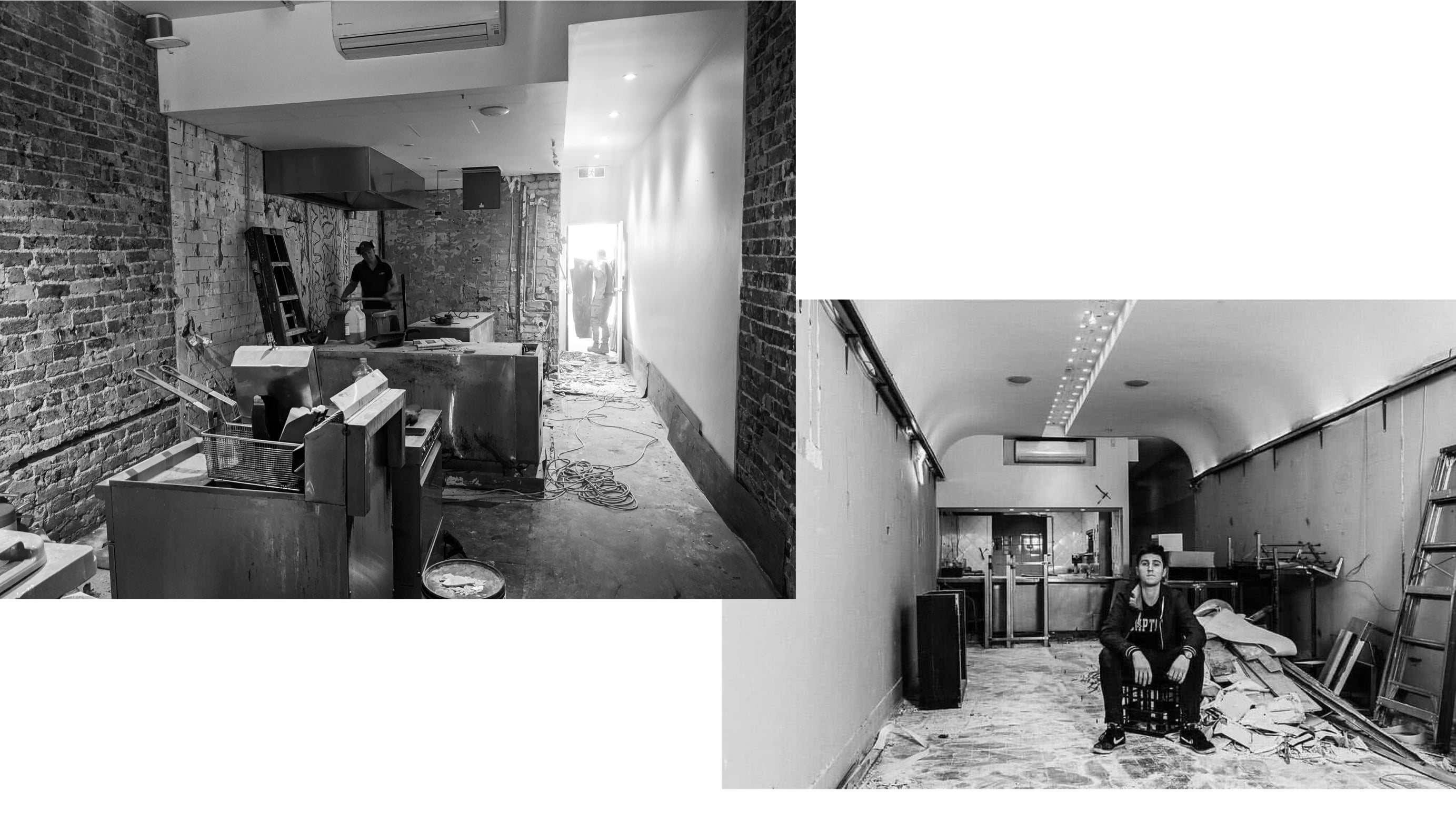
Construction of the original Saint Peter. Photo: Courtesy of Hardie Grant
Nic Brownlee (builder, carpenter and designer): I remember we unearthed all this old sandstone. That was cool. We also reused bits and pieces of the old restaurant, turning old steel frames into shelving. Very on brand for Josh. When he found out I did art and graphic design, he asked me to create the original Saint Peter logo: a John Dory with the black spot.
Josh: Julie made all the tables with her dad.
Julie: I found Magis chairs on Gumtree that were worth $500 new and I got them for $50 each. Afterwards I resold them for $50, so they kept their value! I also found a deep fryer at Grays Online.
Josh: And then on the day of the soft opening I filled it up with 20 litres of oil and then got warm toes. I looked down and it had pinholes all through it.
As well as a leaking fryer, the first service at Saint Peter involved a faulty flat top grill and crew of inexperienced floor staff. It was so chaotic, Julie started cancelling bookings the following day so the team could regroup.
Julie: The first person I called was [prominent food critic] Terry Durack. He’d booked under a different name, but I got his voicemail. I hung up and said to Josh, ‘Well, we can’t cancel Terry.’
Josh: I called as many front-of-house people that I knew, which wasn’t many.
Wimmy Winkler (original Saint Peter restaurant manager, now restaurant host): They called me and I declined. I was on a break because I was very burnt out. But I could see how desperate the situation was, so I agreed to do one service. But after that I realised I couldn’t leave them. I saw the belief Josh had in what he was doing and started believing in him as well.

Josh and Julie Niland. Photo: Courtesy of Rob Palmer
Pushing the boat out
The Nilands pitched Saint Peter as “a fish eatery” because it was supposed to be simple. They didn’t want it to be fancy, or to have a lengthy tasting menu. But as Josh writes in Saint Peter: Chapter and Verse, the restaurant’s weekend brunch service allowed the team space to experiment with dishes channelling “a certain luxury and familiarity”. Meanwhile, the age of “camera eats first” was just getting started.
Josh: At the beginning I just wanted [Saint Peter] to be a place where people experienced the same joy I found in produce. Like, ‘look! We have this awesome asparagus, this great kingfish!’ I can remember having these conversations with Alanna [Sapwell, former head chef] who would ask, ‘Oh, is that all we’re doing? That fish with that thing?’ and I’d be like, ‘…yeah’. I didn’t want to do something really ‘out there’ to get people attracted to the idea of coming.
During the weekend brunch we were serving our own industry – people who’d had the hardest week of their lives and wanted to let their hair down. Or a young demographic that wanted to take photos of what they were eating. Unfortunately, you can’t really communicate ‘hey, I had this amazing wild kingfish with peas’ with much excitement. But you can with a spanner crab croissant, or a sea urchin crumpet, or an octopus Scotch egg. So I started putting this creative energy into the brunch.
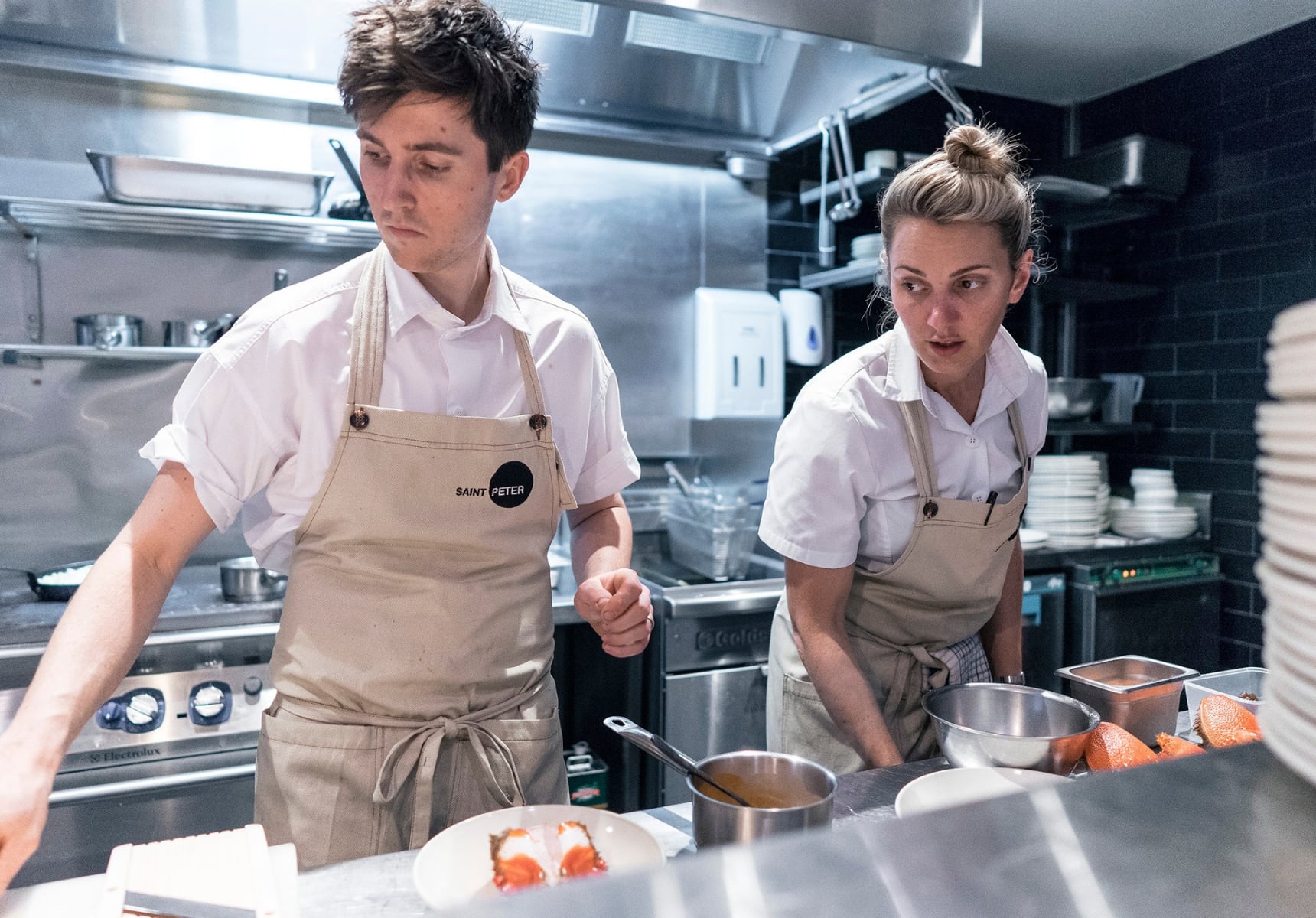
Josh Niland and former head chef Alana Sapwell, 2016. Photo: Leigh Griffiths
But then winter came and suddenly my accountant was on the phone saying what a mess we were in. I’d hired too many staff.
Julie: We didn’t know what we were going to do.
Josh: I wasn’t going to let go of staff and I wasn’t going to buy cheap fish. So that’s when I put trays over the bins to stop us throwing fish scraps away. I figured, ‘if I can’t fix a wage problem, maybe I can fix a food waste problem’.
My main thing was the eyes. How do I use the eyes? Then I woke up one morning and thought, ‘well, a prawn cracker would be fun’. But I didn’t know how I would sell it. So I decided everyone who sat down would just get one as a snack. And then at the end of the meal we’d let them know that cracker was made of fish eye.
Straight away, they’d giggle nervously. No one was ever really offended but they were like ‘Oh really?’ It worked. People got excited.
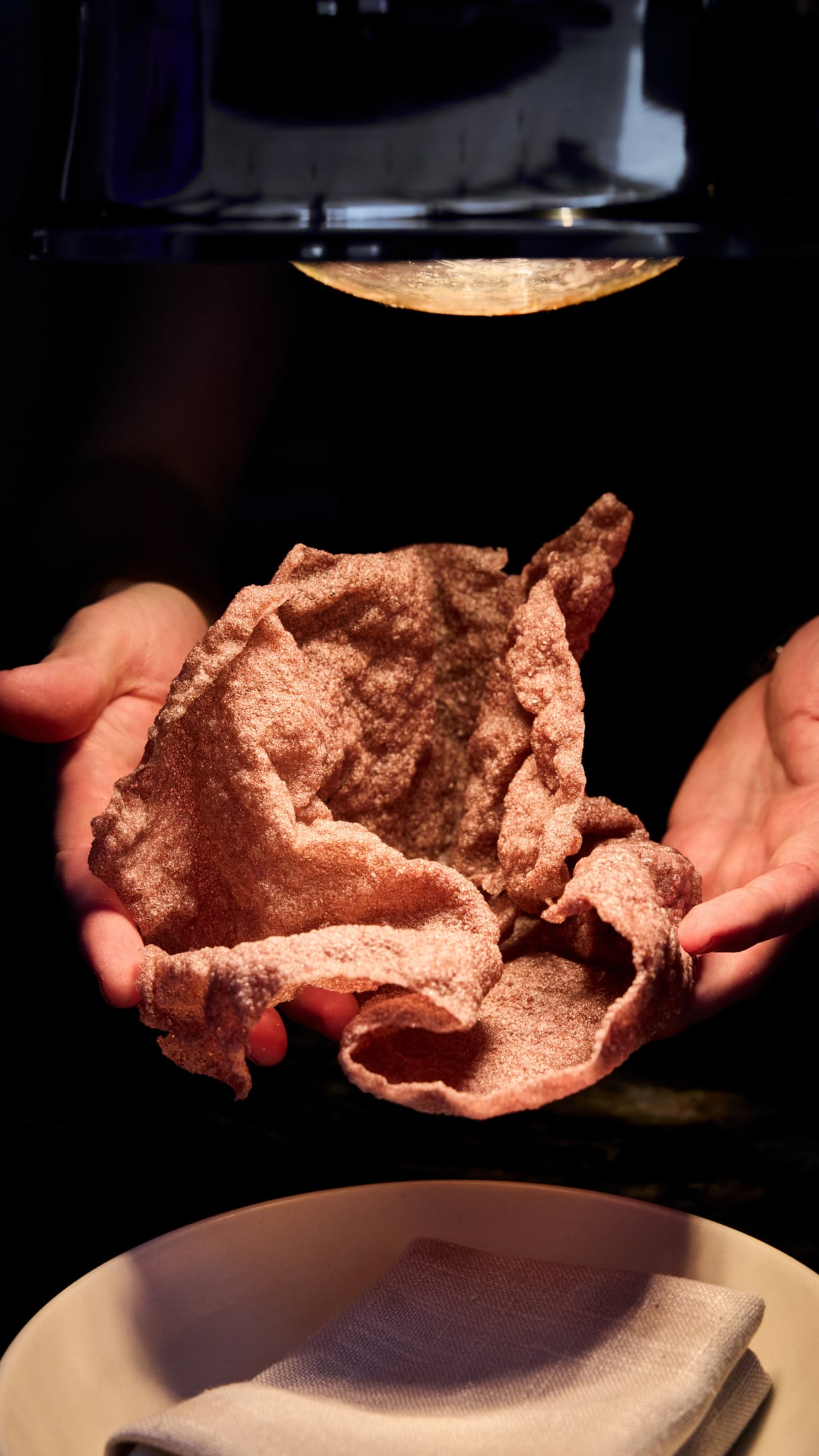
Fish eye chip. Photo: Courtesy of Hardie Grant / David Loftus
New directions
In 2018, the Nilands opened Australia’s first Fish Butchery just a few doors down from Saint Peter. The sleek space served a dual purpose, functioning as both a retail outlet for lesser-known, under-fished species and singular products like octopus ham and smoked prawn sausages, and as a dedicated processing depot for the restaurant.
While the arrival of Covid in 2020 brought challenges the industry had never faced before, it also came with a silver lining: the downtime gave the Nilands a chance to gut the restaurant and refresh both the dining room and concept. They unveiled the new-look Saint Peter in July that year.
Josh: After Covid, people were dancing in the streets to get back into restaurants. The romance of restaurants came back in the form of Gimlet [in Melbourne] and Margaret [in Sydney]. Big brasserie dining was it. Meanwhile, we had just cut our restaurant in half and made it an 18-seat, tasting menu-only counter.
By this point we had amassed this all-star team. We had Måns Engberg, who’s now over at Mister Grotto. Luke Cawsey who’s now head chef at Burnt Ends in Singapore. Wimmy. Joe Greenwood [Saint Peter’s current head chef]. But reopening in that format was exhausting. Suddenly we really had to be ‘on’.
The tasting counter at the original Saint Peter, 2020. Photo: Jiwon Kim
Julie: You had to talk to every customer, face to face. It was like a new muscle.
Josh: You’d be cooking, plating, turning around, then talking. A lot of us hated it at first because it felt really, really close. But then we all got really good at it.
Joe Greenwood: We only had, I think, two front-of-house people, so we chefs would run 90 per cent of the food. It was great because it allowed you to really talk to the guests about what you’d cooked. Spending that time with the guests really helped you pick up the ambience in the room and work out what they like and don’t like.
Winkler: Josh was a lot happier because he was able to prepare the dish and chat to customers at the same time, showing them what he was doing. We had more time to chat to the customers too, if that’s what they wanted.
Saint Peter scales up
In 2022, the Nilands opened a second, much larger Fish Butchery in Waterloo, with an expanded menu and the most ambitious retail offering yet. It would also become the main engine room for the Saint Peter menu, as well as two new hospitality ventures: Charcoal Fish in Rose Bay and Petermen in St Leonards.
Both have since closed, along with the original Paddo Fish Butchery in Paddington and Fysh inside Singapore’s Edition Hotel. But a partnership with investor George Penklis, who owned a dormant 1890s hotel a few blocks from the original Saint Peter, would usher in a new era for the restaurant that started it all.
Winkler: George loved watching Josh. He would come in and just watch what he did. He really believed in what Josh was doing and he was determined to get him.
Josh: But when I first saw The Grand National Hotel I thought, ‘This place is pretty decrepit. And it’s really big.’ But George and I kept having weekly meetings and over time I started to see what he could see.
Winkler: We were so excited about the kind of kitchen he could have compared to that tiny little space we had on Oxford Street. George wanted Josh to have everything that Josh wanted. But we were all worried about how we would fill such a large space when we were so used to being face to face with customers.
We needn’t have worried. In many ways it’s brought us closer to the customers because it’s given us a lot more space to showcase what we’re doing. You can see the kitchen from wherever you’re sitting and watch this seamless service that happens there. It’s turned out like … a magical cinema.
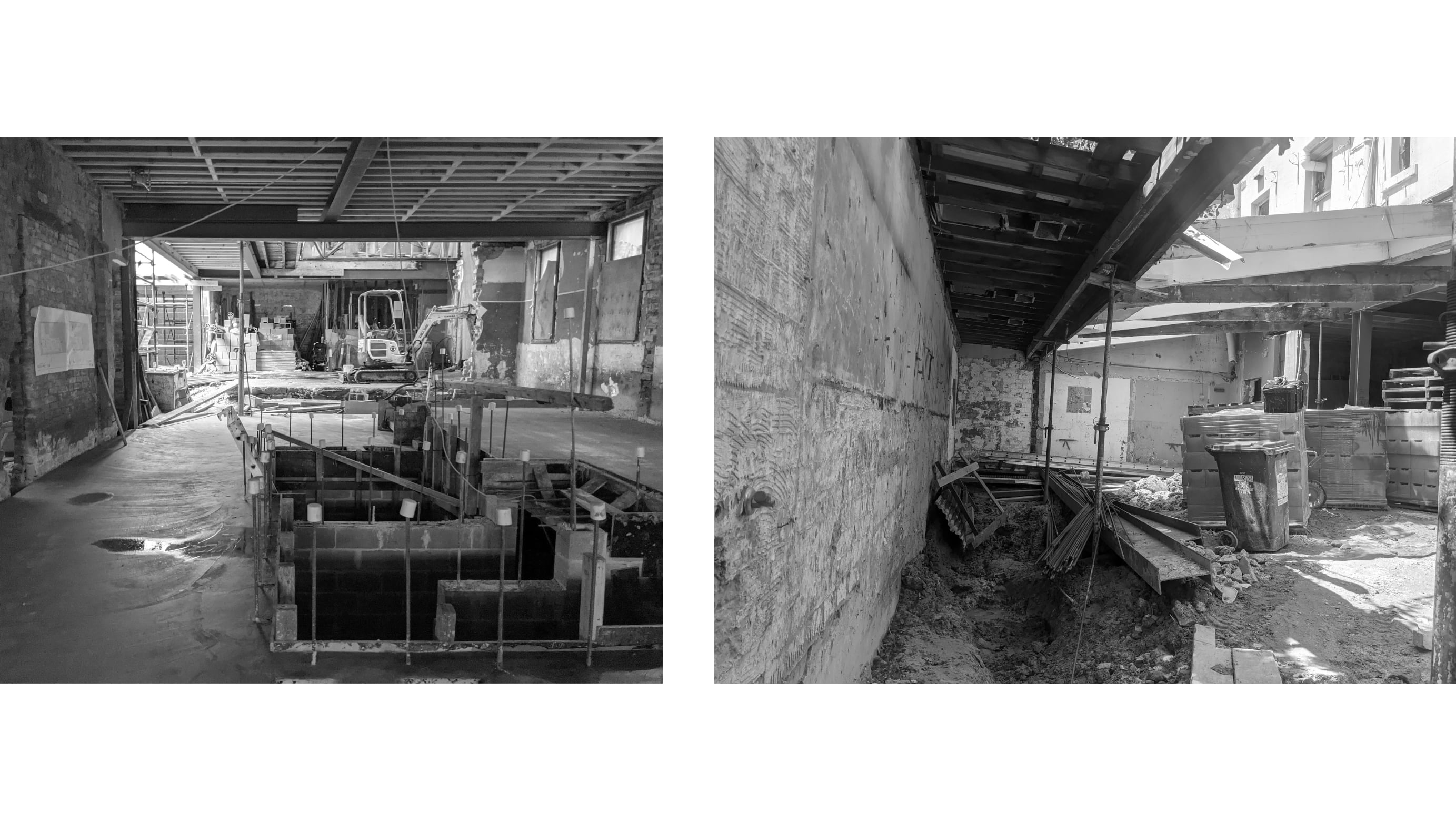
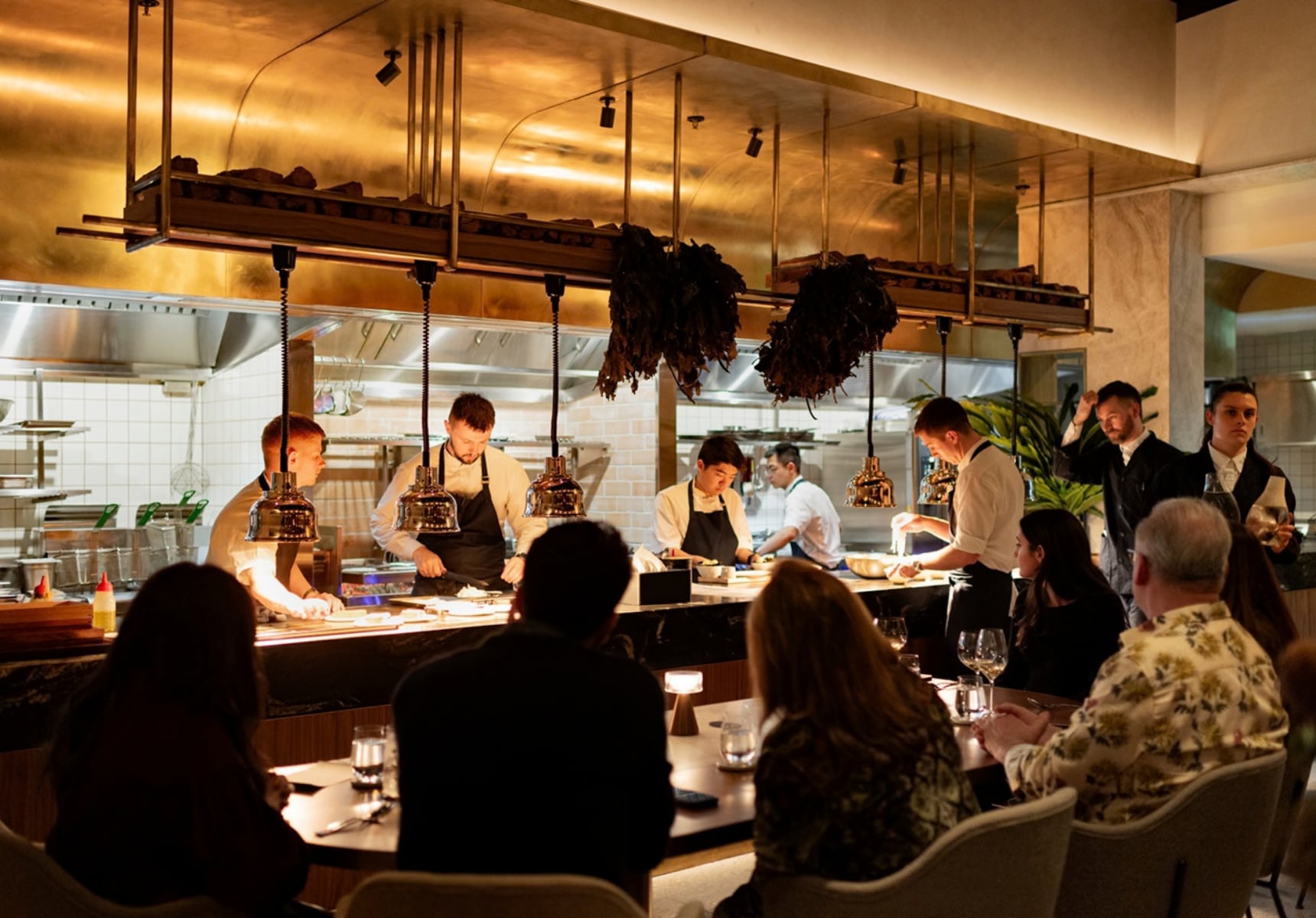
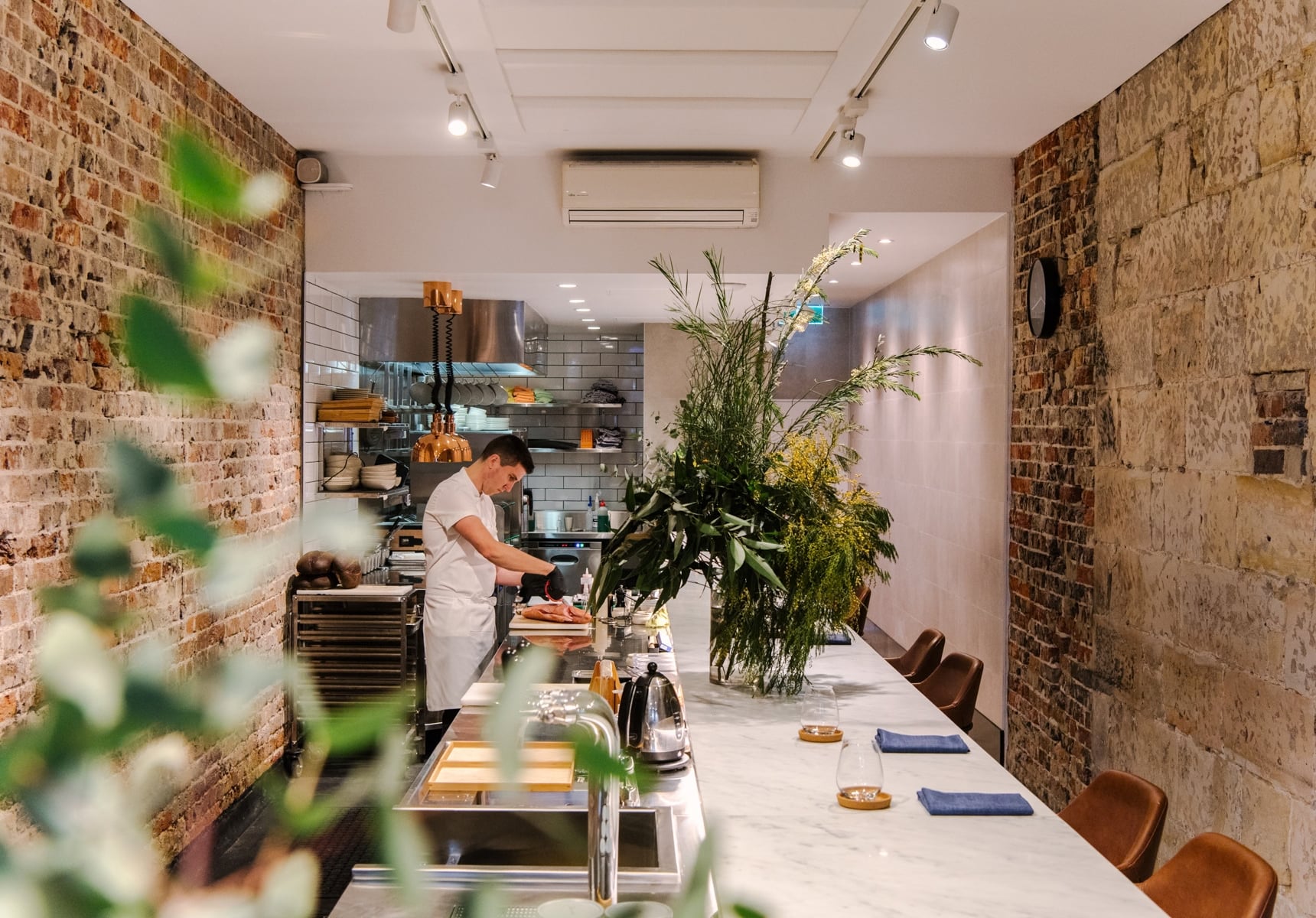
Top: Construction of The Grand National Hotel. Photo: Courtesy of Hardie Grant. Bottom: Dining room at The Grand National Hotel, 2024. Photo: Yusuke Oba
Greenwood: When we finally got into the space, we realised the expectation is so much higher now. We were no longer this little bar on Oxford Street with one bathroom and one little, tiny grill. We really have to deliver now because we’ve got all of this Ken Done, this big open kitchen. We’re now very much in a Ferrari showroom.
Hayden Clifford (assistant head sommelier): There’s an opulence about it. And there’s also this pressure because people are spending their hard-earned money on what is likely a big occasion. You want to make sure it’s the most special night of their year. But everyone on the team, whether it was Oxford Street or when we moved, is an amazing person who is dedicated to their craft. That’s [the experience] they want to deliver.
Josh: When we were discussing the model tasting menu for The Grand National, we had these specific buckets we wanted to nail. There had to be something dry-aged. Something where fish appears as meat. Charcuterie or offal. And fish in the desserts.
We referred back to a very old French menu format, which I grew up cooking. There was always a soup to start, then you move on to a raw [dish], followed by a hot starter and a fish course that was always buttery, elegant, acidic. Then your meat main, your venison or pigeon. Then the pre-dessert, dessert and petit fours.
When I looked at it, it was very much aligned with the Est tasting menu. I loved that framework because then we could push and pull on it as much as we wanted.
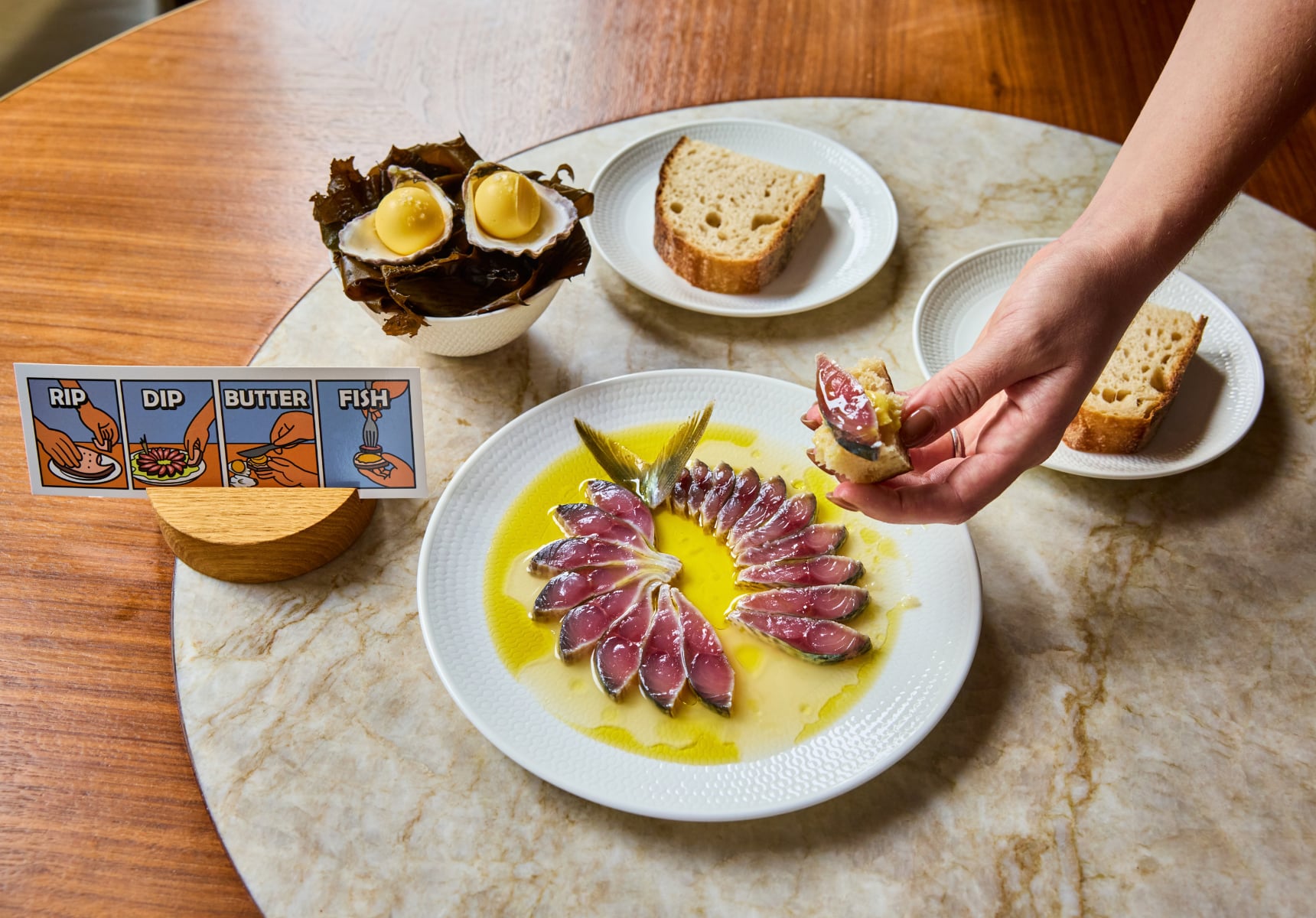
Salt-and-vinegar mackerel. Photo: Courtesy of Hardie Grant / David Loftus
The Saint Peter legacy
Over the years, Saint Peter has created dishes that will likely remain in Australia’s culinary pantheon forever, such as the fish charcuterie and the salt-and-vinegar mackerel (“rip, dip, butter, fish”). Then there’s the double yellowfin tuna cheeseburger, which encompasses every principle Saint Peter stands for, from dry aging to fish as meat. But Saint Peter will also leave an equally important, if less immediately tangible, footprint on the Australian dining landscape.
Greenwood: One of the first conversations I ever had with Josh was him saying, ‘What do you want from your career?’ That’s not a question many people ask. He wanted to know where I saw my career going, what kind of person I want to be. One of the things I told him was that I wanted to open my own restaurant by the age of 30, and he said, ‘Okay, well, what do we need to do to get you to that?’ I’ve still got two years to go, but he’s given me the skill set to eventually go off and do it.
Brownlee: When you go to uni and get your design degree, you wonder how you’re going to make this work. When the market is strong, people spend money, but it tends to dip a lot. It’s rare to work with one customer like Josh and Julie for 10 years. Just this year, I think I’ve done 14 or 15 pieces for them, including all the designs for the T-shirts for their collaborations. It’s amazing to have that kind of relationship.
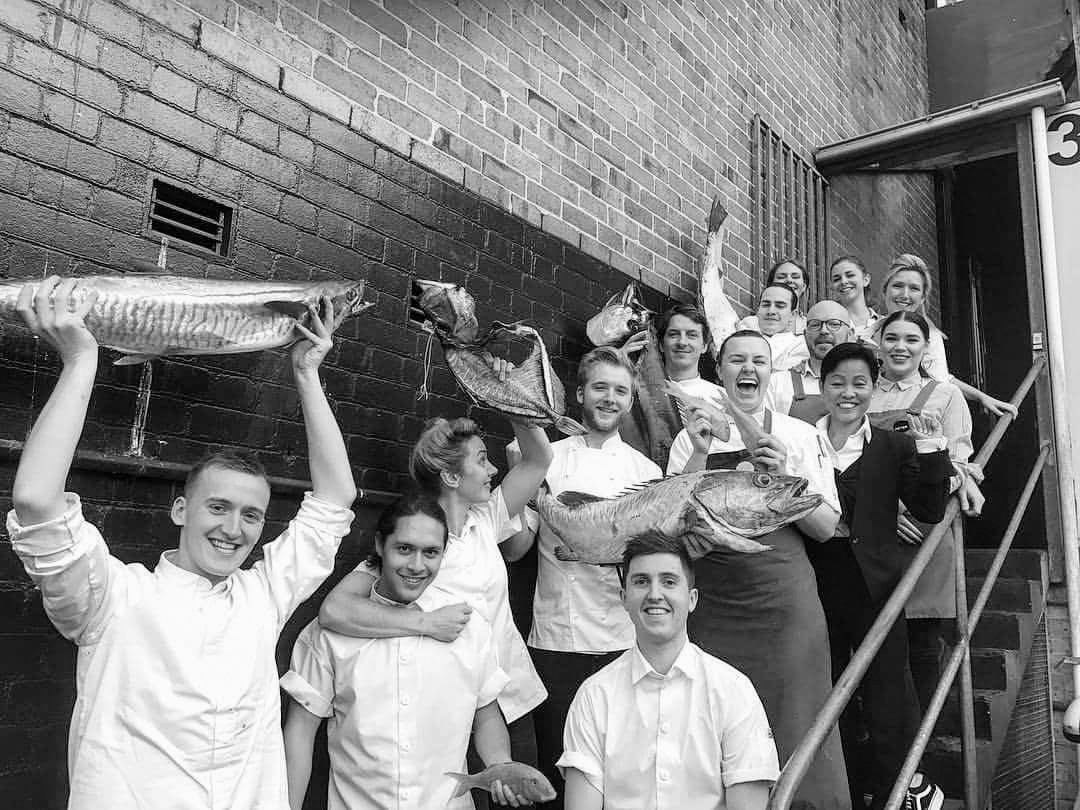
Photo: Courtesy of Hardie Grant
Clifford: Josh and Julie have always been so supportive of personality in the dining room. Sometimes in fine dining, the personality can get stripped out. As long as we’re hitting the right attention to detail, we can be ‘us’.
Peter Doyle [former executive chef of Est, and Josh’s early employer and mentor]: I’m proud to have had a little hand in what Josh has done, but it’s got nothing to do with me, really. It’s like I was teaching him in kindergarten up to fourth class, but he was the one who went on and got his own university degree.
He’s an original. You can’t underestimate how important that is.
Saint Peter: Chapter & Verse by Josh Niland out now. Published by Hardie Grant Books, with photography by David Loftus (RRP $80).
About the author
Alexandra Carlton is one of Australia’s leading food and travel writers. She is currently the Oceania Academy Chair for The World’s 50 Best Restaurants.
Related Content